

How Long Does Xanax Stay in Your System?
Xanax, the brand name for alprazolam, is a benzodiazepine prescribed for anxiety and panic disorders. It works by enhancing the effects of GABA, a calming neurotransmitter in the brain, which is why it can quickly reduce intense anxiety or panic.
Because Xanax has a real risk of dependence, tolerance, and withdrawal, many people want to know how long Xanax stays in your system, especially if they are worried about drug tests, safety, or possible addiction.
If you also want more context about how this medication works, it can help to understand what Xanax does and what Xanax feels like when it starts working and when it wears off.
What Is the Half Life of Xanax?
A drug’s half life is the amount of time it takes for half of the substance to be cleared from your body.
- The average half life of Xanax in healthy adults is about 11 hours
- It usually takes about 4 to 5 half lives for a drug to be mostly eliminated
Based on this, most of the Xanax you take is cleared from your system in about 44 to 55 hours, or roughly two days. This does not mean there is no trace left in your body, only that the active amount has dropped significantly.
Even after Xanax is no longer producing noticeable effects, it can still show up on drug tests and may continue to influence withdrawal symptoms, cravings, or sleep.
How Long Do the Effects of Xanax Last?
Xanax is considered a short acting benzodiazepine.
- The calming or sedating effects usually last about 4 hours
- Some people feel lingering drowsiness or slowed reaction time even longer
- When the effects wear off, anxiety or panic may return, sometimes more intensely
Because its effects fade faster than it fully clears from your body, some people begin taking higher or more frequent doses. Over time, this pattern can increase the risk of dependence, withdrawal, and other complications.
If you are using high doses, combining Xanax with other substances, or misusing it, you may notice more intense effects than those described in general guides about what Xanax feels like.
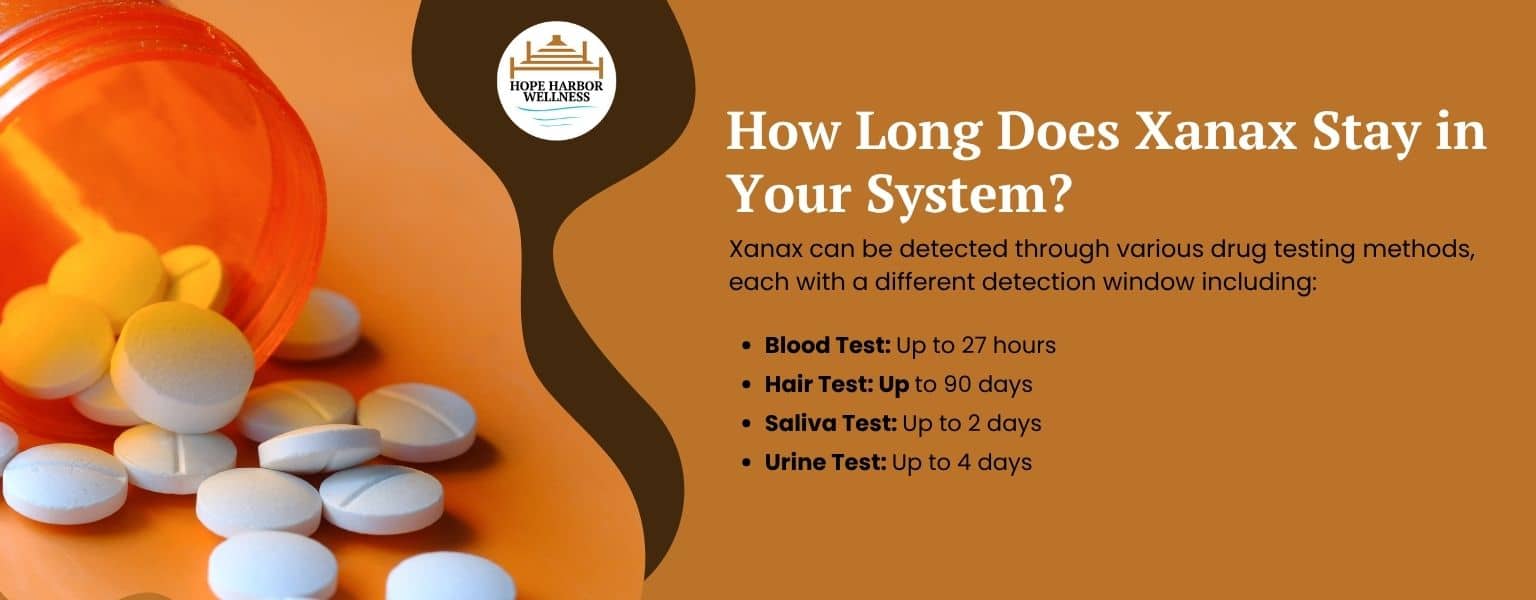
How Long Does Xanax Stay in Your System by Test Type?
Detection windows are general estimates. They can vary with your dose, how often you take Xanax, your age, metabolism, and overall health.
How Long Does Xanax Stay in Your Urine?
Urine testing is the most common method used by employers, treatment programs, and legal systems.
- Occasional use: Xanax is often detectable in urine for up to 4 days
- Frequent or heavy use: it may be detectable for up to a week or slightly longer
Because Xanax is processed in the liver and excreted in urine, people with liver or kidney issues may test positive for a longer period.
How Long Does Xanax Stay in Your Blood?
Blood tests are usually used in emergencies, accidents, or specific medical or legal situations.
- Xanax is usually detectable in blood for about 24 hours after the last dose
- In some cases, traces may remain a bit longer, but blood tests have a shorter detection window than urine or hair
Blood tests are more invasive and expensive, which is why they are not used as often as urine tests.
How Long Does Xanax Stay in Your Saliva?
Saliva testing is less invasive and can detect more recent use.
- Xanax is often detectable in saliva for up to 2 days after the last dose
- Some tests may pick up use slightly beyond this window, especially after frequent dosing
Saliva tests are sometimes used in workplace settings or roadside screenings where a quick sample is helpful.
How Long Does Xanax Stay in Your Hair?
Hair tests provide the longest detection window.
- A standard hair sample, about 1.5 inches in length, can show Xanax use for up to 90 days
- Hair tests are more expensive and are usually used when a long term pattern of use is being investigated, for example in court or custody cases
Because hair grows slowly, hair tests cannot show very recent use, but they do reveal past patterns.
How Long Does Xanax Stay in Breast Milk?
Xanax can pass into breast milk, which is why it is important to talk with a medical provider if you are nursing.
- The half life of Xanax in breast milk is about 14 to 15 hours
- This means it may remain in breast milk for several days after the last dose
Infants exposed to benzodiazepines through breast milk may experience sedation, feeding difficulties, or withdrawal if the medication is stopped suddenly. It is important to follow your provider’s guidance if you are pregnant or breastfeeding and using Xanax.
Factors That Affect How Long Xanax Stays in Your Body
The amount of time Xanax remains detectable is not the same for everyone.
Some of the most important factors include:
- Metabolism: People with faster metabolisms clear Xanax more quickly, while those with slower metabolisms may test positive for longer.
- Age: Older adults usually process benzodiazepines more slowly, so the drug can build up and stay in the system longer.
- Dose and strength: Higher doses, stronger formulations, and certain types of Xanax bars can take longer to leave your body.
- Frequency and duration of use: Long term or daily use allows Xanax to accumulate in fatty tissues, which increases detection windows and the risk of withdrawal.
- Body fat percentage: Xanax is fat soluble, so people with higher body fat may retain the drug for a longer time.
- Liver and kidney health: Because these organs are responsible for processing and eliminating Xanax, any impairment can slow clearance.
- Other substances: Using Xanax with alcohol, opioids, or other benzodiazepines can change how your body processes the drug and may increase risks, including overdose and withdrawal.
If you take other benzodiazepines such as Ativan, Klonopin, or Valium alongside Xanax, you may also want to know how long benzos stay in your system.

Factors That Impact How Long Xanax Stays in Your Body
The length of time Xanax remains in your system is influenced by a variety of factors, which can differ from person to person.
These factors include:
- Metabolism: Individuals with faster metabolisms will process and eliminate Xanax more quickly.
- Age: Older adults tend to metabolize Xanax more slowly, causing it to stay in their system longer.
- Dosage: Higher doses of Xanax take longer to leave the body than lower doses.
- Frequency of Use: People who use Xanax frequently or over a long period may find that the drug stays in their body for extended periods.
- Body Fat: Xanax is stored in fat cells, so individuals with higher body fat percentages may retain the drug longer.
- Organ Health: The health of your liver and kidneys plays a role in how efficiently your body can process and excrete Xanax.
How and Why Do People Test for Xanax?
Testing for Xanax is common in several situations, including compliance programs for individuals with substance use disorders or a history of misuse. Testing may also occur in cases of suspected overdose, or as a requirement for employment or legal matters.
- Urine Tests: The most frequently used method, urine testing can detect both prescription and illegal drugs, including Xanax. It is a cost-effective way to monitor drug use, detecting Xanax for up to 5-7 days after the last dose.
- Blood Tests: Although blood tests can detect everything that a urine test can, they are less common due to their higher cost. Blood tests can identify Xanax for up to 1-6 days after use, depending on the individual’s metabolism and other factors.
- Saliva Tests: These tests can detect Xanax for up to 2.5 days after the last dose and are often used for recent drug use detection.
- Hair Tests: Hair testing can provide a longer history of drug use, detecting Xanax from 1-7 days after ingestion and providing a three-month overview of usage. This method is commonly used in the legal system to track chronic drug use.

Why Do People Get Tested for Xanax?
Testing for Xanax can happen in many different contexts, including:
- Employment or pre employment screening
- Legal cases, probation, or child custody matters
- Monitoring medication compliance for people with prescriptions
- Emergency room visits or suspected overdose
- Treatment programs checking for misuse or relapse
Although each test has its own detection window, any positive result is a sign that your use deserves a closer look, especially if you are not taking Xanax exactly as prescribed.
Signs of Xanax Misuse and Addiction
Xanax is a Schedule IV controlled substance, but it can still be very addictive, especially when used in higher doses, taken more often than prescribed, or combined with other drugs.
Common signs of Xanax misuse or addiction include:
- Needing more Xanax to feel the same effect
- Taking Xanax for reasons other than anxiety or panic, such as getting high or “numbing out”
- Using Xanax with alcohol or other drugs to increase the effects
- Doctor shopping or going to multiple providers or pharmacies to get extra prescriptions
- Hiding or lying about how much you are taking
- Withdrawal symptoms when you try to cut down or miss a dose, such as rebound anxiety, insomnia, shaking, or irritability
- Changes in mood or behavior, including depression, emotional numbness, or angry outbursts
- Struggles at work, school, or home because of sedation, memory issues, or missed responsibilities
Stopping suddenly after long term use can trigger serious withdrawal. To understand what that may look like, you can read more about Xanax withdrawal and why a medically supervised taper is recommended.
Is It Time to Get Help for Xanax Use?
If you are:
- Worried about failing a drug test
- Taking more Xanax than your doctor prescribed
- Unable to get through the day without your medication
- Afraid of what withdrawal will feel like
you do not have to face this alone. These are all signs that it may be time to talk with a professional and consider structured support.
More About Drug Tests and Detection
Understanding how long Xanax stays in your system is only one piece of the picture. If you’d like a deeper breakdown of how urine, blood, saliva, and hair tests actually work, you can read our guide on how drug tests work. For a broader overview of different substances and timelines, visit how long drugs stay in your system.
Xanax Addiction Treatment at Hope Harbor Wellness
Xanax addiction can affect your mental health, physical health, relationships, and sense of self. At Hope Harbor Wellness in Atlanta, Georgia, we offer compassionate, evidence based care for people who are ready to regain control of their lives.
Our levels of care can include:
- Partial Hospitalization Program (PHP)
- Intensive Outpatient Program (IOP)
- Virtual IOP for people who need flexible, remote support
- Standard Outpatient care
- Dual diagnosis treatment for anxiety, depression, trauma, and other mental health concerns
- Medication management and holistic therapies that support the whole person
If you need more structure than weekly therapy but are not looking for inpatient rehab, programs like outpatient drug treatment in Georgia can be a powerful step toward change.
Take the Next Step Toward Recovery
You are not weak or broken because you are struggling with Xanax. Dependence is a medical condition that responds best to medical care, counseling, and a solid support system.
If you are ready to talk about your Xanax use, your options for tapering, or treatment for benzodiazepine addiction, we are here to help.
Call Hope Harbor Wellness today at 770-573-9546 or fill out our online contact form. A member of our team will listen to your story, answer your questions, and help you find the next right step toward a safer, healthier life.
How Long Xanax Stays in Your System FAQs
How long does Xanax stay in your system after one dose?
For most healthy adults, a single dose of Xanax is mostly cleared from the body in about two days. The calming effects usually last only a few hours, but drug tests can sometimes detect Xanax longer, especially in urine or hair samples.
Does Xanax show up on a standard drug test?
Yes. Many standard drug screens test for benzodiazepines, which include Xanax. Urine tests can often detect Xanax for several days after the last dose, while hair tests can show use for up to 90 days. If you are worried about dependence, it can help to learn more about Xanax withdrawal and how a taper works.
Can long term Xanax use make it stay in your system longer?
Long term or frequent Xanax use can cause the medication to build up in your body, especially in fat tissue. This can extend how long it stays in your system and how long it shows up on urine or hair tests. People who have used Xanax for years are also more likely to have withdrawal symptoms when they reduce or stop their dose.
Do liver or kidney problems affect how long Xanax stays in your system?
Yes. Xanax is processed in the liver and removed through the kidneys. If either organ is not working well, the drug can stay in your system longer and side effects can be stronger. Anyone with liver or kidney concerns should talk with a doctor before starting or stopping Xanax.
Can I stop taking Xanax quickly if I have a drug test coming up?
Stopping Xanax suddenly is not recommended, especially if you have taken it regularly for more than a few weeks. A fast or unsupervised stop can cause serious withdrawal symptoms. If you are worried about an upcoming test or feel you are relying on Xanax, it is safer to talk with a provider or a program that understands benzodiazepine tapers, such as a center that offers benzo withdrawal support and structured outpatient care.