Medically Reviewed By: Dr. Bryon Mcquirt, MD
Dr. Byron McQuirt leads works closely with our addictionologist, offering holistic, evidence-based mental health and addiction care while educating future professionals.
If you or someone you love is struggling with marijuana addiction or dependency, evidence-based treatment is available at Hope Harbor Wellness. You do not have to figure this out alone.
Cannabis use disorder (CUD) is the most underdiagnosed substance use disorder in the United States. The combination of marijuana’s increasing legal status across the country, its cultural normalization in media and popular culture, and the persistent belief — even among some healthcare providers — that marijuana is non-addictive creates enormous barriers to identification and treatment. The result: a condition affecting approximately 9 percent of all cannabis users (and 25 to 50 percent of daily users) that goes largely untreated.
Georgia maintains marijuana prohibition under state law, but the proximity of legal markets in surrounding states, the growth of high-potency hemp-derived products sold in gas stations and vape shops across Metro Atlanta, and the broad availability of high-THC black market product means that Georgia residents have access to cannabis at potencies unimaginable in earlier decades. Modern dispensary-grade cannabis averages 20 to 30 percent THC; concentrates and dabs can exceed 80 percent. This potency shift has changed the clinical landscape of cannabis dependency.
Hope Harbor Wellness provides outpatient cannabis use disorder treatment in Atlanta and surrounding communities. If you have tried to stop marijuana use and found it harder than expected — if you cannot sleep without it, cannot manage anxiety without it, feel unmotivated and flat in its absence — that is a clinical signal, not a personal weakness. It is treatable, and you do not need to have been using heroin or methamphetamine to deserve professional support.
Speak With Our Admissions Team — Same-Day Assessments Available
Confidential. No obligation. We verify insurance for free.
What Is Marijuana Addiction?
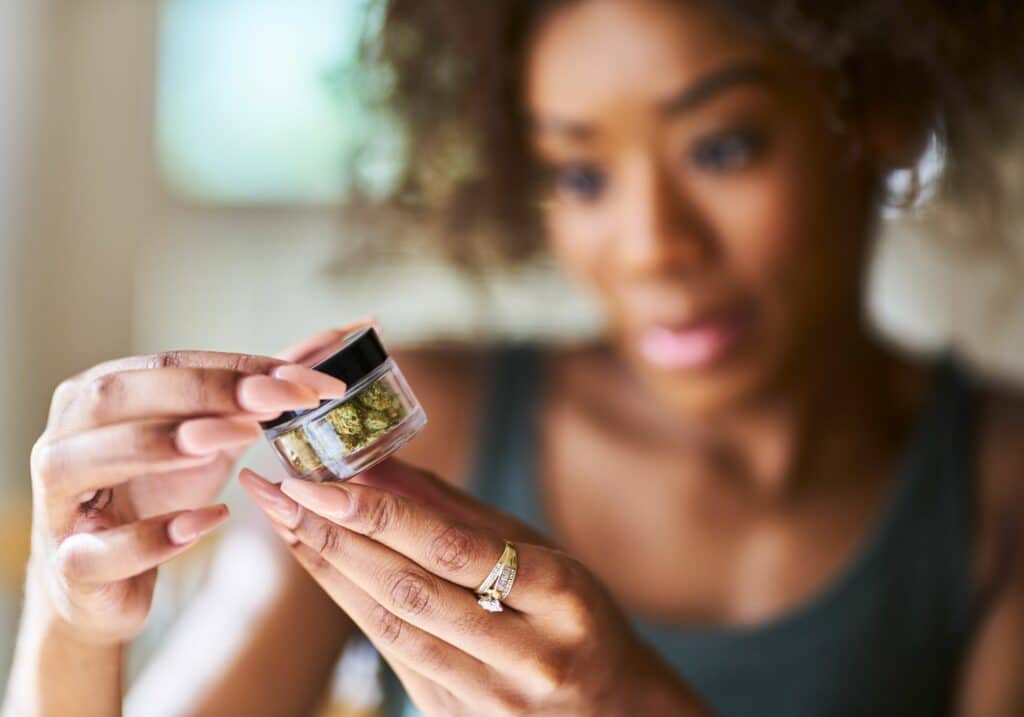
Cannabis contains over 100 cannabinoids, with THC (delta-9-tetrahydrocannabinol) as the primary psychoactive compound. THC binds to CB1 receptors in the brain, producing euphoria, relaxation, altered sensory perception, increased appetite, and — at high doses — anxiety, paranoia, and perceptual distortion. Long-term daily cannabis use downregulates endocannabinoid receptors: the brain reduces its own natural cannabinoid activity to compensate for constant exogenous stimulation, creating a state where cannabis is needed to feel normal rather than to feel high. This is the physiological definition of cannabis use disorder.
The clinical threshold between heavy cannabis use and cannabis use disorder is defined behaviorally — not by quantity or frequency alone, but by the impact on functioning and the ability to control use. DSM-5 criteria include: using more than intended, failed attempts to reduce, significant time spent using, craving, failure to fulfill obligations, continued use despite interpersonal problems, giving up activities, hazardous use, continued use despite known physical or psychological problems, tolerance, and withdrawal.
Marijuana Addiction in Georgia — What the Data Shows
Understanding the scope of marijuana addiction in Georgia and Metro Atlanta helps explain why accessible treatment in Northwest Georgia matters so much.
National SAMHSA data shows approximately 16 million Americans aged 12 and older meeting criteria for cannabis use disorder in 2022 — the highest prevalence of any illicit substance use disorder. Georgia tracks national trends in cannabis use, with NSDUH data showing particular concentration in the 18 to 25 age group. The Metro Atlanta area — with its large college and young professional population — reflects above-national-average cannabis use prevalence.
Adolescent cannabis use is a particular clinical concern in the Georgia school system: the Georgia Student Health Survey has documented cannabis use among high school students in all regions of the state, and early-onset cannabis use (before age 16) is associated with significantly higher rates of cannabis use disorder, lower educational attainment, and earlier onset of other substance use.
Signs and Symptoms of Marijuana Addiction
These are the clinical indicators most commonly associated with marijuana use disorder. A formal diagnosis requires a clinical assessment — but these signs are worth taking seriously.
- Using cannabis daily or near-daily — first thing in the morning or throughout the day
- Inability to relax, sleep, or manage anxiety without cannabis
- Using cannabis before or during obligations — work, school, parenting
- Continued use despite worsening anxiety, paranoia, or depression
- Amotivational syndrome — persistent low energy and reduced engagement
- Giving up activities or relationships affected by cannabis use
- Failed attempts to reduce or stop — stronger than expected withdrawal
- Withdrawal symptoms when stopping: irritability, insomnia, anxiety, decreased appetite
- Using significantly more or more potently than originally intended
- Spending significant time obtaining, using, and recovering from effects
- Relationship or work problems related to cannabis use
- Using concentrates, dabs, or edibles at escalating potency and frequency
Health Risks of Marijuana Use
Beyond the addiction itself, marijuana use carries significant health risks that make early treatment both medically and practically important.
High-potency cannabis is associated with increased risk of cannabis-induced psychosis — a clinical syndrome resembling acute schizophrenia that can occur during heavy use, particularly in adolescents and young adults with genetic vulnerability. The research linking heavy cannabis use to increased schizophrenia risk in genetically predisposed individuals is well-established and supported by multiple large epidemiological studies. This risk is not theoretical — it is a reason why high-potency cannabis use in young people is a genuine clinical concern.
For people with anxiety disorders — a very large overlap population with cannabis users — heavy use typically worsens anxiety over time despite providing temporary relief. Cannabis initially activates the same endocannabinoid system that regulates anxiety, producing short-term anxiolysis. With chronic heavy use, CB1 receptor downregulation reduces the brain’s natural anxiety-buffering capacity, resulting in higher baseline anxiety between uses and rebound anxiety when stopping. This cycle — using cannabis to relieve anxiety that cannabis is worsening — is one of the most common clinical presentations in cannabis use disorder.
Marijuana Questions? Talk to Our Clinical Team.
Confidential consultations. 24/7 admissions line. 770-573-9546.
Marijuana Withdrawal — What to Expect
Understanding the withdrawal process helps you prepare — and helps explain why clinical support during this window dramatically improves outcomes.
Cannabis withdrawal is a real and clinically recognized syndrome listed in DSM-5. Symptoms begin within 24 to 72 hours of cessation and include irritability, anger or aggression, anxiety, restlessness, depressed mood, decreased appetite, sleep disruption (including vivid dreams), and physical symptoms including sweating, chills, and headaches. Acute withdrawal typically peaks in the first week and resolves within 2 to 3 weeks, though sleep disruption can persist for 4 to 6 weeks in heavy long-term users.
The withdrawal syndrome, while not medically dangerous, is uncomfortable enough that many people relapse in the first week of trying to stop without support. The combination of insomnia (difficulty sleeping without cannabis), anxiety rebound (anxiety that feels more severe than before cannabis), and low mood creates a clinical picture that is significantly harder to navigate without structured support and, when indicated, pharmacological management of symptoms.
How Hope Harbor Wellness Treats Marijuana Addiction
Our clinical approach is individualized, evidence-based, and built on the understanding that addiction is a medical condition — not a moral failure.
Our treatment approach for cannabis use disorder begins with an honest assessment of what cannabis has been solving. For the majority of our clients with CUD, the answer is one or more of: anxiety management, sleep management, ADHD symptom management, or emotional numbing from depression or trauma. Treatment that addresses these underlying conditions produces dramatically better outcomes than treatment that targets only the cannabis use pattern in isolation.
We provide concurrent treatment of anxiety disorders, depressive disorders, ADHD, trauma, and sleep disorders alongside the cannabis use disorder — because these are not separate problems but interconnected clinical presentations that require integrated treatment. For clients with ADHD, we evaluate appropriate medication options; for clients with anxiety, we provide CBT for anxiety and non-addictive medication management; for clients with insomnia, we provide CBT-I and sleep hygiene intervention.
For adolescents and young adults, we emphasize the developmental impact of heavy cannabis use and the research on cognitive recovery with abstinence — providing both honest clinical information and genuine hope that stopping produces measurable cognitive and functional improvement in most people.
Your First 30 Days of Marijuana Treatment at Hope Harbor Wellness
Here is what the first month of treatment looks like — in concrete terms — for most clients with marijuana addiction.
Days 1–7 — Withdrawal management and psychiatric assessment: Managing the first week of withdrawal — sleep disruption, anxiety rebound, mood instability — with clinical support, sleep interventions, and non-addictive medications for anxiety and insomnia when indicated. Psychiatric evaluation for co-occurring anxiety, depression, and ADHD.
Days 8–14 — Psychoeducation and motivational work: Group therapy covering the neuroscience of cannabis use disorder, the potency-dependency relationship, and the evidence for cognitive and mood recovery with abstinence. Motivational work addressing ambivalence — acknowledging what cannabis provided while building the case for a different path. Individual therapy exploring the specific functions cannabis has served.
Days 15–21 — CBT and dual diagnosis treatment: CBT for cannabis-specific cue-based craving, anxiety treatment for co-occurring anxiety disorders, ADHD treatment if indicated, and CBT-I for sleep. Building the daily structure and activities that provide engagement and reward without cannabis.
Days 22–30 — Long-term planning: High-risk situation planning for the people, places, and emotional states most likely to trigger cannabis use. Social network assessment. Step-down planning.
Evidence-Based Therapies Used in Marijuana Treatment
Our clinical team selects therapies based on what the evidence shows works — not on habit or convenience.
- Cognitive Behavioral Therapy (CBT)
- CBT-I for cannabis-related insomnia
- Anxiety disorder treatment
- ADHD evaluation and treatment
- Motivational Enhancement Therapy
- DBT skills for distress tolerance
- Biosound Therapy
- Art and Music Therapy
Treatment Programs for Marijuana Addiction at Hope Harbor Wellness
Every client starts with a comprehensive clinical assessment that determines the appropriate level of care. Here is the full continuum available.
Outpatient Drug Detox
Who it’s for: Medically monitored withdrawal management in an outpatient setting — appropriate when clinical assessment indicates medical supervision is needed for safe withdrawal without inpatient hospitalization.
→ Learn More About Outpatient Drug Detox
Partial Hospitalization Program (PHP)
Who it’s for: Five days per week of structured programming — the most intensive outpatient level, comparable to residential care without overnight stay. Appropriate for early recovery, high relapse risk, and post-detox transition.
→ Learn More About Partial Hospitalization Program
Intensive Outpatient Program (IOP)
Who it’s for: Three days per week. Structured clinical treatment that accommodates work and family responsibilities. Often used as a step-down from PHP or as an initial level for appropriate candidates.
→ Learn More About Intensive Outpatient Program
Virtual IOP
Who it’s for: Clients who prefer telehealth due to transportation, schedule, or other barriers. Available to all Georgia residents.
→ Learn More About Virtual IOP
Medication-Assisted Treatment (MAT)
Who it’s for: Evaluated individually. FDA-approved medications for opioid and alcohol use disorder, integrated with behavioral programming.
→ Learn More About Medication-Assisted Treatment
Dual Diagnosis Treatment
Who it’s for: Clients with co-occurring mental health conditions alongside addiction — treated simultaneously.
→ Learn More About Dual Diagnosis Treatment
Why Choose Hope Harbor Wellness for Marijuana Addiction Treatment?
Hope Harbor Wellness is a Joint Commission Accredited outpatient addiction and mental health treatment center in Hiram, GA — built by people in recovery, for people in recovery.
- Joint Commission Accredited — the gold standard of behavioral health quality certification
- Run by people in recovery — lived experience shapes every aspect of our care
- Full continuum — Detox, PHP, IOP, Virtual IOP, MAT, Dual Diagnosis, Aftercare
- Evidence-based programming — CBT, DBT, EMDR, MI, Contingency Management, MAT, Biosound Therapy, Art and Music Therapy
- Individualized treatment plans — built from your assessment, not a template
- Insurance-friendly — in-network with BCBS, Anthem, Cigna, Optum, Oscar, TriCare, Humana Military, and VACCN
- Metro Atlanta accessible — 126 Enterprise Path, Suite 208, Hiram, GA 30141 — serving 15+ communities across 6 counties
Insurance Coverage for Marijuana Addiction Treatment
The Mental Health Parity and Addiction Equity Act requires most commercial insurers to cover marijuana addiction treatment at parity with other medical conditions.
We are in-network with BCBS/Anthem, Cigna, Optum/UnitedHealthcare, Oscar, TriCare, Humana Military, and VACCN. We also accept out-of-network benefits from many other plans and offer CareCredit financing for out-of-pocket costs.
→ Verify your coverage
→ Call: 770-573-9546
Verify Insurance in Under 5 Minutes
hopeharborwellness.com/insurance/ or call 770-573-9546. No pressure. Just answers.
Related Programs and Pages at Hope Harbor Wellness
- Dual Diagnosis Treatment
- Anxiety disorder treatment
- Depression treatment
- ADHD treatment
- Drug rehab near Canton
- Drug rehab near Woodstock
- Atlanta drug rehab hub page
- PHP vs IOP — which program is right for you?
- How much does rehab cost in Georgia?
- Areas we serve
Frequently Asked Questions — Marijuana Addiction Treatment
Is marijuana actually addictive?
Yes. Cannabis use disorder is a recognized DSM-5 diagnosis affecting approximately 9% of all cannabis users and up to 50% of daily users. The dependency involves endocannabinoid receptor downregulation, a real withdrawal syndrome, and compulsive use despite consequences. The fact that cannabis is less physically dangerous than opioids or alcohol does not mean it cannot produce genuine clinical dependency.
I use cannabis for my anxiety — won’t stopping make it worse?
Temporarily, yes. Cannabis withdrawal includes significant anxiety rebound in the first 1 to 2 weeks. After that window, many people find their baseline anxiety improves significantly without cannabis, particularly with evidence-based anxiety treatment. Heavy cannabis use typically maintains rather than resolves anxiety over time by reducing the brain’s natural anxiety-buffering capacity.
Can cannabis cause psychosis?
Heavy cannabis use, particularly high-potency THC products, is associated with cannabis-induced psychosis — a syndrome resembling acute schizophrenia. Research also links heavy adolescent cannabis use to increased long-term risk of schizophrenia spectrum disorder in genetically predisposed individuals. This risk is one of the most important reasons to take cannabis dependency seriously.
How long does cannabis withdrawal last?
Acute withdrawal peaks in the first week and typically resolves within 2 to 3 weeks. Sleep disruption can persist for 4 to 6 weeks in heavy long-term users. Post-acute mood effects — flat mood, reduced motivation — may continue for several months as the endocannabinoid system recovers. Clinical support makes this window significantly more manageable.
What if I have been using cannabis daily for many years?
Long-term use extends the post-acute withdrawal timeline but does not preclude recovery. Many people who have used cannabis daily for years are surprised by how much better they feel after 30 to 60 days of abstinence with clinical support. The brain’s endocannabinoid system has significant recovery capacity.
Does insurance cover cannabis use disorder treatment?
Yes. Cannabis use disorder is covered under behavioral health benefits by most commercial plans. Hope Harbor Wellness is in-network with BCBS/Anthem, Cigna, Optum, Oscar, TriCare, Humana Military, and VACCN. Verify your plan at hopeharborwellness.com/insurance/ or call 770-573-9546.
Begin Marijuana Addiction Treatment Today
Hope Harbor Wellness | 126 Enterprise Path, Suite 208, Hiram, GA 30141 | 770-573-9546