
Facing a random drug test can be a source of significant anxiety, especially if you regularly take Valium. The possibility of a positive result can lead to serious consequences, including reprimands at work or even job loss. If a drug test is on the horizon, a common question arises: how long does Valium stay in your system? This comprehensive guide will explore Valium’s presence in the body, its detection windows, and the vital support available for those seeking a path to recovery.
If you are struggling with Valium dependence, it is crucial to understand that abrupt discontinuation can be dangerous, potentially leading to life-threatening seizures. The safest and most comfortable way to stop using Valium is under professional medical supervision. Hope Harbor Wellness offers specialized outpatient addiction treatment designed to provide a medically supported detox, ensuring your safety and comfort as you navigate withdrawal from Valium and begin your journey toward lasting wellness.
What is Valium? Understanding This Common Benzodiazepine
Valium, scientifically known as diazepam, belongs to a class of medications called benzodiazepines. These powerful central nervous system depressants are prescribed for a variety of conditions, including anxiety disorders, panic attacks, insomnia, muscle spasms, and seizure disorders. Valium works by enhancing the effects of gamma-aminobutyric acid (GABA), a neurotransmitter in the brain that helps to calm nerve activity. This leads to a sedative effect, reducing feelings of anxiety and promoting relaxation.
Introduced in 1963, Valium quickly became one of the most widely prescribed benzodiazepines due to its effectiveness. However, its therapeutic benefits are accompanied by a significant potential for dependence and addiction, especially with prolonged or unprescribed use. Understanding its mechanism of action and potential for physical dependence is the first step in addressing concerns about its presence in your system or seeking help for problematic use.
Valium and Drug Testing: Detection Methods Explained
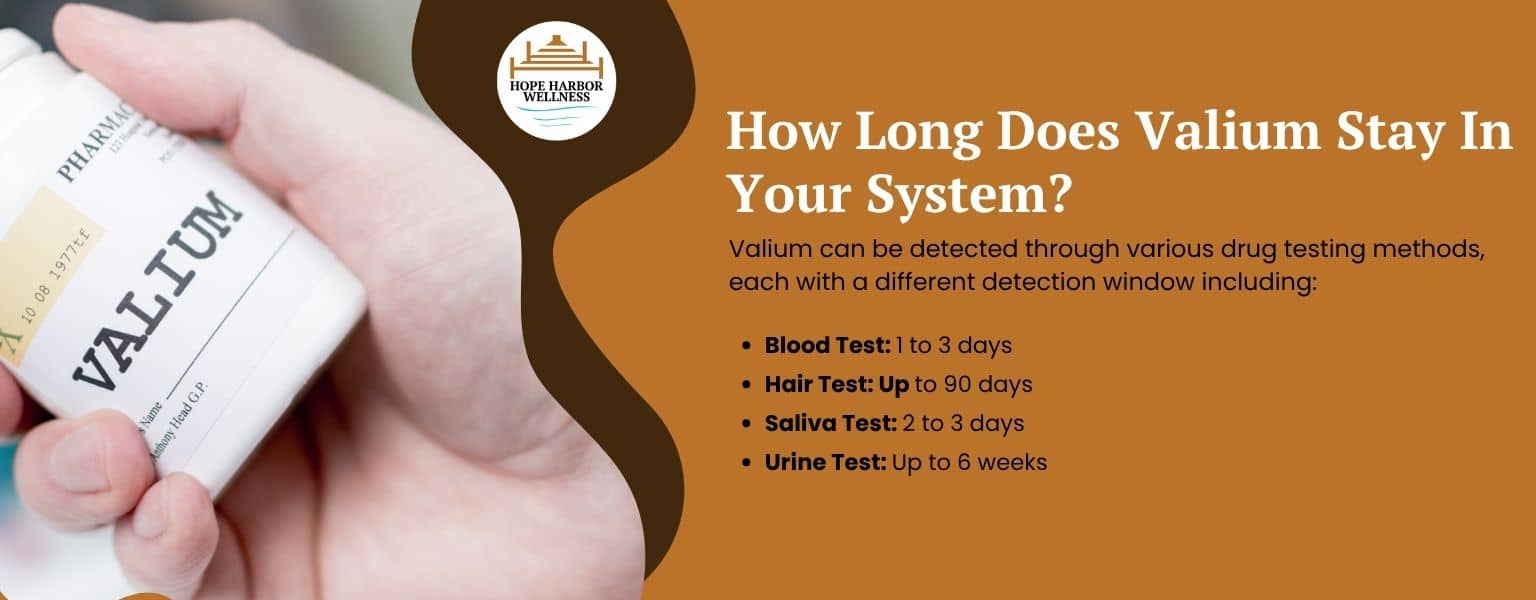
When considering how long Valium stays in your system, it’s essential to understand the different drug testing methodologies and their respective detection windows. These tests are designed to identify the presence of Valium and its metabolites, which are the byproducts created when the body processes the drug.
Urine Tests: A Common Detection Method
Urine drug tests are the most frequently used method for detecting Valium. They are favored for their non-invasive nature, cost-effectiveness, and relatively long detection window. So, how long does Valium stay in your urine? Valium, particularly its long-lasting metabolites, can typically be detected in urine for an extended period:
- Detection Window: Up to 6 weeks after the last use, though this can vary based on individual factors and the frequency/duration of use.
These tests involve providing a urine sample in a designated container, sometimes under supervision to ensure integrity. While various products claim to help individuals “pass” urine tests, their reliability is often questionable, and relying on them can have severe consequences. The most reliable way to ensure a negative test result is to abstain from Valium.
Hair Follicle Tests: Long-Term Detection
Hair tests are less common but offer a significantly longer detection window than urine tests. This method can provide a historical overview of drug use.
- Detection Window: Up to 90 days after the last use.
For a hair test, a small sample of hair, usually about 1.5 inches long, is collected close to the scalp, often from the back of the head. The drug and its metabolites become incorporated into the hair shaft as it grows, allowing for long-term detection.
Blood Tests: Recent Use Indicator
Blood tests are generally used to detect very recent Valium use, as the drug is metabolized and eliminated from the bloodstream relatively quickly.
- Detection Window: Up to a few days (typically 1-3 days) after the last dose.
While not as common for routine drug screenings due to their shorter detection window and invasive nature, blood tests are valuable in emergency situations or legal contexts where recent intoxication needs to be confirmed.
Saliva Tests: Convenient and Non-Invasive
Saliva tests are gaining popularity for their convenience and non-invasiveness, often used in roadside drug testing or some workplace screenings.
- Detection Window: Up to 2-3 days after the last dose.
Valium can be detected in oral fluid as it passes from the bloodstream into the saliva.

Factors Influencing How Long Valium Stays in Your System
The question of how long does Valium stay in your system doesn’t have a single, universal answer. Several individual and physiological factors can significantly influence the detection window.
- Dosage and Frequency of Use: Higher doses and more frequent or prolonged use of Valium lead to greater accumulation in the body, extending its detection time. Chronic, heavy use means the body has more of the drug to process and eliminate, thereby answering how long does valium last in your system for regular users.
- Individual Metabolism: A person’s metabolic rate is a crucial determinant. Individuals with faster metabolisms tend to process and eliminate Valium more quickly, resulting in a shorter detection window. Conversely, those with slower metabolic rates may find the drug detectable for extended periods. This directly impacts how long is valium in your system.
- Age: Generally, older adults often exhibit a slower metabolism and reduced organ function, which can cause Valium to remain in their system for longer durations compared to younger individuals.
- Body Composition and Hydration Levels: Factors like body fat percentage (Valium is fat-soluble and can accumulate in fatty tissues), overall body mass, and hydration can all influence how quickly Valium is metabolized and excreted. While staying hydrated is vital for health, it is not a reliable method to quickly “flush” the system for a drug test.
- Liver and Kidney Function: Since Valium is primarily metabolized by the liver and eliminated by the kidneys, any impairment in the function of these vital organs can significantly slow down the elimination process, thereby extending the detection window. Individuals with pre-existing liver or kidney conditions will typically retain the drug for longer.
- Polydrug Use: The presence of other substances in the body can also impact the rate at which Valium is metabolized. Some drugs may slow down metabolism, leading to longer detection times, while others might accelerate it. The interactions can be unpredictable and, in many cases, extremely dangerous.
The Science Behind Valium’s Persistence: Metabolism and Elimination
To fully understand how long Valium stays in your system, it’s helpful to delve into how the body processes and eliminates this medication. Valium (diazepam) is primarily metabolized in the liver into several active metabolites, which also contribute to its effects and prolonged presence in the body.
The main active metabolites of diazepam include:
- Desmethyldiazepam (nordiazepam): This is the major active metabolite and has a very long half-life, ranging from 30 to 100 hours. This metabolite is largely responsible for Valium’s extended duration of action and detection time, explaining how long valium in system is.
- Temazepam: Another active metabolite with a half-life of 10-20 hours.
- Oxazepam: An active metabolite with a half-life of 5-15 hours.
These metabolites are further processed (conjugated) in the liver into inactive compounds, which are then primarily excreted through the kidneys in the urine. Because of desmethyldiazepam’s exceptionally long half-life, Valium’s effects can persist for days, and its presence can be detected for much longer, which answers how long does one Valium stay in your system when considering the lingering metabolites. The collective elimination time of Valium and its metabolites is why it can be detected for weeks in urine and months in hair.
More About Drug Tests and Detection
Understanding how long Valium stays in your system is only one piece of the picture. If you’d like a deeper breakdown of how urine, blood, saliva, and hair tests actually work, you can read our guide on how drug tests work. For a broader overview of different substances and timelines, visit how long drugs stay in your system.
Recognizing Valium Addiction and Its Consequences
Valium, while medically useful, carries a high risk of dependence and addiction. Understanding the signs of problematic use is crucial for seeking timely help.
Signs of Valium abuse or addiction include:
- Taking the drug more often or in higher doses than prescribed.
- Using it for non-medical reasons, such as to achieve euphoria or escape problems.
- Continuing to use Valium despite experiencing negative consequences in your life.
- Developing a tolerance, meaning you need more of the drug to achieve the same effect.
- Experiencing withdrawal symptoms when attempting to reduce or stop use.
- Spending a significant amount of time obtaining, using, or recovering from Valium.
- Neglecting responsibilities at work, school, or home due to Valium use.
- Craving Valium and feeling unable to control its use.
The negative consequences of Valium addiction can be far-reaching:
- Job Loss and Career Impact: Failing a drug test for Valium can lead to immediate job loss. Furthermore, a history of drug-related termination can make it significantly more challenging to secure future employment.
- Financial Problems: Valium, especially when obtained without a prescription, can be expensive. Compulsive use often leads to increasing expenditures, resulting in mounting debt, inability to pay bills, and overall financial instability.
- Relationship Strain: Addiction can erode trust and strain relationships with family and friends. Arguments, secretive behavior, and emotional distance are common as the drug becomes the primary focus.
- Health Problems: Chronic Valium misuse can lead to various health issues, including impaired cognitive function, liver damage (especially when combined with alcohol), respiratory depression, and an increased risk of accidents due due to impaired coordination and judgment.
- Legal Issues: Obtaining Valium illegally or using it in a manner inconsistent with a prescription can lead to legal penalties, including arrests, fines, and incarceration.
The Dangers of Valium Withdrawal
If you have developed a physical dependence on Valium and suddenly stop taking it, you are likely to experience withdrawal symptoms. Unlike some other substances, Valium withdrawal can be severe and potentially fatal, largely due to the risk of seizures. This is why attempting to detox from Valium without medical supervision is strongly discouraged.
Valium withdrawal symptoms can include:
- Severe anxiety and panic attacks
- Insomnia and nightmares
- Restlessness and agitation
- Muscle spasms, tremors, and twitching
- Nausea and vomiting
- Headaches
- Heart palpitations
- Sweating
- Hallucinations (visual, auditory, tactile)
- Delirium
- Seizures (potentially life-threatening)
The severity and duration of these symptoms depend on factors such as the dosage, duration of Valium use, and individual physiology. Medical supervision during withdrawal is critical to manage these symptoms safely, prevent complications, and enhance comfort through a carefully managed tapering schedule.
The Perilous Combination: Valium and Other Substances
Combining Valium with other substances, whether prescription medications, over-the-counter drugs, alcohol, or illicit substances, is extremely dangerous and can have severe, even fatal, consequences. Valium itself is a powerful central nervous system (CNS) depressant; when mixed with other substances that also depress the CNS, the effects are amplified and become highly unpredictable.
Valium and Alcohol:
This is one of the most hazardous combinations. Both Valium and alcohol depress the CNS, leading to a synergistic effect.
- Severe Respiratory Depression: The most critical danger is the profound slowing or complete cessation of breathing, which can lead to coma, permanent brain damage, or death.
- Profound Sedation: Extreme drowsiness, impaired consciousness, and loss of coordination are significantly heightened, increasing the risk of accidents and injuries.
- Liver Strain: While Valium is primarily processed by the liver, combining it with alcohol places immense additional stress on this vital organ, potentially leading to damage.
Valium and Other Opioids:
Mixing Valium with opioids (such as oxycodone, heroin, fentanyl, or prescription painkillers like hydrocodone) is particularly deadly. Both classes of drugs are potent CNS depressants.
- Extreme Overdose Risk: This combination significantly increases the risk of fatal overdose due to severe respiratory depression. The Centers for Disease Control and Prevention (CDC) warns against co-prescribing opioids and benzodiazepines due to this elevated risk.
- Enhanced Sedation and Impairment: The combined effects lead to extreme drowsiness, confusion, and impaired motor skills, making daily activities hazardous.
Valium and Other CNS Depressants (Barbiturates, Sedatives):
Combining Valium with other CNS depressants, even those prescribed for similar conditions, dramatically increases the risk of overdose. These include barbiturates (e.g., phenobarbital) or other sedative-hypnotics. The cumulative sedative effects can be overwhelming.
Valium and Stimulants (Cocaine, Amphetamines):
While seemingly contradictory, mixing Valium with stimulants is also dangerous.
- Cardiovascular Stress: The conflicting effects place immense strain on the heart and cardiovascular system, increasing the risk of heart attack or stroke.
- Masking Overdose Symptoms: Stimulants can mask the initial sedative effects of Valium, leading individuals to take higher doses of Valium than their body can handle. Once the stimulant wears off, the full, dangerous depressant effects of Valium can manifest suddenly and severely.
- Increased Seizure Risk: After a stimulant “crash,” there’s an increased risk of seizure, which can be further complicated by benzodiazepine dependence.
Valium and Antidepressants:
Certain antidepressants, especially those affecting serotonin levels (like SSRIs or SNRIs), can have dangerous interactions with Valium. While not as acutely life-threatening as opioid or alcohol combinations, they can still lead to excessive sedation, impaired cognition, or in rare cases, serotonin syndrome.
Due to these severe risks, it is imperative to inform your healthcare provider about all medications, supplements, and substances you are using if you are prescribed Valium. Never combine Valium with alcohol or other drugs without explicit medical advice. If you or someone you know is combining Valium with other substances, seeking immediate professional help is crucial.
Valium for Mental Health Disorders
Valium is a valuable medication when used as prescribed for specific mental health conditions. As a benzodiazepine, it works by enhancing the effects of GABA, leading to a calming effect that can alleviate acute symptoms of anxiety and panic disorders. It is also sometimes used to manage symptoms of alcohol withdrawal, control certain seizure disorders, reduce muscle spasms, and act as a sedative before medical procedures.
When used appropriately and for short durations, Valium can be highly effective in providing short-term relief from debilitating symptoms. However, due to its addictive potential and side effects like drowsiness, dizziness, and confusion, it is crucial to use it strictly as prescribed by a doctor and for the shortest duration necessary. If you are considering Valium for your mental health, a thorough discussion with your doctor is essential to determine if it is the right medication for your specific needs, considering alternatives and potential risks.
Understanding Central Nervous System Depressants
A central nervous system (CNS) depressant is a drug that slows down the activity of the brain and nervous system. This slowing effect can lead to various physiological responses, including drowsiness, reduced anxiety, muscle relaxation, slowed breathing, and impaired motor function. Common examples of CNS depressants include alcohol, barbiturates, benzodiazepines (like Valium), and opioids.
The primary danger of combining Valium with other CNS depressants lies in the amplification of these effects. The combined action can lead to dangerous levels of respiratory depression, where breathing becomes dangerously slow or stops entirely. It also severely impairs motor function, judgment, and coordination, drastically increasing the risk of accidents, falls, and injuries. In severe cases, the cumulative depressant effects can lead to coma or death. Understanding the nature of CNS depressants underscores why polysubstance use involving Valium is so acutely hazardous.

Seeking Help for Valium Addiction at Hope Harbor Wellness
Now that you have a clearer understanding of how long Valium stays in your system and the significant risks associated with its misuse and dependence, it’s time to consider a healthier path forward. Valium addiction is a serious condition that requires professional intervention. If you are struggling with Valium dependence, help is available, and recovery is possible.
At Hope Harbor Wellness in Atlanta, GA, we specialize in providing compassionate and comprehensive outpatient addiction treatment for individuals navigating benzodiazepine dependence. We recognize the unique challenges associated with Valium withdrawal and addiction, and our dedicated team is committed to guiding you through every stage of your recovery journey safely and effectively.
Our outpatient programs are designed to integrate seamlessly into your life, allowing you to maintain your daily responsibilities while receiving high-quality care. We offer a medically supported detox process, ensuring that any withdrawal symptoms are managed safely and comfortably under the supervision of experienced medical professionals. This minimizes risks and maximizes your comfort during a critical phase of recovery.
Our evidence-based therapeutic approaches include:
- Cognitive Behavioral Therapy (CBT): To help identify and change negative thought patterns and behaviors contributing to Valium use.
- Dialectical Behavior Therapy (DBT): To develop skills in emotional regulation, distress tolerance, and interpersonal effectiveness.
- Motivational Interviewing (MI): To strengthen your motivation for lasting change and commit to sobriety.
- Medication-Assisted Treatment (MAT): While MAT is more commonly associated with opioid use disorder, certain medications may be considered to help manage specific symptoms or co-occurring conditions during Valium recovery, always under strict medical guidance.
Beyond therapy, we focus on holistic support and life skills development, empowering you with strategies for stress management, relapse prevention, and building a fulfilling life in recovery. Our dedicated team also works with you on comprehensive aftercare planning, connecting you to ongoing support systems and resources to sustain your sobriety long-term.
If you are wondering how long can Valium be detected in urine or are simply ready to break free from the grip of Valium addiction, please do not hesitate to reach out. Contact Hope Harbor Wellness at 770-573-9546 or fill out our online contact form today to learn more about our specialized outpatient treatment services in Atlanta, GA, and take the crucial first step toward a healthier, Valium-free life.
Frequently Asked Questions (FAQs) About Valium and Addiction Treatment
How long does Valium stay in your urine for a drug test?
Valium, particularly its long-lasting metabolites, can typically be detected in a urine drug test for up to 6 weeks after the last use. This timeframe can vary depending on factors like dosage, frequency of use, and individual metabolism.
What is Valium and what is its primary use?
Valium (diazepam) is a benzodiazepine, a type of central nervous system depressant. It is primarily prescribed to treat anxiety disorders, panic attacks, insomnia, muscle spasms, and seizure disorders by calming brain activity.
Is Valium addictive, and what are the signs of dependence?
Yes, Valium carries a high potential for dependence and addiction, especially with prolonged or unprescribed use. Signs include taking more than prescribed, using it for non-medical reasons, continuing use despite negative consequences, developing tolerance, experiencing withdrawal symptoms when not using, strong cravings, and neglecting responsibilities.
What are the dangers of suddenly stopping Valium if you are dependent?
Abruptly stopping Valium after developing physical dependence can be very dangerous and potentially fatal. Withdrawal symptoms can include severe anxiety, insomnia, muscle spasms, hallucinations, delirium, and, most critically, life-threatening seizures. Medical supervision is essential for safe detox.
How long does Valium stay in your system in hair follicle tests?
Hair follicle tests have the longest detection window for Valium. It can typically be detected in hair for up to 90 days or more after the last use, providing a longer historical record of drug consumption compared to other test types.
Can combining Valium with alcohol or other drugs be fatal?
Yes, combining Valium with alcohol or other central nervous system depressants (like opioids, other benzodiazepines, or barbiturates) is extremely dangerous and can be fatal. This combination significantly increases the risk of severe respiratory depression (breathing slowing or stopping), profound sedation, coma, and overdose.
What does “outpatient addiction treatment” mean for Valium dependence?
Outpatient addiction treatment means you receive comprehensive therapy and medical support for Valium dependence while continuing to live at home. This allows you to maintain work, family, or educational commitments while undergoing treatment, which often includes medically supervised detox, individual and group therapy, and relapse prevention strategies.
What factors influence how long Valium stays in your system besides the type of drug test?
Several factors influence detection times, including the dosage and frequency of Valium use (higher doses and more frequent use lead to longer detection), individual metabolism, age, body composition, hydration levels, and the health and function of your liver and kidneys.
What is a “half-life” in relation to Valium?
The half-life of a drug refers to the time it takes for half of the substance to be eliminated from your body. Valium has a relatively long half-life, ranging from 20-40 hours for the parent drug, but its active metabolites, particularly desmethyldiazepam, have even longer half-lives (up to 100 hours), contributing to its prolonged presence and effects in the system.
Why is it important to seek professional help for Valium addiction?
Professional help is crucial for Valium addiction due to the severe and potentially life-threatening nature of its withdrawal symptoms, especially seizures. An addiction treatment center like Hope Harbor Wellness provides a medically supervised detox, therapeutic support, and a structured recovery program to ensure safety, manage symptoms, address underlying issues, and help build a foundation for long-term sobriety.