
Clonazepam, sold under the brand name Klonopin, is a benzodiazepine known for its long-lasting effects in the body. In many situations, this drug can remain active for six to nine days. If you’re taking clonazepam for panic, anxiety, or seizure disorders, you might wonder, “How long does Klonopin stay in your system?” Understanding this timeline matters if you’re worried about drug tests, withdrawal, or possible side effects.
Below, we’ll discuss the typical timeframe for how long clonazepam stays in your system, including how it’s detected in different types of tests. We’ll also cover breastfeeding concerns, factors that affect elimination, and what to do if you’re misusing Klonopin. If you or a loved one is dealing with substance abuse or mental health issues, learning about clonazepam can offer a clearer path to help and recovery.
Remember that everyone processes medications differently. While it’s often said Klonopin can stay in your body for up to six to nine days, your exact timeframe may differ based on your health, metabolism, and how often you take the medication. Always talk to a doctor if you have concerns about clonazepam or any other prescription.
How Long Does Clonazepam Stay in Your System?
When you take clonazepam (Klonopin), your body breaks it down into substances called metabolites. Drug tests often search for these metabolites rather than the drug itself. However, standard tests are typically designed to detect a wide range of benzodiazepine byproducts, which might not always catch Klonopin’s unique markers.
You might wonder, “How long does a Klonopin stay in your system?” or “Klonopin how long does it stay in your system?” Generally, detection windows range from a few days to over a month, depending on your biology, how much you took, and the type of test used. Because Klonopin’s metabolites differ slightly from other benzodiazepines, false negatives can happen more often than you might expect. If you’re worried about a drug test, be sure to mention any valid prescriptions to the testing agency.
Clonazepam is typically prescribed to help manage panic or anxiety disorders, as well as certain seizure conditions. Despite its benefits, it carries risks if misused. This is why it’s crucial to know how long does klonopin last in your system, especially if you’re considering stopping or if you have a drug test coming up. Stopping clonazepam suddenly can lead to withdrawal, and continuing it longer than prescribed can cause dependence. Either scenario can have serious health consequences.
How Long Does Klonopin Stay in Your Urine?
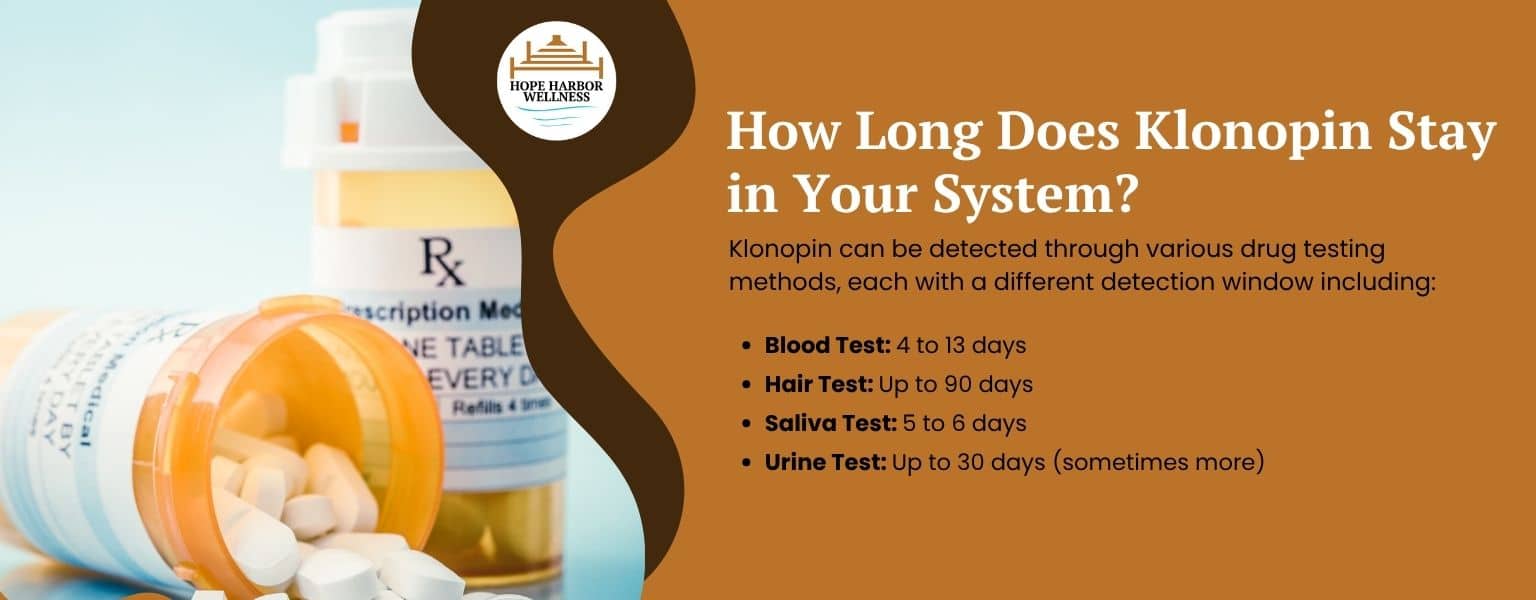
Many people use urine tests to detect benzodiazepines, and results can vary. Although short-acting benzos might only show up for about a day, longer-acting ones, including some forms of clonazepam, could be detectable for up to 30 days in certain cases. However, because standard tests often miss Klonopin’s unique metabolite (7-aminoclonazepam), the detection timeframe might be shorter.
If you’re asking, “Klonopin how long does it stay in your system for a urine test?” the answer might fall between 1 and 30 days. Some people could get a false negative if their bodies eliminate the drug quickly or if the test isn’t looking for the right metabolite. Because of these variables, the window for detection can swing widely.
Though 30 days is a general rule for many benzodiazepines, clonazepam is sometimes overlooked by common test panels. So, it’s possible a heavy user might test positive for a longer period, while someone who takes small or infrequent doses might clear it faster.
How Long Does Klonopin Stay in Your Blood?
Blood tests can show whether Klonopin is still circulating in your system, but these tests measure a narrower detection window. Most doctors say clonazepam remains detectable in blood anywhere from 4 to 13 days. This depends on your metabolism, liver function, and how much or how often you use the medication.
Because blood testing zeroes in on active drug levels, it’s often used in clinical settings where medical professionals need to know if the medication is currently affecting you. If your goal is to see if clonazepam is behind certain side effects or to check for misuse, blood tests can be effective during that 4- to 13-day window.
How Long Does Klonopin Stay in Your Saliva?
Saliva testing for benzodiazepines is less common than urine or blood tests. However, you can still ask, “How long does clonazepam stay in your system if tested via saliva?” Typically, these tests pick up the drug for about 5 to 6 days. While it’s possible to detect Klonopin in saliva, many labs don’t routinely offer this option unless there’s a specific request.
If you face a saliva test, know that the detection window is shorter than with urine or hair testing. This can be useful if someone wants to check recent, rather than long-term, usage. But again, because clonazepam metabolites are unique, the test must be designed specifically to find them.
How Long Does Klonopin Stay in Your Hair?
Hair testing offers a broader detection window. By analyzing hair strands, labs can identify past usage over roughly 90 days. Because hair grows at a predictable pace—about half an inch each month—labs can slice a segment (typically 1.5 inches long) to see drug use dating back three months.
This method is valuable for spotting extended or repeated clonazepam misuse. If you’re wondering, “How long does klonopin last in your system so that it shows up in hair?” the answer points to several months. Still, hair tests are usually more expensive and less common than urine tests. They’re often reserved for legal or forensic contexts where a thorough history of drug use is relevant.
Klonopin and Breastfeeding
Some new parents worry about the effect of clonazepam on breastfed infants. Studies suggest that only about 2.5% of the mother’s dose transfers through breastmilk. Another study showed that in 10 out of 11 breastfed babies, clonazepam was not detectable in their systems, even if the mother was taking Klonopin.
Despite these seemingly mild levels, clonazepam’s lengthy half-life means it can remain in breastmilk for one or two weeks after a dose. Traces have been found in infants several days later. If you’re breastfeeding or planning to be, talk to a doctor. They can assess your specific situation, weigh potential risks, and help you make the safest decision for you and your baby.
Klonopin’s Long Half-Life
A crucial factor in figuring out, “How long does klonopin last?” or “clonazepam half life,” is understanding the elimination process. A drug’s half-life tells you how long it takes for half of a single dose to exit your body. With clonazepam, the half-life sits around 30 to 40 hours, meaning it can take a day or two for 50% of the drug to clear.
Pharmacologists often talk about 5 half-lives as the time frame for a substance to be almost entirely gone. For Klonopin, that translates to about six to nine days before it’s mostly out of your system. Some people might metabolize it faster, others slower, but six to nine days is a common estimate. Knowing this helps you anticipate withdrawal timing or gauge how long potential side effects may last.
Factors That Influence How Long Klonopin Stays in Your System
While six to nine days is typical, various factors affect how long does clonazepam stay in your system:
- Age: Metabolism slows as we get older, potentially extending detection times.
- Liver Function: Since the liver breaks down clonazepam, any liver issues could slow this process.
- Dosage: Higher doses can linger longer.
- Frequency of Use: Regular users often build up more drug in their systems.
- Duration of Use: Taking Klonopin for months or years can lead to accumulation in tissues.
- Other Medications: Drug interactions can alter how your body processes benzodiazepines.
These details mean that if two people take the same dose, one might eliminate it more quickly. Always consider your unique medical background and lifestyle. That’s why a doctor might need to adjust your dose if you have health conditions or if you’re combining Klonopin with other prescriptions.
Will Klonopin Misuse Show on a Drug Test?
Yes. Like other benzodiazepines, Klonopin is usually detectable on a standard drug test. But because clonazepam has special metabolites, routine tests sometimes yield false negatives. If you’re taking Klonopin under a valid prescription, let the testing center know to avoid misunderstandings.
If you misuse Klonopin or take it in ways not approved by a doctor, it could still appear on a test if the lab checks for the correct metabolites. People with concerns about job-related drug screenings or legal issues should be upfront with their healthcare provider to get the right medical guidance.
How Long Does Klonopin Take to Peak?
Klonopin is not fast-acting. After an oral dose, its effects usually become noticeable within one to four hours. This slower onset is why doctors might prescribe different benzodiazepines, like Xanax or Ativan, for immediate relief of panic attacks. Those meds can kick in within minutes, while Klonopin’s delayed start makes it more suitable for longer-term anxiety or seizure management.
But how long does klonopin last in your system once it peaks? Although it peaks in one to four hours, the overall effects can last much longer due to its extended half-life. You might feel calmer for a full day or even longer, depending on how your body responds. This prolonged effect can be helpful for steady symptom control, but it also increases the risk of accumulation if you’re not following medical guidance.
Klonopin Withdrawal Risks
Withdrawal from Klonopin can be dangerous, especially if you’ve been using it regularly and then stop cold turkey. Since clonazepam heightens the calming effects of GABA in the brain, quitting suddenly can jolt your central nervous system into overdrive.
Potential problems include:
- Seizures
- Hallucinations
- Tremors
- Stomach or muscle cramps
- Anxiety spikes
Even though many people ask how long does klonopin last or how long does a klonopin stay in your system, the bigger issue might be how your body reacts once it’s gone. If you suspect you’ve become dependent, seek professional help. A structured taper or medical supervision can make withdrawal safer. In an outpatient drug rehab setting, you might find medication-assisted treatment or counseling that helps you manage cravings and symptoms while you slowly wean off the drug.
Klonopin Overdose
Overdosing on clonazepam can happen if you exceed the recommended dose or take it too often.
Certain factors raise the risk of overdose:
- Mixing with other drugs, especially opioids or alcohol
- Underlying mental health issues
- Using more than prescribed or crushing pills to intensify effects
Signs of an overdose can include:
- Excessive drowsiness or confusion
- Coma
- Weak or delayed reflexes
- Profound dizziness or fainting
Call 911 if you suspect an overdose. Even if the symptoms seem mild, it’s better to be safe. Overdoses can worsen quickly, particularly if you’ve combined clonazepam with other substances that depress the central nervous system.
How Do You Detox From Klonopin?
Clonazepam is classified as a Schedule IV controlled substance, meaning it has moderate potential for misuse and dependence. The National Alliance on Mental Illness (NAMI) notes that physical dependence can develop in as little as two weeks of daily use. Even people who follow their doctor’s instructions precisely might become physically dependent over time.
If you’ve been abusing Klonopin, a medical detox can ensure safer withdrawal. NAMI recommends never stopping suddenly without talking to your doctor. Tapering your dose is typically the safer route. Some doctors reduce it by 0.125 mg every three days, though your schedule might differ depending on factors like your current dose, health status, and reaction to the taper.
Klonopin withdrawal symptoms can include:
- Anxiety and irritability
- Insomnia and vivid dreams
- Sweating, nausea, or vomiting
- Blood pressure or heart rate changes
- Possible hallucinations
- Tremors or seizures
You might not notice withdrawal for more than a week, but symptoms could peak during the second week and slowly decline by the third or fourth. A detox program offers medical support if complications arise. If you’ve been using multiple substances, professionals can address all dependencies at once. They can also help with relapse prevention and mental health issues that might have led to drug abuse in the first place.
How Easy Is It to Become Addicted to Klonopin?
Benzodiazepines can be addictive, though perhaps not at the same level as opioids, cocaine, or methamphetamine. Still, it’s possible to develop a severe Klonopin dependency, especially if you misuse it. Some people mix benzodiazepines with other drugs to intensify a high or ease withdrawal from a different substance. This kind of polydrug use can compound the risk of addiction.
Signs of a Klonopin addiction include:
- Needing higher doses to feel the same effects
- Trying to quit but failing repeatedly
- Spending too much time or money obtaining the drug
- Neglecting responsibilities
- Craving the medication when you don’t have it
If you think you might be addicted, consider a professional evaluation. Treatment often starts with detox, followed by a rehab program. Options include inpatient rehab or outpatient drug rehab, where you attend sessions part-time. At Hope Harbor Wellness we offer one-on-one and group therapy, skill-building workshops, and support for any co-occurring disorders. A personalized plan can help you address addiction at its source and learn healthy coping strategies.

More About Drug Tests and Detection
Understanding how long Klonopin stays in your system is only one piece of the picture. If you’d like a deeper breakdown of how urine, blood, saliva, and hair tests actually work, you can read our guide on how drug tests work. For a broader overview of different substances and timelines, visit how long drugs stay in your system.
Getting Treatment for Klonopin Addiction in Atlanta, GA
Admitting you have a Klonopin problem is a brave first step. Dependence can creep up, especially if you initially started taking it for legitimate medical reasons like anxiety or seizures. Once you’re ready to seek help, addiction treatment programs can guide you through detox, therapy, and ongoing recovery.
These programs typically offer:
- Medically supervised detox: Helps you taper off Klonopin safely, avoiding severe withdrawal risks.
- Counseling and therapy: Teaches coping methods for stress, anxiety, or depression without relying on drugs.
- Medication management: May involve other meds that support mood or control withdrawal.
- Group therapy and peer support: Connects you with others who’ve faced similar challenges.
- Aftercare planning: Outlines steps to prevent relapse, such as support groups or continued outpatient care.
Recovery is a gradual process. Many people benefit from a continuum of care, starting with structured detox, then stepping down to partial hospitalization or outpatient services. If your mental health or living situation is unstable, you might need more intensive support. Stay open to guidance from doctors, counselors, and peers in recovery. They can help you navigate challenges and celebrate small victories along the way.
If you’ve been struggling with Klonopin addiction in Atlanta, or you’re worried about how long does klonopin last in your system, now is the time to seek help. Remember, addiction isn’t a moral failing; it’s a treatable condition. By contacting Hope Harbor Wellness at 770-573-9546 or via online form our outpatient drug rehab can help you access the guidance and tools needed to break free. Your future can be brighter and healthier, starting with one phone call or online inquiry to see what recovery options work best for you.
How Long Does Klonopin Stay in Your System Frequently Asked Questions
Below are six frequently asked questions that cover essential points about Klonopin, including its half-life, detection windows, withdrawal, and more:
How Long Does Klonopin Stay in Your System for Most People?
Typically, clonazepam remains in the body for about six to nine days. This timeline is tied to its half-life of 30 to 40 hours. After about five half-lives, most of the drug is gone.
Why do Standard Tests Sometimes Miss Klonopin?
Klonopin has unique metabolites not always targeted by generic benzodiazepine tests. This can lead to false negatives. Specialized tests can detect clonazepam more accurately.
Is it Safe to Breastfeed While Taking Klonopin?
Only small amounts of Klonopin pass into breastmilk, and many infants don’t test positive for it. However, it can linger due to the long half-life. Always talk to a doctor to see if breastfeeding is advisable in your situation.
What are the Main Risks of Stopping Klonopin Suddenly?
Abrupt withdrawal can cause severe symptoms like seizures, hallucinations, and intense anxiety. A medical detox or taper plan is usually recommended to reduce risks.
Can you Overdose on Klonopin Alone?
Yes. Taking more than prescribed or mixing it with other substances like opioids or alcohol can lead to overdose. Symptoms include extreme drowsiness, confusion, and even coma.
What Kind of Treatment is Available if I Become Addicted?
Treatment can range from outpatient drug rehab to inpatient programs, depending on your needs. Many include detox, medication management, therapy, and aftercare planning to help you achieve lasting recovery.