

How Does Your Body Process THC?
When you consume marijuana, THC either enters your body through inhalation or digestion. Once there, it travels through your blood to organs and tissues, including your brain and heart. It also goes into fat cells, where it can stay for some time. The liver breaks a portion of THC down into two compounds—11-hydroxy-THC and carboxy-THC—often called “metabolites.” After the liver does its job, about 65% of these byproducts leave through feces, while roughly 20% exit through urine. The remaining THC stays in your body.
Over time, stored THC drifts from your fatty tissues back into your bloodstream, where the liver breaks it down again. In someone who smokes or consumes weed regularly, THC can gather in fatty tissues faster than your body can clear it. Because of that, you could test positive for marijuana long after your last use—sometimes days or even weeks.
How Long Is Marijuana in Your System?
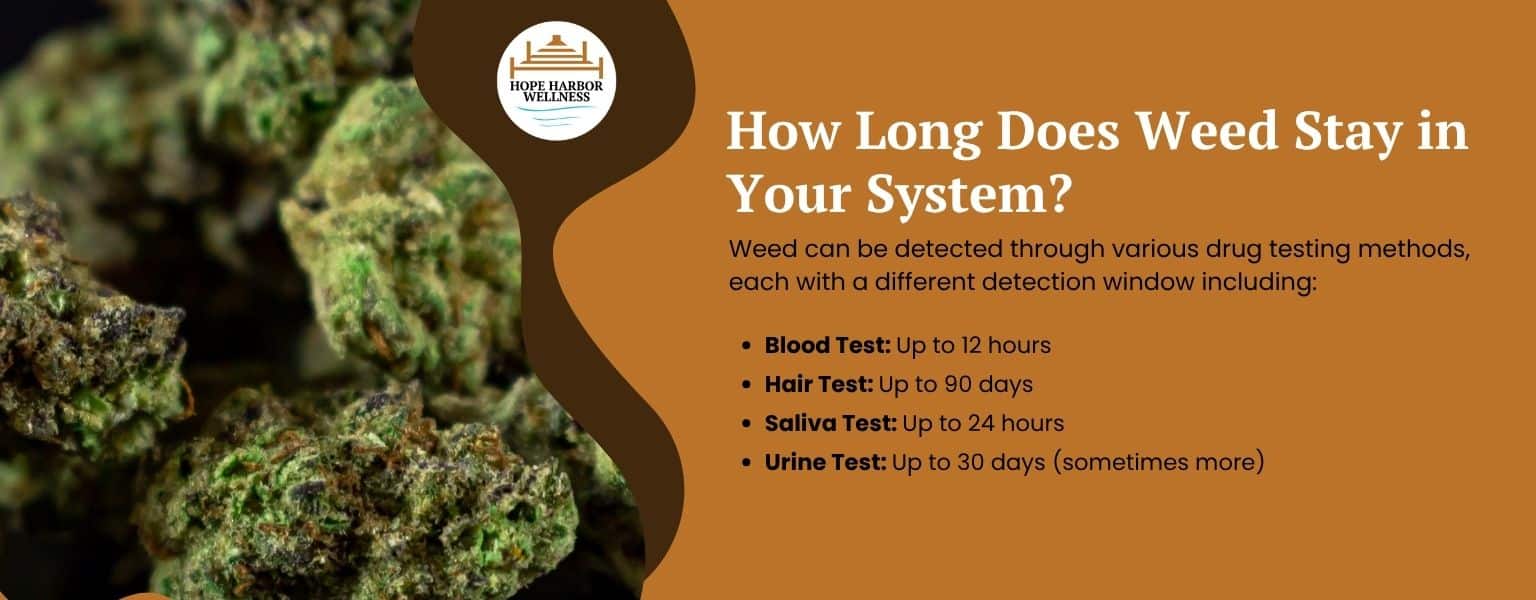
One big question for many people is: “How long does weed stay in your system after quitting?” The answer isn’t so simple. THC has a long half-life, meaning it takes a good chunk of time for the amount of THC in your body to drop by 50%. According to one study, the half-life for infrequent users was around 1.3 days. For more frequent users, it could range between 5 and 13 days.
Because THC lingers in the body, you can test positive for it even if you’re not actively feeling high. The exact detection window depends on a bunch of factors, like how often you use weed, how much you use, your metabolism, and the type of test. Some tests show THC for a few days; others might catch it for over a month.
Here’s a quick look at common testing methods:
- Blood: Up to 12 hours
- Hair: Up to 90 days
- Saliva: Up to 24 hours
- Urine: Up to 30 days (sometimes more)
As you see, each method has a different timeframe, partly because THC shows up in body fluids and tissues for different lengths of time. Understanding these windows can matter if you’re dealing with workplace drug testing or trying to gauge how long it takes to clear your system.
Saliva Test
Saliva testing is a quick and painless way to check for recent weed use. A small sponge or pad is used to collect saliva from the inside of your cheek or tongue. Studies suggest THC can stick around in your mouth, which raises THC levels for a few hours after you use weed.
If you use weed occasionally, a saliva test will likely show it for up to about 24 hours. Heavy users might test positive a little longer. Because saliva tests mainly pick up recent use, they’re not as common for routine screenings. But you might see them at roadside stops where officers want to find out if a driver is currently under the influence.
Urine Test
Urine testing is one of the most popular ways to detect THC. That’s because weed’s byproducts remain in urine longer than in blood or saliva. With occasional use, weed might show up in urine for just a few days. For heavy users, it can be there for weeks or more.
Urine tests measure THC metabolites rather than the THC itself. These metabolites stick around as your body breaks down cannabis over time. The more often you use marijuana, the more these metabolites build up, extending how long they’ll appear in a test.
Hair Test
Hair testing offers the longest detection window. THC can show up in hair for up to 90 days—sometimes even longer. Each half-inch of hair can indicate about one month of drug use, though it generally takes a week or two for new hair to contain detectable THC.
However, hair tests might not be as reliable for casual users. Research shows hair tests often miss light cannabis use. They’re more accurate for daily or near-daily consumption. This method is used in some legal or workplace scenarios, especially if an employer or authority wants a more extensive drug history.
Blood Test
Weed doesn’t linger in your bloodstream for long. Your THC blood levels typically drop a few hours after you use marijuana, which makes blood tests less common except in specific cases—like car accidents or roadside checkpoints. In those instances, police might do a blood draw to figure out if you recently smoked or ate weed. People who heavily or frequently use cannabis might still test positive in blood for several days, but it’s generally not the norm.
How Long Is Weed in Your System After Quitting?
Many people ask, “How long does weed stay in your system after quitting?” but the answer depends on your situation. Maybe you’ve chosen to stop using cannabis and want to know how long traces of the drug remain in your body. Or perhaps you have a required drug test and need to find out when you’ll test negative after quitting. Either way, it’s worth understanding how weed moves through and lingers in different parts of the body.
How Long Does Weed Stay in Urine?
Because many people wonder, “How long does weed stay in system after quitting?” let’s talk specifically about urine testing. THC metabolites gather in urine for a decent stretch, reflecting past use rather than real-time intoxication. Some estimates suggest it could take one to four days for weed to become undetectable in urine for occasional users. Yet in certain cases, especially if you use weed daily or in high amounts, it could be traceable for weeks—some studies even mention up to 70 days for very heavy users.
This wide range can feel frustrating, especially if you’re anxious about a job test or legal situation. Things like your body mass index, general health, and metabolic rate all play a part. If you exercise a lot or have a fast metabolism, you might flush THC out more quickly, but there’s no guaranteed method to speed up the process significantly.
How Long Does Weed Stay in Your Blood?
Weed usually leaves your bloodstream fast. In typical cases, it might vanish within about 36 hours for occasional users. But heavy, chronic use might keep it around for a bit longer—some claim up to seven days. Still, blood testing is rarely the main choice for routine checks because THC levels drop so quickly. You’re more likely to face a blood test in scenarios like a car crash, where authorities suspect impairment right now.
How Long Does Weed Stay in Your Hair?
Hair tests look for the past three months of marijuana use, though detection can depend on hair length. If you have short hair, only a portion is available for testing. Also, hair testing doesn’t always show exactly how much cannabis someone used—just that they used it at some point during that window.
Because new hair takes a couple of weeks to grow above the scalp, first-time or recent weed consumption might not show in a hair test right away. Frequent use is more likely to appear. Even though hair tests are the most “invasive,” they’re widely used in some occupations or legal matters for a thorough drug-use history.
How Long Does Weed Stay in Your Saliva?
Marijuana is detectable in saliva for a relatively short time—often under two days. Because of that short window, a saliva test can reveal recent intoxication, but it doesn’t say how impaired you might be. Generally, you might test positive up to 34 hours after use. This is why saliva tests work best if you suspect someone is currently high, like right after they smoked.
How Long Does Weed Stay in Breastmilk?
If you’re breastfeeding, you might worry: “How long does THC stay in your body, and will it harm my baby?” Research suggests THC can remain in breastmilk for up to six days after using weed. Because THC can affect a newborn’s brain development and possibly lead to issues like hyperactivity or trouble focusing, many doctors strongly advise against using cannabis while breastfeeding. It’s best to talk to a healthcare provider if you have concerns about weed use and infant safety.
What Factors Impact How Long Weed Stays in Your System?
Numerous elements can change how long cannabis remains in your body.
Besides the test method, these factors can include:
- THC content: The potency of the marijuana you consume matters. Higher levels of THC can stay in your system longer.
- Method of use: Smoking or vaping sends THC into your bloodstream faster, while eating it makes it take longer to enter your system but may also linger differently.
- Frequency and dose: Daily or heavy use can build up THC in your fatty tissues. Occasional users usually clear it sooner.
- Personal metabolism: People with faster metabolic rates often eliminate THC faster. Others, especially if they carry more body fat, may retain THC longer.
- Health and genetics: Overall health, hydration, and inherited traits can affect how your body processes and gets rid of cannabinoids.
Some detox kits claim to help flush your system quickly. Unfortunately, no proven shortcuts exist to speed up THC metabolism. The best way to reduce THC in your body is to stop using weed, allow time to pass, and live a healthy lifestyle.
How Long Do the Effects of Cannabis Last?
Many also want to know, “How long does cannabis stay in your system in terms of feeling high?” According to some resources, if you smoke weed, you might start feeling it within 1 or 2 minutes. If you eat weed in an edible, it can take 45 minutes or more to kick in. You could notice changes in your mood, inhibitions, and senses—like a shift in sight or speech. You might also experience a dry mouth, an elevated heart rate, anxiety, or nausea.
Typically, the high lasts around 40 minutes to an hour, but it can go longer. The strength of the weed, how much you use, and your own tolerance all matter. Once the immediate effects wear off, you might feel some lingering impacts like tiredness or mild brain fog.
How Long Does It Take for the Effects of Cannabis To Wear Off?
Short-term effects from marijuana—like the feeling of being high—usually wind down after 1 to 3 hours, depending on potency and how much you consumed. You might remain groggy or have slower reflexes for a few extra hours. Edibles can extend this window because your body keeps digesting THC. If you’re a chronic user, though, weed can lead to ongoing health risks and addiction that may last for weeks, months, or even years, depending on the situation.
Will Weed Show Up on an Employment Drug Test?
Many employers use drug tests to maintain a drug-free workplace. Often, they begin with an immunoassay test (EMRIT or RIA), followed by a more precise gas chromatograph-mass spectrometer (GCMS) test if something is flagged. In older tests, some medications like ibuprofen could cause false positives for marijuana, but modern screenings have mostly removed that issue.
Even if weed is legal in your state, companies can still have zero-tolerance policies. This means you could lose your job if you fail a drug test. So, if you’re applying for a role that mandates drug testing or if your company performs random checks, it’s vital to know how your weed use might appear on those tests.

Detoxing From Weed
Contrary to some beliefs, marijuana can be addictive. If you keep using weed despite damage to your relationships, job, or health, you might have what professionals call a cannabis use disorder. About 30% of weed users could have at least some degree of marijuana use disorder, and starting young raises your risk significantly.
When you try to quit after heavy or long-term use, you might experience marijuana withdrawal. Symptoms can include irritability, trouble sleeping, cravings, and restlessness. These symptoms aren’t usually as severe as withdrawals from substances like opioids or alcohol, but they can still be uncomfortable enough to drive you back to using. This is why weed detox is very important in your sobriety journey.
Marijuana Detox Facilities in Atlanta
If you’re hoping to manage weed dependence, a medical detox might be a good first step. At a detox facility, you’ll have professional supervision while you let marijuana exit your system. Doctors and nurses can help ease withdrawal symptoms and ensure safety. Once detox is complete, you can enter a more comprehensive addiction treatment program, which might involve therapy, support groups, or medication-assisted treatment for any co-occurring disorders.
Marijuana Addiction Treatment Near You
Marijuana addiction is real and can cause big problems if it goes unaddressed. Hope Harbor Wellness and our sister companies, you’ll find several levels of care—from inpatient rehab to outpatient programs. Our centers use evidence-based treatments, meaning our strategies are backed by research on what helps people recover and stay drug-free.
If finances or insurance coverage worry you, admissions staff can talk you through your options. They can verify insurance benefits, explain self-pay possibilities, and generally guide you toward a plan that meets your needs. The road to living without weed can feel long, but with the right support, it’s very doable.
Begin Marijuana Addiction Treatment in Atlanta
Starting your journey away from marijuana can seem intimidating. But at Hope Harbor Wellness in Atlanta, we aim to make the process as positive and effective as possible. We know everyone’s marijuana experience is personal, so we look at factors like your frequency of use, mental health status, and if you use any other substances. This thorough evaluation helps us craft a plan that fits your specific situation.
Whether you’re worried about failing a drug test or simply wanting to live free from the hold of cannabis, help is available. At Hope Harbor Wellness, we offer outpatient programs designed to provide support while letting you keep up with work, family, or other duties. Our caring team guides you through detox, therapy, and aftercare, so you feel supported every step of the way.
If you or someone you love is struggling with weed, remember there are proven ways to move forward. It’s possible to regain control, find healthier ways to cope, and set yourself on a better path. Reach out today at 770-573-9546 or via online form, and let’s begin your journey together at Hope Harbor Wellness in Atlanta, GA.