

At Hope Harbor Wellness in Atlanta, we understand that the route of drug administration significantly affects the risks and intensity of drug abuse. Each method comes with its own set of challenges, influenced by various factors such as the duration of addiction and the individual’s health history. Although some methods may appear less harmful, they can carry hidden dangers that are often unexpected.
Drugs can be introduced into the bloodstream in several ways, each posing unique short-term and long-term dangers. While some methods provide a quicker high, potentially escalating the addictive behavior, others might seem safer but lead to severe health consequences over time.
Every method of drug administration carries its own set of risks, which can vary based on factors like the duration of addiction and the individual’s health history. Some methods may appear less daunting, but all have potential hidden dangers. As a drug rehabilitation facility in Atlanta, we are well-acquainted with the varied risks associated with each drug administration route. Each method can deliver substances into the bloodstream in different ways, with varying speeds and consequences.
Oral Administration
Oral intake is often perceived as one of the less intimidating methods of drug use. It is common for both prescription pills and recreational drugs to be consumed orally. Though this method might seem safer, it typically results in delayed effects, which can dangerously lead to overdoses as users might consume more of the drug while waiting to feel its effects.
- Common Drugs Taken Orally Include:
- Alcohol
- Prescription medications (especially long-acting opioids like OxyContin)
- Marijuana (in the form of edibles)
- Club drugs (such as ecstasy and MDMA)
- Hallucinogens (like DMT and mushrooms)
- Kratom
When drugs are consumed orally, they are absorbed through the stomach and intestinal linings into the bloodstream. The liver often plays a role in metabolizing these substances, making this one of the slowest methods of administration. While it is the only option for certain substances, its slow nature can mislead users into taking higher doses than necessary.
Risks Associated with Oral Administration:
- Short-term: Overdose is a significant risk with oral intake, especially with alcohol and opioids. The body’s delayed processing means users may not feel the effects immediately and continue consuming dangerous amounts.
- Long-term: Regular consumption of substances like alcohol can lead to severe damage to the stomach, intestines, and liver. Alcoholism, for instance, can result in liver and stomach cancer, ulcers, chronic acid reflux, and cirrhosis. Alcohol poisoning can occur when excessive amounts are consumed in a short period, as the body only begins to show intoxication effects after a delay.
The slow release of substances through the digestive system, especially with drugs designed for prolonged effect like some prescription opioids, can easily lead to unintentional overdoses. Users might not feel the drug’s impact promptly and may take more to achieve desired effects, significantly raising the risk of a life-threatening overdose. Therefore, it is crucial for individuals on prescription drugs to adhere strictly to prescribed dosages and seek immediate help for any dependency issues to prevent escalation to more dangerous substances or administration methods.
Injection
Injecting drugs directly into the bloodstream is a common method for achieving a rapid high. This method, particularly intravenous injection, is quick but fraught with dangers including infections, vein damage, and visible scarring. Injecting is not only a fast route to intoxication but also one of the most hazardous ways to consume drugs.
Commonly Injected Drugs Include:
- Heroin
- Steroids
- Illegally used prescription medications
- Barbiturates
- Benzodiazepines
- Cocaine
- Methamphetamine
- Crack cocaine
Water-soluble drugs are particularly prone to being injected, either into veins or under the skin, typically resulting in effects within five minutes. Injecting drugs significantly increases the risk of contracting infectious diseases through needle sharing. Diseases like hepatitis B, hepatitis C, and HIV are common among those who share unclean drug paraphernalia.
Injecting drugs also exposes individuals to a higher risk of skin and muscle infections, organ damage, and even organ failure due to the introduction of contaminated substances directly into the bloodstream. The risks extend to severe bodily damage, including vein collapse, artery damage, blood clots, and unstoppable bleeding. Injectors face a heightened danger of overdosing since the bloodstream does not filter substances as other organs do.
Snorting
Snorting drugs is another rapid method of administration, where powdered drugs are insufflated through the nose. Though seemingly less dangerous than injection, snorting carries its own set of risks, from nosebleeds to more severe nasal damage.
Drugs Commonly Snorted Include:
- Cocaine (a highly addictive stimulant)
- Methamphetamines
- Prescription amphetamines (e.g., Ritalin)
- Heroin
- MDMA
- CNS suppressants like Rohypnol
- Ketamine
- Kratom
The process of snorting drugs allows the substance to be absorbed swiftly into the bloodstream through the thin nasal lining. However, this method can lead to severe health issues such as pneumonia due to the inhalation of foreign particles. Other risks include loss of smell, chronic runny nose, swallowing problems, and voice changes. Given the rapid absorption, there’s an increased risk of overdose, particularly with potent drugs or painkillers like oxycodone and hydrocodone, which are sometimes modified for stronger, immediate effects.
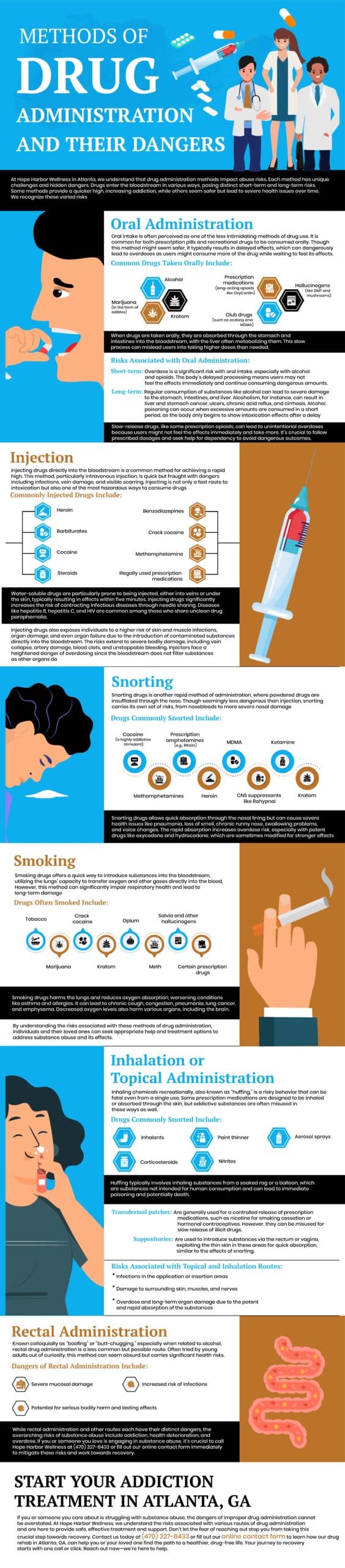
Smoking
Smoking drugs offers a quick way to introduce substances into the bloodstream, utilizing the lungs’ capacity to transfer oxygen and other gases directly into the blood. However, this method can significantly impair respiratory health and lead to long-term damage.
Drugs Often Smoked Include:
- Tobacco
- Marijuana
- Crack cocaine
- Kratom
- Opium
- Meth
- Salvia and other hallucinogens
- Certain prescription drugs
Smoking drugs is detrimental not only because it introduces harmful substances into the lungs but also because it reduces the amount of oxygen absorbed into the bloodstream. This can exacerbate existing respiratory conditions like asthma and allergies and lead to serious complications such as chronic cough, congestion, pneumonia, lung cancer, and emphysema. The decreased oxygen levels can also cause widespread harm to various organ systems, including the brain.
By understanding the risks associated with these methods of drug administration, individuals and their loved ones can seek appropriate help and treatment options to address substance abuse and its effects.
Inhalation or Topical Administration
Inhaling chemicals recreationally, also known as “huffing,” is a risky behavior that can be fatal even from a single use. Some prescription medications are designed to be inhaled or absorbed through the skin, but addictive substances are often misused in these ways as well.
- Commonly Abused Substances Through Inhalation Include:
- Inhalants
- Paint thinner
- Corticosteroids
- Nitrites
- Aerosol sprays
Huffing typically involves inhaling substances from a soaked rag or a balloon, which are substances not intended for human consumption and can lead to immediate poisoning and potentially death.
Transdermal patches and suppositories offer other less common but risky methods of drug administration:
- Transdermal patches are generally used for a controlled release of prescription medications, such as nicotine for smoking cessation or hormonal contraceptives. However, they can be misused for slow release of illicit drugs.
- Suppositories are used to introduce substances via the rectum or vagina, exploiting the thin skin in these areas for quick absorption, similar to the effects of snorting.
Risks Associated with Topical and Inhalation Routes:
- Infections in the application or insertion areas
- Damage to surrounding skin, muscles, and nerves
- Overdose and long-term organ damage due to the potent and rapid absorption of the substances
Rectal Administration
Known colloquially as “boofing” or “butt-chugging,” especially when related to alcohol, rectal drug administration is a less common but possible route. Often tried by young adults out of curiosity, this method can seem absurd but carries significant health risks.
- Dangers of Rectal Administration Include:
- Severe mucosal damage
- Increased risk of infections
- Potential for serious bodily harm and lasting effects
While rectal administration and other routes each have their distinct dangers, the overarching risks of substance abuse include addiction, health deterioration, and overdose. If you or someone you love is engaging in substance abuse, it’s crucial to call Hope Harbor Wellness at 770-573-9546 or fill out our online contact form immediately to mitigate these risks and work towards recovery.
Start Your Addiction Treatment in Atlanta, GA
If you or someone you care about is struggling with substance abuse, the dangers of improper drug administration cannot be overstated. At Hope Harbor Wellness, we understand the risks associated with various routes of drug administration and are here to provide safe, effective treatment and support. Don’t let the fear of reaching out stop you from taking this crucial step towards recovery. Contact us today at 770-573-9546 or fill out our online contact form to learn how our drug rehab in Atlanta, GA, can help you or your loved one find the path to a healthier, drug-free life. Your journey to recovery starts with one call or click. Reach out now—we’re here to help.