

For individuals prescribed Tramadol or concerned about its presence in their body, a critical question often arises: “How long does Tramadol stay in your system?” Understanding Tramadol’s half-life and its detection windows is crucial, whether for drug testing purposes, managing medication, or recognizing the potential for dependence.
Tramadol is a synthetic opioid pain reliever used for moderate to moderately severe pain. Despite its classification as a Schedule IV controlled substance – indicating a lower potential for abuse than some other opioids – it can indeed lead to physical dependence and addiction. If concerns about Tramadol’s detectability stem from misuse, or if you’re experiencing challenges with its use, Hope Harbor Wellness in Atlanta, GA, offers confidential and effective outpatient substance abuse treatment tailored to your needs. We’re here to help you understand Tramadol’s presence in your system and guide you toward lasting recovery.
Tramadol Metabolism and Its Half-Life
To understand how long Tramadol stays in your body, it’s essential to grasp how your body processes it, a journey heavily influenced by a concept called half-life.
What is a Drug’s Half-Life? A drug’s half-life is the time it takes for the amount of the drug in your body to reduce by half. It’s a key indicator of how long a substance’s effects will last and how long it will remain detectable. Typically, it takes about 4 to 5 half-lives for a drug to be almost completely eliminated from the body.
Tramadol’s Half-Life:
- The half-life of Tramadol itself typically ranges from 5 to 7 hours. This means that after 5-7 hours, half of the initial dose of Tramadol has been metabolized or excreted.
- However, Tramadol has an important active metabolite called O-desmethyltramadol (M1). This M1 metabolite is actually more potent than Tramadol itself and contributes significantly to the drug’s pain-relieving effects. The M1 metabolite has a longer half-life, usually around 8 hours.
The Role of the Liver:
The liver plays a crucial role in metabolizing Tramadol. Enzymes in the liver, particularly Cytochrome P450 enzymes (CYP2D6 and CYP3A4), break down Tramadol into M1 and other inactive metabolites.
Genetic Variability in Metabolism:
Genetic factors can significantly influence the activity of these liver enzymes. Some individuals are “rapid metabolizers,” processing Tramadol quickly, while others are “poor metabolizers,” leading to slower elimination and potentially higher drug levels in their system for longer periods. This genetic variability is a key reason why elimination times can differ so much from person to person.
Given these factors, while the half-life provides a general guideline, the total amount of time Tramadol stays in your system for complete elimination can be around a day and a half to two days for most healthy individuals. However, its metabolites can linger longer.
Factors Influencing How Long Tramadol Stays in Your System
The precise duration Tramadol remains detectable in the body is not universal.
Several individual and drug-related factors can significantly influence its elimination time:
- Individual Metabolism (Genetics): As mentioned, genetic variations in liver enzymes mean some people break down Tramadol faster or slower than others.
- Age: Older individuals generally have slower metabolic rates and reduced kidney function, which can extend the time Tramadol stays in their system.
- Liver and Kidney Health: Impaired liver or kidney function dramatically reduces the body’s ability to process and excrete Tramadol. Individuals with liver or kidney disease will retain the drug for much longer periods.
- Dosage: Higher doses of Tramadol take longer for the body to process and eliminate compared to lower doses.
- Frequency and Duration of Use: Chronic or prolonged use can lead to the accumulation of Tramadol and its metabolites in the body, extending its detection window compared to a single dose.
- Overall Health and Body Composition: General health status, hydration levels, and even body fat percentage can play a minor role, though less significant than liver/kidney function or genetics.
- Drug Interactions: Taking other medications that affect liver enzymes (e.g., certain antidepressants like SSRIs, antifungals, or antibiotics) can either speed up or slow down Tramadol’s metabolism, altering its elimination time.
- Form of Tramadol: Extended-release formulations will release the drug more slowly over time, potentially leading to a more prolonged presence in the system, though the half-life of the active drug remains consistent once absorbed.
Understanding these variables is crucial when interpreting drug test results or managing Tramadol use, as they highlight why individual detection times can differ.
Does Tramadol Show Up On a Drug Test? Detection Windows Explained
Yes, Tramadol can and often does show up on drug tests. While it may not always be included in standard 5-panel or 10-panel drug screens (which primarily look for common illicit drugs and specific opioids like morphine, heroin, and oxycodone), many expanded opioid panels or specific targeted tests will detect Tramadol and its metabolites.
It is always advisable to inform the testing facility if you have a valid prescription for Tramadol to avoid complications or false positives.
Tramadol Drug Detection Windows by Test Type:
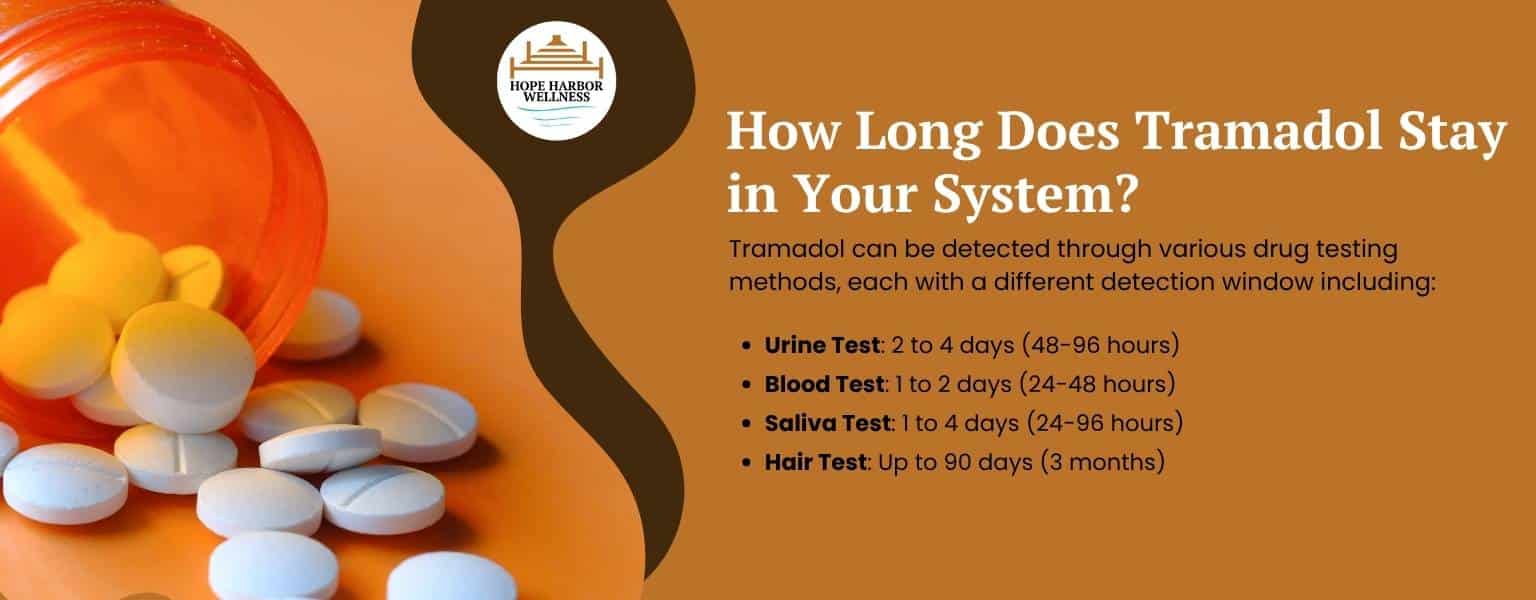
- Urine Tests: Tramadol and its metabolites can typically be detected in urine for approximately 2 to 4 days after the last dose. Urine tests are the most common method due to their ease of collection and cost-effectiveness.
- Blood Tests: Tramadol is usually detectable in the bloodstream for up to 24 to 48 hours after use. Blood tests offer a snapshot of very recent drug use but are more invasive.
- Saliva Tests: Tramadol can be detected in saliva for 1 to 4 days after the last dose. These are less invasive than blood tests and can be useful for detecting recent use.
- Hair Follicle Tests: Tramadol can be detected in hair follicles for the longest period, up to 90 days after use. This method is often employed to identify long-term or chronic drug use patterns.
Will Tramadol show up in a urine test?
Yes, Tramadol can show up in a urine test, typically within 2 to 4 days after the last dose. While some standard panels might not include it, expanded drug screens often will.
How long is Tramadol detectable in hair?
Tramadol can be detected in hair follicles for up to 90 days after the last use, providing a detection window for long-term use.

Why Understanding Tramadol’s Presence Matters: Beyond Just Detection
While concerns about drug test results are valid, understanding how long Tramadol stays in your system is also crucial for broader reasons, particularly if misuse or dependence is a factor.
- Risk of Overdose: If Tramadol remains in your system longer than expected, especially due to impaired metabolism, the risk of accidental overdose increases, particularly if combined with alcohol or other central nervous system depressants.
- Managing Addiction: Knowing the typical elimination time can help individuals understand the duration of their physical dependence and the timeline for potential withdrawal symptoms if they attempt to stop using.
- Informing Treatment: For those seeking recovery, understanding their unique metabolism can inform a personalized treatment plan, including the necessary duration for detox or monitoring.
The knowledge of Tramadol’s persistence in the body can be a catalyst for recognizing a deeper issue: a developing dependence or addiction.
More About Drug Tests and Detection
Understanding how long Tramadol stays in your system is only one piece of the picture. If you’d like a deeper breakdown of how urine, blood, saliva, and hair tests actually work, you can read our guide on how drug tests work. For a broader overview of different substances and timelines, visit how long drugs stay in your system.
What is Tramadol?
Tramadol is a synthetic opioid classified as a Schedule IV controlled substance. It works in two ways to relieve pain: by binding to opioid receptors in the brain and by altering levels of serotonin and norepinephrine, neurotransmitters involved in pain perception and mood. While effective for pain management, its opioid properties mean it carries a risk of physical dependence, tolerance, and addiction, particularly when misused.
Recognizing the Signs: Is It Tramadol Addiction?
If concerns about how long Tramadol stays in your system are linked to misuse, it’s vital to recognize the signs of addiction. Addiction is a complex disease that impacts brain function and behavior, leading to compulsive drug use despite harmful consequences.
Common Signs and Symptoms of Tramadol Addiction or Misuse:
- Taking More Than Prescribed: Using higher doses or taking Tramadol more frequently than directed.
- Strong Cravings: Intense urges to use Tramadol.
- Failed Attempts to Cut Down: Wanting to reduce or stop use but being unable to.
- Neglecting Responsibilities: Prioritizing Tramadol use over work, school, or family duties.
- Continued Use Despite Harm: Using Tramadol even when it causes physical, mental, social, or legal problems.
- “Doctor Shopping”: Visiting multiple doctors to obtain more prescriptions.
- Withdrawal Symptoms: Experiencing unpleasant physical and psychological effects when trying to stop or reduce use.
- Social Isolation: Withdrawing from friends and family, or engaging in secretive behavior.
What are the signs of Tramadol abuse?
Signs of Tramadol abuse include taking higher doses than prescribed, using it without a prescription, experiencing strong cravings, neglecting responsibilities, continuing use despite negative consequences, and developing withdrawal symptoms if use stops.
How do I know if someone is addicted to Tramadol?
Look for behaviors such as secrecy, financial problems, neglecting hygiene or responsibilities, irritability, unexplained mood swings, “doctor shopping,” and signs of withdrawal when they try to stop.
Tramadol Withdrawal: What to Expect When Stopping
If physical dependence has developed, stopping Tramadol can lead to uncomfortable and potentially dangerous withdrawal symptoms. Because of its dual action (opioid effects and impact on serotonin/norepinephrine), Tramadol withdrawal can be particularly challenging.
Common Tramadol Withdrawal Symptoms:
- Flu-like Symptoms: Nausea, vomiting, diarrhea, sweating, chills, body aches.
- Anxiety and Agitation: Severe restlessness, nervousness, and irritability.
- Insomnia: Difficulty sleeping or staying asleep.
- Depression and Dysphoria: Feelings of sadness, hopelessness, or general unease.
- Neurological Symptoms: Tingling sensations, “brain zaps” (electric shock-like sensations), and, in some cases, seizures (especially with high doses or rapid discontinuation).
Withdrawal symptoms can last for several days to weeks, with some psychological symptoms lingering longer. Due to the risk of seizures and severe discomfort, it is highly recommended to undergo Tramadol withdrawal under medical supervision.
What are Tramadol withdrawal symptoms?
Tramadol withdrawal symptoms can include flu-like symptoms, nausea, vomiting, diarrhea, severe anxiety, agitation, insomnia, body aches, “brain zaps,” and, in serious cases, seizures.
How long does Tramadol withdrawal last?
Acute Tramadol withdrawal typically lasts 5-7 days, with peak discomfort around days 2-4. However, some psychological symptoms and less intense physical symptoms (Post-Acute Withdrawal Syndrome or PAWS) can linger for weeks or even months.
Seeking Help for Tramadol Addiction: Outpatient Treatment at Hope Harbor Wellness in Atlanta, GA
If concerns about how long Tramadol stays in your system are pointing toward a deeper issue of misuse or addiction, know that effective help is available. At Hope Harbor Wellness in Atlanta, GA, we specialize in providing compassionate and comprehensive outpatient drug addiction treatment for individuals ready to overcome Tramadol addiction.
Our outpatient model offers a flexible yet structured approach to recovery, allowing you to engage in therapy and support while maintaining your daily life, work, and family commitments in the Atlanta area.
Components of Our Outpatient Tramadol Addiction Treatment Include:
- Individual Therapy: Personalized sessions using evidence-based approaches like Cognitive Behavioral Therapy (CBT) and Dialectical Behavior Therapy (DBT) to address the root causes of addiction, develop coping skills, and prevent relapse.
- Group Therapy: A supportive environment where you can connect with peers, share experiences, and learn from others navigating similar challenges.
- Family Therapy: When appropriate, involving loved ones to heal relationships, improve communication, and build a strong support system at home.
- Medication-Assisted Treatment (MAT) Support: While we offer outpatient therapy, we collaborate with prescribers in the Atlanta, GA, area to integrate MAT (e.g., medications like buprenorphine/naloxone) if medically recommended to manage cravings and withdrawal symptoms.
- Psychoeducation: Learning about the brain science of addiction, understanding triggers, and developing healthy lifestyle habits.
- Life Skills Training: Practical strategies for stress management, healthy communication, boundary setting, and problem-solving.
- Relapse Prevention Planning: Creating a personalized plan to identify high-risk situations and strategies to maintain sobriety long-term.
Our dedicated team at Hope Harbor Wellness in Atlanta, GA, is committed to guiding you through each step of your recovery journey with expertise and empathy.
Your Path to Lasting Recovery Starts Here in Atlanta, GA
Understanding how long Tramadol stays in your system is a crucial piece of information, but for many, it’s also a gateway to addressing underlying substance use concerns. If you’re ready to take control of your life and break free from Tramadol addiction, Hope Harbor Wellness in Atlanta, GA, is here to support you.
Our outpatient substance abuse treatment programs provide the tools, support, and community you need to build a healthier, substance-free future.
Contact Hope Harbor Wellness today at 770-573-9546 or fill out our online contact form. Let us help you embark on your path to lasting recovery in Atlanta, GA.
Frequently Asked Questions (FAQs) About Tramadol Detection and Addiction
What is Tramadol’s half-life?
Tramadol itself has a half-life of 5 to 7 hours. Its active metabolite, M1, has a longer half-life of about 8 hours.
How long does Tramadol stay in your urine?
Tramadol can typically be detected in urine for 2 to 4 days after the last dose.
Can Tramadol be detected in a hair follicle test?
Yes, Tramadol can be detected in hair follicles for up to 90 days, making it useful for identifying long-term use.
Will Tramadol show up on a standard drug test?
Tramadol may not be included in all standard 5-panel or 10-panel drug tests. However, it will be detected on expanded opioid panels or specific tests for Tramadol. It’s always best to disclose any prescriptions.
What factors can make Tramadol stay in my system longer?
Factors include slower metabolism (due to genetics or age), impaired liver or kidney function, higher doses, longer duration of use, and interactions with other medications.
Is Tramadol an opioid?
Yes, Tramadol is a synthetic opioid pain reliever. It acts on opioid receptors in the brain, carrying the risk of dependence and addiction.
Can I get addicted to Tramadol?
Yes, despite being a Schedule IV controlled substance, Tramadol can cause physical and psychological dependence and lead to addiction.
What are the signs of Tramadol withdrawal?
Withdrawal symptoms can include flu-like symptoms, nausea, vomiting, anxiety, agitation, insomnia, body aches, “brain zaps,” and, in severe cases, seizures.
Does Hope Harbor Wellness offer detox for Tramadol?
Hope Harbor Wellness in Atlanta, GA, provides outpatient substance abuse treatment. While we don’t offer inpatient detox directly, we can refer you to trusted detox facilities in the Atlanta area if medically supervised withdrawal is necessary before starting our outpatient program.
What kind of treatment does Hope Harbor Wellness offer for Tramadol addiction?
We offer comprehensive outpatient treatment including individual therapy (CBT, DBT), group therapy, family therapy, psychoeducation, life skills training, and support for medication-assisted treatment (MAT) in coordination with prescribers in Atlanta, GA.