

When individuals use LSD, commonly known as acid, they might wonder how long it remains detectable in their bodies. Understanding the timeline for LSD detection is essential for those undergoing drug testing or considering treatment options. While LSD itself typically clears the body quickly, various factors affect how long it remains detectable.
In this article, we’ll explore exactly how long LSD stays in your body, how drug tests detect it, the effects of LSD use, associated risks, its addictive potential, and available help options at outpatient addiction treatment in Atlanta, GA.
How Long Does LSD Stay in Your Body?
Determining precisely how long LSD stays in your body depends on several personal and situational factors. These include your age, weight, genetic makeup, metabolism, hydration, liver and kidney health, and the quantity and potency of the LSD used.
Generally, LSD does not linger in the system long. The drug has a short half-life—roughly 3.6 hours—which means half of the dose is metabolized within this timeframe. LSD typically clears completely from the bloodstream within 24 to 48 hours. However, certain tests can detect LSD or its metabolites for much longer periods, ranging from days to several months.
What Is LSD?
Lysergic acid diethylamide (LSD), often called acid, is a potent synthetic hallucinogen derived from ergot, a fungus found on grains like rye. LSD profoundly alters perceptions, emotions, and thoughts, creating intense hallucinations and changes in consciousness.
Usually, LSD is taken orally in forms such as blotter paper squares, capsules, or liquid drops. Street names include blotter, dots, Mellow Yellow, Window Pane, and Yellow Sunshine. Though commonly ingested orally, some users administer it differently, like through eye drops—though this is rare.
How Traceable Is LSD in a Drug Test?
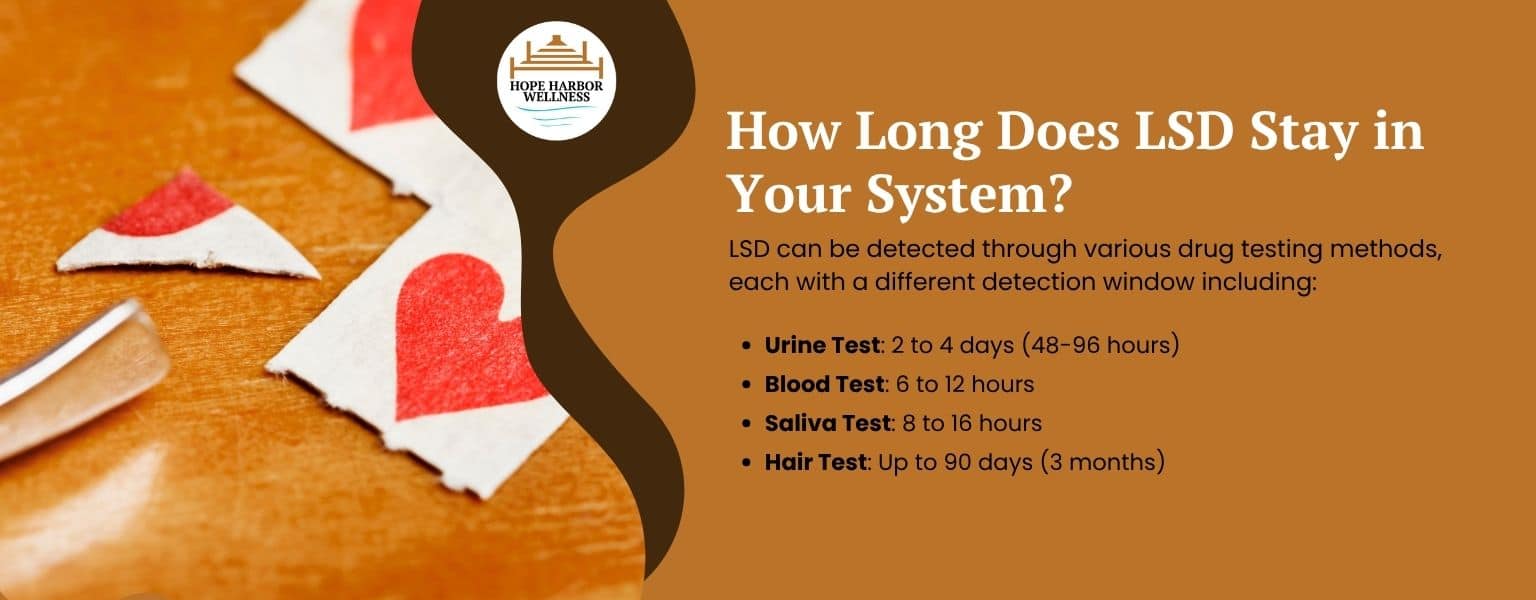
Standard drug screenings don’t usually check for LSD. However, specialized tests can detect LSD or its metabolites. Detection methods commonly include urine, blood, hair, and saliva tests. Let’s review each test type and the detection windows for LSD.
Blood Test: How Long Does LSD Stay in Your Blood?
Blood tests detect LSD usage for a very short period, usually within 6 to 12 hours after ingestion. Blood testing isn’t common for LSD because the substance leaves the bloodstream rapidly due to its quick metabolization in the liver.
Urine Test: How Long Does LSD Stay in Your Urine?
Urine tests detect LSD use effectively for up to 2 to 4 days after ingestion. LSD breaks down into metabolites like 2-oxo-3-hydroxy-LSD, which urine tests detect more reliably than LSD itself. These metabolites remain detectable slightly longer than LSD, making urine tests practical and common for short-term detection.
Hair Test: How Long Does LSD Stay in Your Hair?
Hair testing can detect LSD use for the longest period, typically up to 90 days. This method works because drug metabolites embed into hair follicles as hair grows. However, LSD is consumed in such tiny amounts that hair tests often struggle to detect low-level usage. Consequently, hair testing isn’t as frequently utilized for LSD compared to substances like cocaine or opioids.
Swab Test: How Long Does LSD Stay in Your Saliva?
Saliva tests detect LSD for a short duration, typically around 8 to 16 hours following ingestion. Due to this brief detection window, saliva testing is less common for LSD detection but may be used in some immediate-use scenarios.
How Is LSD Metabolized?
When someone ingests LSD orally, the body rapidly absorbs it through the digestive tract. The liver then breaks LSD down into inactive metabolites such as 2-oxo-LSD and 2-oxo-3-hydroxy-LSD. These metabolites are excreted through urine relatively quickly. LSD’s half-life is short (around 3.6 hours), which explains why it leaves the bloodstream rapidly.

How Long Do the Effects Last?
While LSD leaves the bloodstream relatively fast, the psychological effects typically last 9 to 12 hours after ingestion. The drug’s potency and dosage influence how long and intense the experience (“trip”) will be.
Common LSD effects include:
- Dilated pupils
- Dry mouth and appetite loss
- Increased heart rate and blood pressure
- Elevated body temperature and sweating
- Tremors and anxiety
- Visual hallucinations
- Distorted sense of reality and time
- Mood swings and emotional instability
- Panic attacks or paranoia
What Are the Risks of LSD Use?
Using LSD carries several significant risks. Due to impaired judgment and distorted reality, users might act recklessly, causing harm or legal issues. “Bad trips,” marked by anxiety, paranoia, and fear of insanity or death, can cause lasting psychological distress.
Another long-term risk includes flashbacks—recurrences of the LSD experience days or even months after using the drug. Some individuals develop hallucinogen persisting perception disorder (HPPD), causing visual disturbances long after LSD use.
Research also suggests LSD use might hasten schizophrenia onset in genetically susceptible individuals. LSD may interact dangerously with medications, especially antidepressants and lithium, potentially leading to severe psychological or physical complications.
Is LSD Addictive?
The National Institute on Drug Abuse clarifies that LSD doesn’t lead to physical addiction because it doesn’t produce uncontrollable cravings. However, users can develop tolerance quickly, needing higher doses to achieve desired effects. This increased dosage significantly heightens risk and unpredictability.
Despite no physical withdrawal symptoms, individuals may develop psychological dependence. The desire to escape reality or chase intense experiences could lead to harmful repeated use. If you or a loved one frequently use LSD, seeking professional help can prevent long-term mental health problems.
Getting Help for LSD Addiction
While LSD itself doesn’t lead to severe physical addiction, problematic use can disrupt life significantly. Those frequently using LSD may benefit greatly from professional support, especially if also struggling with other substance use issues. Comprehensive treatment, including counseling and behavioral therapy, helps individuals regain control and address underlying issues.
At Hope Harbor Wellness, our outpatient addiction treatment in Atlanta, GA, provides a supportive environment for people struggling with substance use and mental health disorders. Our dedicated and compassionate team delivers personalized care plans designed to meet your unique needs.
Recovery is possible, and we’re here to help you every step of the way. Don’t wait to regain control of your life.
If you or someone you love needs help with LSD or other substances, contact Hope Harbor Wellness at 770-573-9546 or fill out our online contact form today.
More About Drug Tests and Detection
Understanding how long LSD stays in your system is only one piece of the picture. If you’d like a deeper breakdown of how urine, blood, saliva, and hair tests actually work, you can read our guide on how drug tests work. For a broader overview of different substances and timelines, visit how long drugs stay in your system.
How Long Does LSD Stay in Your System? FAQs
How long is LSD detectable in urine?
Standard urine tests seldom screen for LSD, but specialized assays can detect it for up to 2–4 days.
What is LSD’s half-life?
Roughly 3–5 hours; subjective effects end in 8–12 hours, but metabolites linger longer.
Can LSD be found in hair tests?
Hair-follicle analysis may show LSD use for up to 90 days, though false negatives are common.
Does hydration flush LSD faster?
Water intake helps general clearance but won’t significantly shorten detection windows.
Why is LSD rarely included in standard drug tests?
Expensive lab methods and low workplace abuse rates make routine LSD testing uncommon.