
How long does Adderall stay in your system depends on various factors, including age, weight, dosage, and frequency of use. Immediate-release and extended-release forms of the medication persist in the system for different durations. This comprehensive guide explores how long different forms of Adderall last, highlights the side effects, risks, and dangers of this medication, and provides insights into effective treatment for prescription drug addiction.
How Long Does Adderall Stay in Your System?
The duration of Adderall detection varies based on the testing method used. In blood, Adderall can typically be detected within hours after ingestion and may remain detectable for up to 2-3 days. In urine, the drug can be detected for approximately 1-2 days after use. Saliva testing can detect Adderall for a shorter window, usually within 24-48 hours. Understanding how long does Adderall stay in your system urine is crucial for those undergoing drug testing for employment, legal, or medical reasons.
What Is Adderall?
Adderall is a stimulant medication prescribed to treat attention-deficit hyperactivity disorder (ADHD) and narcolepsy. It contains a mixture of amphetamine and dextroamphetamine. Branded formulations include Adderall (immediate release), Adderall XR (extended release), and Mydayis (extended release). Immediate-release Adderall is available in oral tablet form, while extended-release forms come as capsules to be taken by mouth.
The effects of Adderall vary based on the formulation. Immediate-release Adderall lasts around 4–6 hours per dose, while Adderall XR, the extended-release version, only needs to be taken once each morning, providing effects for up to 12 hours.
Adderall is one of the most widely prescribed ADHD medications. In 2022, nearly 3.8 million people aged 12 and older misused prescription amphetamine products, which includes Adderall, Dexedrine, Vyvanse, and similar drugs.
How Long Does Adderall Last?
The duration Adderall lasts depends on its type and dosage. There are two main types of Adderall: IR (immediate release) and XR (extended release). Each type works for different lengths of time.
How Long Does Adderall IR Last?
Adderall IR starts working quickly, usually within 30 minutes to an hour. Its effects last about 4 to 6 hours. Because it wears off faster, people usually need to take it 2 to 3 times a day to maintain its therapeutic effects.
How Long Does Adderall XR Last?
Adderall XR is designed to work all day. It starts working within 1 to 2 hours and lasts up to 12 hours. This extended duration means it is usually taken just once in the morning. The medication is released slowly throughout the day, providing a steady effect that supports sustained focus and attention.
How Long Does 10 mg of Adderall Last?
A 10mg dose of Adderall lasts for different times based on its type:
- Adderall IR: A 10mg dose of Adderall IR lasts about 4 to 6 hours.
- Adderall XR: A 10mg dose of Adderall XR can last up to 12 hours.
How Long Does 20 mg of Adderall Last?
The duration of Adderall’s effects depends on the dose and formulation. Immediate-release Adderall typically lasts for 4-6 hours, while extended-release Adderall can last up to 8-12 hours from the last dose. Understanding how long does an Adderall stay in your system helps individuals manage their dosage and timing effectively, ensuring optimal symptom management.
Does Adderall Show Up on a Drug Test?
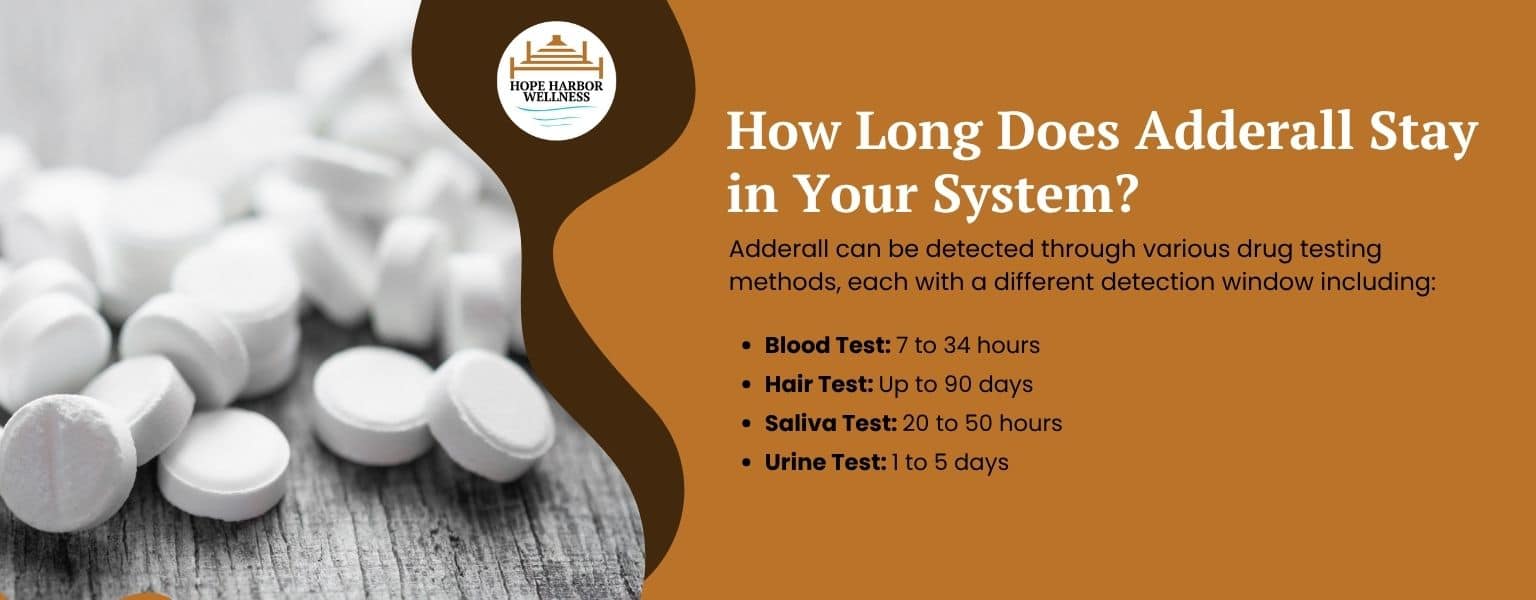
Adderall appears on most drug tests used by law enforcement, employers, medical and mental health providers, and others. The most common types of drug tests are urine, hair, saliva, and blood.
How Long Does Adderall Stay in Urine?
Adderall can be detected in the urine for one to five days after your last dose of the medication. Urinary pH can influence this duration—if your urinary pH is lower (more acidic), you can expect to eliminate Adderall faster. Conversely, if your urinary pH is higher (less acidic), it will take longer to eliminate Adderall. Urine testing is relatively inexpensive and commonly used because it does not require specialized medical personnel or facilities.
How Long Does Adderall Stay in Hair?
Adderall can be detected in the hair for about 90 days. However, this drug test has several variables that can affect its accuracy, such as hair length, hair treatments (like coloring or bleaching), and the presence of hair extensions. Hair follicle testing also raises questions about practicality because it is impossible to determine how much of the drug was used or whether usage is increasing or decreasing.
How Long Does Adderall Stay in Saliva?
Adderall can be detected in saliva for 20–50 hours. However, there is debate about this form of testing because, like urine drug tests, saliva testing can be highly variable depending on the pH.
How Long Does Adderall Stay in Blood?
Adderall can be detected in blood plasma for 7–34 hours after your last dose. This type of drug test requires specialized medical personnel and a laboratory setting. It is more invasive than other kinds of drug testing, like urine, but it can accurately determine the presence of drugs in your bloodstream and is sometimes used in clinical settings.
Will Adderall Show Up in Routine Blood Work?
No, Adderall will not show up on routine blood work if you are at the doctor for a regular check-up. Routine blood work most often includes a complete blood count (CBC), which examines the components of your blood, and either a comprehensive or basic metabolic panel (CMP or BMP), which assesses electrolyte, kidney, and liver function. Consent is required for any lab work, so be sure to read any documents you sign or ask questions to know what you agree to before providing a sample.
What Factors Influence How Long Adderall Stays in Your System?
Many factors influence how long Adderall stays in your system, from body composition and dosage amount to frequency of use.
Body Composition
Adderall metabolizes more quickly in people with higher body weight. When people with a higher weight take the same dosage as someone who weighs less, a smaller amount of the drug is available in their bloodstream.
Food in the System
Food does not affect the metabolism of Adderall, and it can be taken with or without food. However, it may not absorb into the bloodstream as well in acidic environments, like when the stomach is full of food.
pH Levels
The pH levels in the urinary and gastrointestinal tracts may affect how long it stays in the system. The kidneys will take longer to remove Adderall through the urine if someone has a high pH level (more alkaline). Additionally, factors like food and drink can influence the body’s pH.
Organ Function
Organs such as the liver and kidneys play a crucial role in ridding the body of many substances, including Adderall. This process can be slower when an organ does not function properly. If kidney function is impaired, the drug may remain in the system longer than normal or even be recirculated. Similarly, liver function affects how quickly Adderall is metabolized and cleared from the body.
Dosage Amount
A medication’s dosage can also greatly affect how long it takes to clear the system. The more someone has taken, the longer it will take for the body to remove it.
Frequency of Use
Those who have been using Adderall regularly or daily will likely take longer to clear it from the system compared to someone who has only used the drug a few times. Frequent use can lead to drug accumulation in the body, making it take longer to leave the system entirely.
Is Adderall Addictive?
As previously mentioned, Adderall misuse can lead to addiction. An addiction can interfere with many areas of a person’s life, such as their health, relationships, schoolwork, and employment.
Signs of a Stimulant Use Disorder
Signs of a stimulant use disorder, the clinical term for addiction, include:
- Taking Adderall in larger amounts or over a longer period than intended.
- Lacking the ability to cut back on Adderall use despite efforts or a desire to do so.
- Spending a large amount of time acquiring Adderall, using it, or recovering from its effects.
- Craving Adderall.
- Difficulty taking care of responsibilities at work, school, or home due to Adderall use.
- Continuing to use Adderall despite it causing or worsening social or interpersonal problems.
- Failing to participate in previously enjoyed activities in favor of Adderall use.
- Using Adderall in dangerous situations.
- Continuing to use Adderall despite it causing or worsening physical or psychological problems.
- Building tolerance to Adderall, meaning needing progressively higher doses to achieve the same effect (doesn’t count if used as prescribed).
- Experiencing withdrawal symptoms when use is suddenly reduced or stopped (doesn’t count if used as prescribed).
Misuse and addiction increase the risk of overdose. For example, individuals who develop tolerance to the drug may steadily increase their intake of Adderall, raising the likelihood of taking too much and overdosing. Symptoms of a stimulant overdose include high body temperature, agitation, rapid breathing, heart palpitations, and seizures. Emergency medical services may be required in the event of an overdose, which can result in death.
Can a Drug Test Detect Adderall?
Yes, a drug test can detect Adderall. A urine test is commonly used to check for Adderall and other stimulants. Blood and saliva tests can also be used to detect substance abuse.
What is a High Level of Adderall in Urine?
Detection of Adderall in urine samples at any level indicates that you have used this drug within the last 1-3 days. Therefore, any level of urine Adderall will raise a concern for drug abuse if you don’t have a prescription for this medication.
Adderall Withdrawal
When someone stops taking Adderall after using it for a long time, they might experience withdrawal. This happens because the body has become used to having the medication, and it needs time to adjust without it. Withdrawal can be uncomfortable but is a normal part of stopping the medication.
How Long Does Adderall Withdrawal Last?
Adderall withdrawal can last for a few days to a few weeks. The length of time depends on how long and how much someone has been taking Adderall.
- First few days: Symptoms might be the strongest in the first few days after stopping.
- First week: Many symptoms start to get better after the first week.
- Several weeks: Some symptoms, like tiredness or mood changes, might last a few weeks.
Everyone is different, so the withdrawal timeline can vary from person to person.
Symptoms of Adderall Withdrawal
When someone is going through Adderall withdrawal, they might experience the following symptoms:
- Tiredness: Feeling very tired and having low energy is common during detox.
- Sleep problems: Some people have trouble sleeping, while others might sleep too much.
- Hunger: People might feel hungrier than usual.
- Mood changes: Feeling sad, anxious, or irritable can happen when someone withdraws from Adderall.
- Cravings: Wanting to take Adderall again can be a strong feeling.
- Trouble concentrating: It can be hard to focus or think clearly.
These symptoms are normal and usually get better over time. If the symptoms are very strong or don’t go away, talk to a doctor. There are ways to manage withdrawal and feel better.
Adderall Addiction Treatment in Atlanta, GA
Understanding how long does Adderall stay in your system is essential for managing use and addressing potential addiction. The duration of Adderall in the system varies based on factors like dosage, metabolism, age, and overall health. Drug testing methods such as blood, urine, and saliva tests can detect recent Adderall use, although the precise duration cannot be determined solely through these tests. Understanding the effects, risks, and potential side effects of long-term Adderall use is crucial for individuals prescribed this medication. Regular communication with healthcare professionals can help monitor the effectiveness and safety of Adderall therapy.
At Hope Harbor Wellness, we believe in a comprehensive approach to mental health and substance abuse treatment. By providing resources and support tailored to individual needs, we aim to empower individuals to lead healthier, more fulfilling lives. If you or a loved one is seeking guidance or has concerns related to medication use, don’t hesitate to reach out for expert assistance and advice. Our specialized outpatient treatment programs in Atlanta, GA, are designed to help you overcome addiction and regain control of your life. Our team offers personalized care plans, medical supervision, and therapeutic support to address the complexities of Adderall addiction and its withdrawal effects.
Our treatment includes a variety of evidence-based therapies such as cognitive-behavioral therapy (CBT), group therapy, and individual therapy. These therapies help address the psychological aspects of addiction, teaching coping strategies and relapse prevention techniques. Additionally, we provide medical support to manage withdrawal symptoms safely, ensuring a comfortable and secure detoxification process.
Hope Harbor Wellness also emphasizes the importance of aftercare and ongoing support. Our aftercare programs include support groups, continued counseling, and resources to help maintain sobriety and prevent relapse. By focusing on both immediate treatment and long-term recovery, we ensure that our clients receive the comprehensive care they need to achieve lasting success.
Contact us today 770-573-9546 or fill out our online contact form to learn more about our specialized treatment programs and take the first step toward healing and recovery.
How Long Does Adderall Stay in Your System FAQs
How long does Adderall stay in your urine?
Adderall is usually detectable in urine for 24–96 hours after the last dose, with most people clearing it in two to four days.
How long does Adderall show up on a saliva test?
Saliva screens can pick up Adderall roughly 1 hour after ingestion and up to 48 hours later.
How long is Adderall detectable in blood?
Blood tests generally detect Adderall for up to 24 hours post-dose, though heavy or frequent use may extend this window slightly.
How long does Adderall stay in hair follicles?
Because amphetamine deposits remain locked in emerging hair shafts, Adderall can be found in hair samples for up to 90 days after the last use.
What factors affect how long Adderall stays in your system?
Dose size, frequency of use, individual metabolism, age, urinary pH, liver health, and concurrent medications all influence detection times.
What is the half-life of Adderall in adults?
The combined amphetamine salts in Adderall have an average half-life of about 10 hours, meaning most of the drug clears within a few days.