


Topamax (topiramate) can be a helpful medication for some people, and a difficult one for others. It is prescribed for conditions like migraine prevention and seizure disorders, and sometimes used off-label for other issues. But Topamax side effects can also affect mood, anxiety, and thinking, which can feel alarming if you started it to feel better.
This page is educational, not medical advice. Do not stop Topamax suddenly without medical guidance. If you have suicidal thoughts, severe confusion, fainting, chest pain, seizures, or any symptom that feels unsafe, seek emergency care right away.
What Is Topamax Used For?
Topamax is most commonly used for seizure disorders and migraine prevention. Some people are prescribed Topamax off-label for other reasons, which means it is used in a way not specifically listed on the medication label. No matter why you were prescribed it, your experience matters, and side effects deserve attention.
Common Topamax Side Effects
Side effects vary by person and dose. Some are mild and improve over time, while others are disruptive and may require a change in treatment.
Commonly reported Topamax side effects can include:
- Tingling in the hands or feet (pins and needles)
- Decreased appetite or weight loss
- Fatigue or sleepiness
- Dizziness
- Nausea or stomach upset
- Taste changes
Topamax And Mental Health Side Effects
For some people, Topamax can affect mental health in ways that feel unfamiliar or intense. If you notice mood or personality changes after starting or increasing your dose, bring it up quickly.
Potential mental health and emotional side effects may include:
- Increased anxiety or panic symptoms
- Low mood or depression
- Irritability or agitation
- Emotional numbness or feeling detached
- Restlessness or trouble sleeping
If you notice suicidal thoughts or a sudden worsening of depression, treat it as urgent and get immediate help.
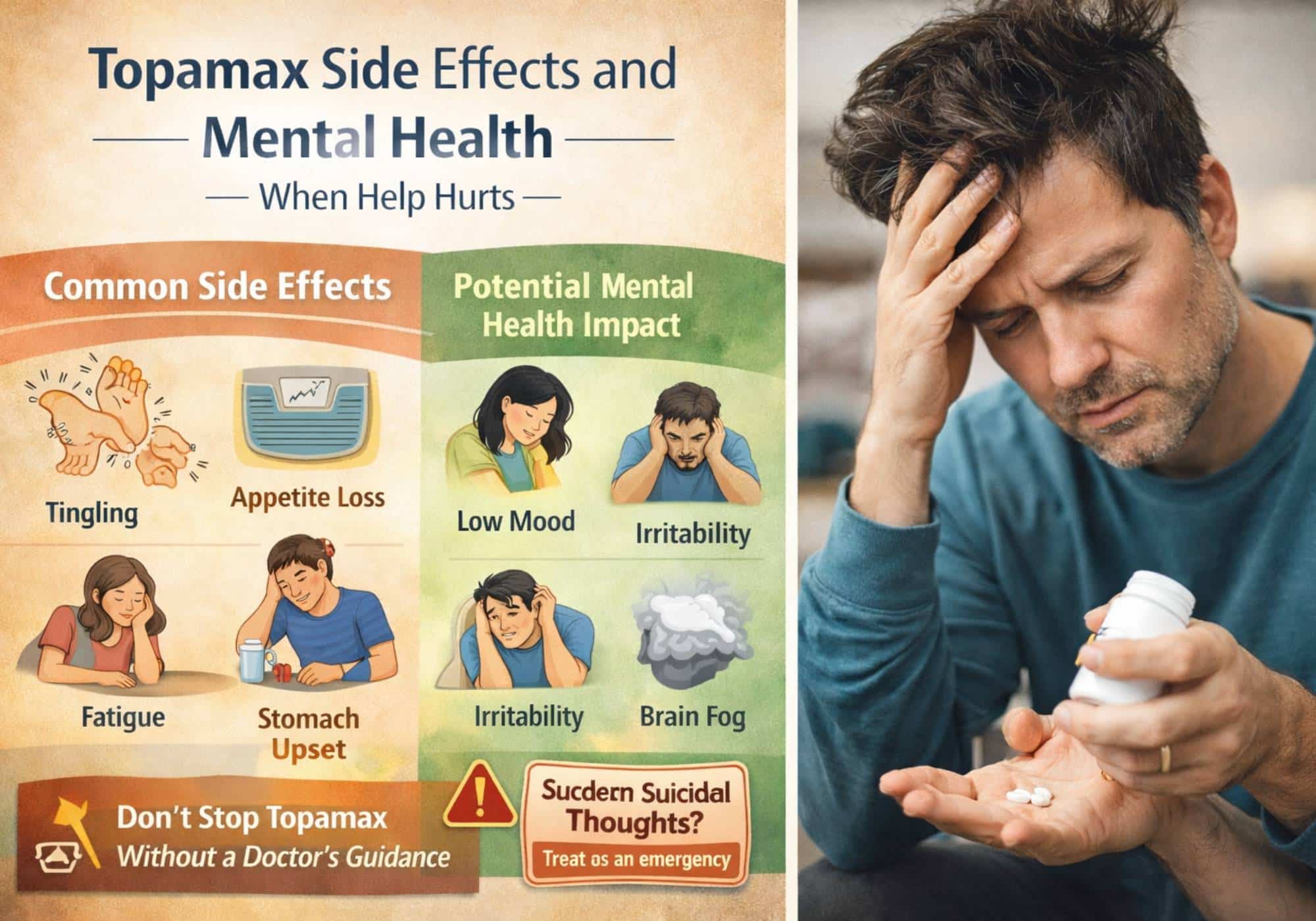
Cognitive Side Effects, “Brain Fog,” And Word-Finding Trouble
One of the most commonly discussed challenges with Topamax is cognitive side effects. People may describe this as “brain fog” or feeling slowed down.
This can show up as:
- Word-finding difficulty (knowing what you want to say, but struggling to say it)
- Short-term memory issues
- Reduced focus or concentration
- Feeling mentally “dull” or less sharp
If your work, school, or daily functioning is being impacted, that is a strong signal to talk with your prescriber about next steps.
When Side Effects Feel Like A Crisis
Sometimes people search “Topamax ruined my life” because the experience feels scary, sudden, or destabilizing. If you feel like you are not yourself, your symptoms are escalating, or you are afraid of what is happening, you deserve support and a clear plan. The right next step is often a structured conversation about dose timing, dose changes, alternative options, and safety monitoring.
What To Track Before You Call Your Prescriber
Clear details help your clinician help you.
Track:
- Start date and current dose
- Any recent dose changes and when they happened
- New symptoms, when they started, and how intense they feel (0–10)
- Sleep changes, appetite changes, and energy changes
- Mood changes, anxiety changes, and any intrusive thoughts
How To Talk To Your Doctor About Topamax Side Effects
If you feel unsure what to say, use a simple script:
“Since starting or increasing Topamax, I’ve noticed these changes: (list symptoms). It’s affecting my daily life. Can we review whether this is expected, what timeframe we’re watching, and what our options are if it doesn’t improve?”
For a step-by-step approach and more scripts, use this companion page on how to talk to your doctor.
Do Not Stop Topamax Abruptly
Stopping suddenly can be risky, especially for people taking it for seizure control. If Topamax is causing severe side effects, you can still advocate for change, but do it with medical guidance so you have a safe taper or transition plan.
When A Medication Experience Leaves You Feeling Traumatized
A harmful or frightening medication experience can create ongoing fear and mistrust, even after the side effects ease. If you feel stuck in hypervigilance or afraid to try treatment again, this resource may help you process what happened and medication trauma healing.
When To Get Help Beyond Medication Adjustments
Sometimes side effects collide with anxiety, depression, or substance use, and the whole situation feels bigger than a dose change. If you are in Georgia and want support for mental health and substance use concerns in an outpatient setting, Hope Harbor Wellness can help you build a plan that feels stable and realistic. Contact us today at 770-573-9546 or fill out our online contact form.
Topamax Side Effects And Mental Health FAQs
Can Topamax cause anxiety or depression?
Some people report increased anxiety, low mood, or emotional changes after starting Topamax or changing the dose. Any mood change that feels intense, persistent, or unsafe should be discussed with your prescriber promptly.
Why does Topamax cause “brain fog” or word-finding problems?
Topamax can affect cognition in some people, leading to slowed thinking, memory issues, or word-finding difficulty. If it interferes with daily functioning, talk with your prescriber about dose adjustments or alternatives.
How long do Topamax side effects last?
Some side effects improve after the body adjusts, especially early in treatment. Others may persist or worsen. Your clinician can help you set a timeframe for monitoring and decide when a change is needed.
Can I stop Topamax cold turkey?
Do not stop Topamax abruptly unless a clinician tells you to. Stopping suddenly can be risky, especially for seizure disorders. Ask for a safe taper plan.
When should I seek emergency help?
Seek emergency care for suicidal thoughts, severe confusion, fainting, seizures, severe allergic reactions, or any symptom that feels life-threatening.
What should I say to my doctor if Topamax makes me feel worse?
Be specific about what changed, when it started, and how it affects your life. Ask for a clear plan for what to change and when to reassess.