
Trazodone helps treat depression and sometimes insomnia, yet questions often arise about how long it remains detectable in your system. Factors like age, metabolism, dosage amounts, and health can change the exact timeline. Because your liver breaks down trazodone and the kidneys eliminate most of it, these organs play a big role in how quickly it leaves your body. Below, we’ll explore the basics of how long trazodone stays in your system, its half-life, and how to find help if misuse becomes a problem. If you or a loved one needs support, outpatient drug treatment in Atlanta at Hope Harbor Wellness could help turn things around.
What Is Trazodone Used For?
Trazodone is an antidepressant that mostly helps people struggling with major depressive disorder. It can boost mood, appetite, and energy in those dealing with depression. Additionally, many doctors use it off-label for insomnia because it can help promote sleep. Trazodone belongs to a class of drugs known as serotonin antagonists and reuptake inhibitors (SARIs). By influencing serotonin levels, it addresses some of the emotional and physical symptoms tied to depression. Some people with persistent sleep issues also find relief taking trazodone at bedtime under professional guidance. However, it’s important to remember that any medication can lead to challenges if not used as prescribed.
What Class of Drug Is Trazodone?
Drug “classes” group medications by how they act in the brain or body. Trazodone is part of the serotonin antagonist and reuptake inhibitor category, or SARI. It prevents brain cells from reabsorbing serotonin too quickly, helping stabilize mood. Other SARI drugs include nefazodone and mepiprazole, but trazodone is the best-known. Because of its sedative qualities, it’s often prescribed at lower doses for sleep. Users should know that mixing trazodone with certain medications—or using more than recommended—can have serious consequences, such as dizziness, sedation, or changes in blood pressure.

Does Trazodone Show Up on a Drug Test?
Standard drug screens, such as the typical 5-panel test for employment, often look for opioids, cocaine, marijuana, amphetamines, and PCP. Trazodone usually doesn’t appear on those. However, advanced or extended tests can detect it. In rarer cases, trazodone might produce a false positive for something else. If you’re taking this drug and worried about a screening, let the testing facility or your employer know. In general, though, it’s not a typical drug of abuse that labs specifically watch for.
What is the half‑life of Trazodone?
A medication’s half‑life is the time your body needs to reduce the amount of that drug in your bloodstream by half. Trazodone’s elimination is often described as “biphasic” (an early distribution phase followed by a slower elimination phase). For most adults:
-
Average elimination half‑life: roughly 5 to 13 hours, often close to 10 hours.
-
Absorption and peak levels: typically peak about one hour after a dose on an empty stomach and about two hours if taken with food.
Half‑life offers a clue to duration, but it is not the whole story. Detection windows vary by test type and by the person. Traces may be detectable in some tissues and tests well after the drug’s main effects have worn off. For example, hair tests can reflect exposure for up to 90 days, even though the medication is no longer active in your system.
Factors That Affect How Long Trazodone Will Stay in Your System
When it comes to elimination times, one size does not fit all.
Many personal circumstances can stretch or shorten how long trazodone is detectable:
- Dosage and Frequency: Taking larger doses or using it multiple times a day may lead to a buildup. That can extend the time your body requires to flush it out.
- Metabolism: Your body’s metabolic speed, influenced by age or genetics, can either speed up or delay clearance. Younger individuals usually remove drugs faster.
- Liver and Kidney Health: Trazodone is metabolized mostly in the liver, while the kidneys excrete the byproducts. If these organs don’t work well, the medication may linger.
- Co-Existing Conditions: Medical issues affecting your liver or kidneys (like cirrhosis or kidney failure) can slow the process.
- Body Composition: Weight, muscle mass, and hydration also factor in. Heavier or less hydrated individuals may store remnants longer.
How Long Does Trazodone Stay in Your System?
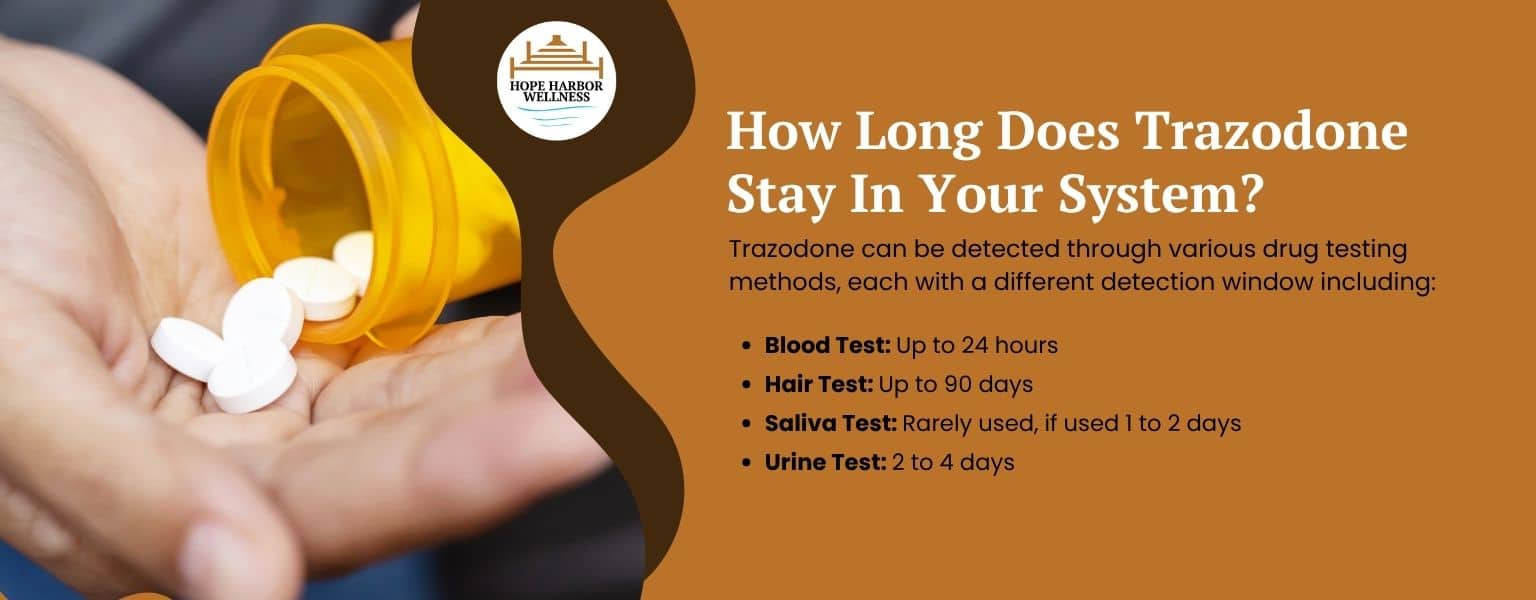
Depending on the type of test:
- Urine: Trazodone can appear for 2–4 days post-dose. However, if you’re a chronic user, it could show up slightly longer.
- Hair: Hair tests might detect it for up to 90 days, though it’s unusual to test hair for trazodone specifically.
- Blood: Typically, it’s detectable for up to 24 hours in blood, which is usually used to confirm very recent use.
- Saliva: Not a common method for checking trazodone, but if tested, it might find traces for about a day or two.
If your body takes longer to metabolize it—say, due to older age or health issues—the detection window might be somewhat extended.
How Long Does Trazodone Stay in Your Urine?
Urine tests generally remain the most common approach for many medications, including sleeping aids or antidepressants. For most folks, trazodone remains in urine for around 2–4 days. Frequent use can extend that. So if you’re a daily user, your system might not be fully clear for closer to a week. Then again, typical drug screens don’t automatically look for trazodone—lab-based tests can, but a standard panel might not pick it up unless specifically requested.
How Long Does Trazodone Stay in Your Hair?
In hair, the detection window can stretch to 90 days or more. That’s because as hair grows, it traps drug traces in the follicles. However, hair testing for trazodone is rare, as it’s not commonly abused in the same manner as narcotics or stimulants. Even so, if you’re dealing with a specialized test—for example, in legal or custody battles—hair analysis might check for multiple prescription drugs.
How Long Does Trazodone Stay in Your Blood?
Blood tests offer a short detection window, usually no more than 24 hours for trazodone. They’re best at confirming very recent intake. If someone’s being tested in an emergency room scenario—for instance, due to an overdose or adverse reaction—a blood draw can reveal how much is in the system. Because the drug’s half-life is only about 10 hours, levels drop after a day.
How Long Does Trazodone Stay in Your Saliva?
Saliva testing for trazodone is uncommon, but if it occurs, the detection period is short—somewhere around 1–2 days. After that, any residual amounts likely become too small to detect. Because of that short range and the specialized nature of a saliva test, you don’t usually see it used for standard workplace or legal screenings.
Trazodone Withdrawal
When a person’s used trazodone regularly—especially at higher doses—and stops abruptly, they can face withdrawal.
Symptoms might involve:
- Rebound Insomnia
- Anxiety
- Irritability
- Mild Flu-Like Aches
- Restlessness
Trazodone withdrawal doesn’t typically cause life-threatening issues like severe seizures (common with certain benzodiazepines or alcohol). However, it can still be unpleasant. Tapering down under medical guidance is often a safer path if you’ve been using trazodone for extended periods.
Using Trazodone Safely
Trazodone is generally deemed safe under professional supervision.
That means following the instructions on the label or from your doctor:
- Stick to Prescribed Doses: Don’t increase the dose without consulting a physician, even if you feel it’s not “working enough.”
- Avoid Abrupt Stopping: If you want to discontinue, talk to your provider about a taper plan to minimize withdrawal or rebound symptoms.
- Watch for Interactions: Combining trazodone with other central nervous system depressants (like alcohol or opioids) can magnify sedation or breathing risks.
- Check with Your Doctor: If you have kidney or liver issues, you might need dose adjustments.
If you’re using trazodone for sleep, be aware that it was primarily developed for depression. Though many doctors do prescribe it off-label for insomnia, it’s wise to keep communication open about how well it’s working and whether there are side effects.
When Trazodone Use Becomes a Problem
Some people start off with legit prescriptions but take trazodone longer or at higher doses than advised. Maybe they enjoy the sedation or see it as a fix for ongoing stress. Others may combine it with alcohol or anti-anxiety meds to amplify relaxation, which can be dangerous. Misuse can set the stage for psychological dependence—feeling uneasy without it.
If you notice:
- Cravings
- Escalating Doses
- Panic When Missing a Pill
- Neglecting Work or Family
- Mixing with Substances for a “Better High”
…then it might be time to seek guidance. Trazodone misuse isn’t as prevalent as some other substances, but addiction is still possible.
Trazodone Interactions: Alcohol, Benzodiazepines, and Opioids
Mixing sedating substances raises risk. Even if you feel “used to” a medication, combinations can surprise you.
Keep these safety points in mind:
- Alcohol – Alcohol and trazodone both depress the central nervous system. Together, they can cause excessive drowsiness, dizziness, poor coordination, low blood pressure, and risky decision‑making. Sleep quality also suffers, even if you fall asleep faster.
- Benzodiazepines (e.g., Xanax, clonazepam, lorazepam) – Adding a benzodiazepine increases sedation and can impair memory and breathing—especially at night. It also complicates driving and raises overdose risk when other depressants are present.
- Opioids (prescription pain meds or illicit opioids) – The combination of opioids and sedatives is particularly dangerous. It can suppress breathing and is linked to overdose. If you use opioids, let your clinician know before taking any sedating medication.
- Over‑the‑counter sleep aids and antihistamines – Many “PM” products contain sedating antihistamines (diphenhydramine or doxylamine). These add to next‑day grogginess and confusion when combined with trazodone.
If you are prescribed multiple sedating medicines, ask your provider about dose timing, safer alternatives, and whether a taper might help. Never start, stop, or combine medications without medical guidance.
More About Drug Tests and Detection
Understanding how long Trazodone stays in your system is only one piece of the picture. If you’d like a deeper breakdown of how urine, blood, saliva, and hair tests actually work, you can read our guide on how drug tests work. For a broader overview of different substances and timelines, visit how long drugs stay in your system.
Treatment for Trazodone Abuse at Hope Harbor Wellness
If you sense trazodone is overshadowing your daily life, consider a range of treatments:
- Detox: For some, a short medical detox can help safely wean off the medication.
- Therapy: Counseling (like Cognitive Behavioral Therapy) pinpoints triggers and helps reshape thought patterns.
- Medication Adjustments: If you initially took trazodone for depression or insomnia, your doctor may switch you to a safer or more effective alternative.
- Support Groups: Programs where others share the same struggle can boost motivation and provide accountability.
- Outpatient Drug Treatment: If addiction severity demands structured support, stepping into an outpatient setting is a major step. It merges therapy, group work, and medical oversight without requiring overnight stays.
Trazodone generally helps with depression or sleeplessness. But if you’re worried about misuse or harmful side effects, you don’t have to tackle it alone. At Hope Harbor Wellness in Atlanta, GA, we offer outpatient drug rehab in Atlanta for anyone battling substance-related challenges. Ready to reclaim your well-being? Call us now at 770-573-9546 or via online form, and we’ll share how we can help you move forward.
How Long Does Trazodone Stay in Your System FAQs
How long does trazodone stay in your system?
Most people clear the drug to low levels within a few days. The average elimination half‑life is about 5 to 13 hours, often near 10 hours, but it varies with age, liver function, dose, and other medications. Hair testing can reflect exposure for up to 90 days.
What is the most significant side effect of trazodone?
The most concerning effects are excessive sedation, low blood pressure, confusion, rare heart rhythm issues, and signs of liver stress such as yellowing of the eyes or skin. Tell your provider right away if these occur.
How is trazodone eliminated from the body?
Trazodone shows biphasic elimination—a quick distribution phase and a slower elimination phase. It is metabolized in the liver and excreted by the kidneys as metabolites.
Can trazodone be stopped immediately?
It is not a benzodiazepine, but stopping suddenly can cause rebound insomnia, anxiety, or mood changes. Work with your prescriber on a taper and sleep‑support strategies.
Is trazodone a strong sleeping pill?
Many people find low‑dose trazodone helpful for sleep, especially when insomnia is tied to mood. Others may benefit more from CBT‑I or non‑benzodiazepine sleep options. The “best” approach depends on your goals and medical history.
Will trazodone show up on a standard drug test?
Some panels do not look for it; others do. Urine tests may detect it for 2–4 days, saliva for 1–2 days, blood for up to 24 hours, and hair for up to 90 days. Bring your prescription to any required testing.
Can I take trazodone with alcohol or Xanax?
Combining trazodone with alcohol or benzodiazepines increases sedation and breathing risk. Use only under medical supervision, if at all. Ask your provider about safer alternatives and timing.