

“Topamax Ruined My Life”: When Side Effects Go Too Far
If you’ve ever thought, “Topamax ruined my life,” you’re not being dramatic. For some people, topiramate (brand name Topamax) is a life-changing medication that reduces seizures or migraines. For others, the side effects are so intense that it impacts memory, mood, work, and relationships.
You might recognize yourself in some of these experiences:
- Feeling like your thinking is slowed down or foggy
- Struggling to find words or remember what you just said
- Feeling emotionally flat, depressed, or unlike yourself
- Losing weight without really trying
- Feeling like friends, family, or even your doctor “don’t get it”
This page is here to validate your experience, explain what might be happening, and offer ideas for next steps so you can move toward feeling like yourself again.
For a trusted medical overview of topiramate’s uses and side effects, you can look at the MedlinePlus topiramate drug information page from the National Library of Medicine.
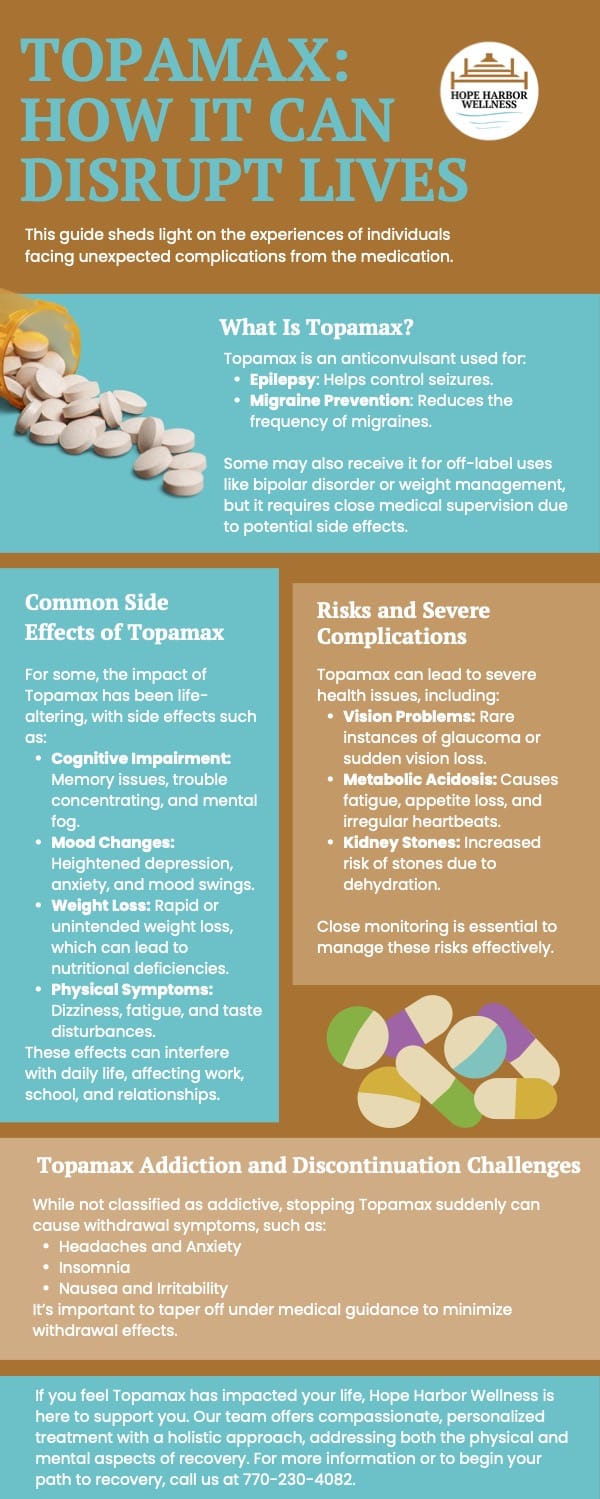
What Is Topamax (Topiramate) and Why Is It Prescribed?
Topamax is the brand name for topiramate, a prescription medication classified as an anticonvulsant.
It’s approved to:
- Treat certain types of seizures (epilepsy)
- Help prevent migraine headaches
In some cases, doctors also prescribe topiramate off-label for conditions like mood disorders, binge eating, or weight management.
Topiramate works on brain chemistry by:
- Calming overactive nerve firing
- Affecting GABA and other neurotransmitters
- Changing how certain brain pathways communicate
The FDA-approved Topamax prescribing information notes that while it can be effective, it also carries warnings for cognitive and neuropsychiatric side effects, metabolic changes, and other serious reactions.
Common Topamax Side Effects
Every medication has potential side effects. With Topamax, many people notice at least some of the following:
- Tingling or “pins and needles” in hands or feet
- Taste changes or food tasting “off”
- Nausea, stomach discomfort, or diarrhea
- Feeling tired or drowsy
- Weight loss or decreased appetite
- Dizziness or unsteady balance
These may be manageable for some people—annoying but not life-ruining. For others, they pile up and feel overwhelming, especially when combined with deeper cognitive or mood changes.
Resources like the GoodRx guide to topiramate side effects summarize both common and serious reactions in a consumer-friendly way so you can see how your experiences fit into the bigger picture.
Cognitive Side Effects: “I Can’t Think Clearly Anymore”
One of the most difficult parts of being on Topamax is the effect it can have on thinking and memory.
People often describe it as:
- “Brain fog” or mental slowing
- Trouble finding words or remembering names
- Losing your train of thought mid-sentence
- Feeling less sharp at work or school
The FDA label for topiramate lists cognitive and neuropsychiatric adverse reactions as significant warnings, including problems with attention, memory, and language.
When your ability to think, speak, or remember feels different, it can touch everything:
- Job performance and confidence
- Schoolwork or academic goals
- Parenting, relationships, and day-to-day tasks
- Your sense of who you are as a person
That’s a big part of why people use strong language like “Topamax ruined my life.” It’s not just side effects—it’s a feeling of having your mind changed without fully realizing what was happening at first.
Mood and Mental Health Changes on Topamax
Topamax doesn’t just affect seizures and migraines—it can also affect mood and mental health.
Some people notice:
- New or worsening depression
- Anxiety or irritability
- Feeling emotionally flat or disconnected
- Increased anger, agitation, or restlessness
- Darker thoughts, including thoughts of self-harm
The FDA and other medical sources warn that topiramate can increase the risk of suicidal thoughts and behaviors in some individuals, especially when starting the medication or changing the dose.
The National Alliance on Mental Illness medication guide for topiramate (Topamax) also notes these mood-related side effects and emphasizes the importance of close monitoring, especially in people with a history of depression or other mental health conditions.
If you’ve noticed your mood shifting since starting Topamax—or you’ve had thoughts like “I don’t care if I’m here” or “I’d be better off gone”—that’s not something to ignore or just push through.

Physical Complications: Weight Loss, Kidney Stones, and More
In addition to cognitive and mood changes, Topamax can cause physical changes that contribute to feeling unwell, such as:
- Significant, unintended weight loss
- Decreased sweating and overheating (especially in children)
- Vision changes or eye pain
- Kidney stones
- Metabolic acidosis (changes in blood chemistry)
These side effects might show up slowly over time, which can make it harder to connect them to the medication—especially if you started Topamax with good intentions, hoping it would finally give you relief from seizures or migraines.
When It Feels Like Topamax Has “Ruined Your Life”
You might feel that Topamax has taken more from you than it has given, especially if you’ve experienced:
- Losing a job, academic struggles, or falling behind because you can’t think clearly
- Strained relationships because you feel irritable, flat, or unlike yourself
- Increased drinking or substance use to cope with your symptoms
- Fear that your brain will “never go back to normal”
Those feelings are real and valid. At the same time, it’s important to remember:
- You did not “fail” this medication.
- You are not weak or imagining things.
- You still have options, even if you’ve had a bad experience with Topamax.
Many people find that when they work closely with a provider, taper carefully, and explore other treatments, they can improve their quality of life and feel more like themselves again.
What to Do If You Think Topamax Is Hurting You
If you suspect Topamax is doing more harm than good, consider these steps:
- Write down what you’re noticing.
- Memory or word-finding problems
- Mood changes or darker thoughts
- Physical symptoms like weight loss, vision issues, or kidney pain
- Schedule an appointment with the prescriber.
- Bring your notes and be specific
- Ask directly: “Could these be side effects of Topamax?”
- Ask about alternatives and taper options.
- Never stop Topamax abruptly without medical guidance, especially if you take it for seizures.
- Your provider may suggest a slow taper and/or a different medication or approach.
- Include mental health support.
- Therapy can help you process what happened, manage fear about future medications, and address any depression or anxiety that’s surfaced.
If you feel dismissed or unheard, it’s okay to seek a second opinion from another medical or mental health professional.
When Topamax, Trauma, and Substance Use Overlap
Sometimes it’s not just the medication. Many people who end up on Topamax are already dealing with:
- Chronic pain or migraine
- Anxiety, bipolar disorder, or other mental health conditions
- Past trauma or ongoing stress
- Alcohol or substance use to cope with symptoms
A medication that affects your brain and mood can stir all of that up. You might find yourself:
- Using more substances to take the edge off side effects
- Feeling hopeless or trapped in your situation
- Struggling with both physical symptoms and emotional pain
In these cases, you may need more than a simple med change. A comprehensive treatment plan that addresses mental health, substance use, and medical issues together can be much more effective than trying to fix each piece in isolation.

When to Seek Immediate Help
Topamax side effects can be urgent or even life-threatening.
Get immediate help (call 911 or go to the nearest emergency room) if you experience:
- Thoughts of suicide, self-harm, or feeling like you might act on those thoughts
- Sudden vision changes, eye pain, or loss of vision
- Severe confusion, agitation, or drastic behavior changes
- Trouble breathing, severe rash, or swelling of the face or throat
- Symptoms of kidney stones with intense pain in the back or side and blood in the urine
You are not overreacting by taking these signs seriously. Your safety matters more than staying on any one medication.
You Don’t Have to Go Through This Alone
If your experience with Topamax has left you anxious, depressed, or feeling like you don’t recognize yourself, you deserve real support—not judgment, dismissal, or “just stick with it.”
You don’t have to navigate this by yourself. Call us today at 770-573-9546 or fill out our online contact form.—let’s map a plan that fits your life and protects your health.
Topamax Ruined My Life FAQs
Why do some people say “Topamax ruined my life”?
People use this phrase when side effects—like brain fog, mood changes, weight loss, or physical complications—impact work, relationships, and overall quality of life so much that they feel worse on the medication than they did before.
Can Topamax cause depression or suicidal thoughts?
Yes. Topiramate can contribute to depression, mood changes, and suicidal thoughts in some individuals. Any new or worsening depression, hopelessness, or thoughts of self-harm should be taken seriously and discussed with a doctor right away.
Does Topamax permanently damage your brain?
Most cognitive side effects (like memory problems and word-finding issues) improve after the dose is reduced or the medication is stopped, but recovery can take time. Everyone is different, so it’s important to work closely with your provider and report any ongoing problems.
How can I talk to my doctor about bad side effects from Topamax?
Bring specific examples of what has changed—memory, mood, work performance, relationships—and how long it’s been happening. Ask directly whether Topamax could be the cause and what your options are for adjusting the dose, tapering, or switching medications.
Can I just stop taking Topamax if the side effects are too much?
Do not stop Topamax suddenly, especially if you take it for seizures, as this can increase your risk of serious problems. Instead, talk with your prescriber about a safe taper plan and alternative treatments.
What if I feel traumatized after my experience with Topamax?
Feeling anxious, fearful, or traumatized after a difficult medication experience is common. Working with a therapist—ideally one familiar with health-related trauma—can help you process what happened and rebuild confidence in your care.