


When you seek help for mental health challenges, medications like Cymbalta often appear as a beacon of hope. But what if that beacon leads you into unexpected darkness? Imagine turning to a solution that unexpectedly brings complications, profoundly impacting your life. This article delves into the lesser-known side of Cymbalta, highlighting personal experiences and scientific insights that reveal its potential to cause significant disruption.
As you explore these insights, you’ll understand why some individuals say, “Cymbalta ruined my life,” and gain a deeper comprehension of the complexities surrounding psychiatric medications. Welcome to a journey through the challenging aspects of treatment.
What Is Cymbalta?
Cymbalta, whose generic name is duloxetine, is an FDA-approved serotonin-norepinephrine reuptake inhibitor (SNRI). It’s prescribed to treat various mental health disorders and certain medical conditions by increasing the levels of serotonin and norepinephrine in the brain, chemicals that play a crucial role in mood regulation and pain perception.
What Does Cymbalta Treat?
Cymbalta is used to manage several conditions, including:
- Depression: Helps alleviate symptoms by regulating mood.
- Anxiety Disorders: Reduces anxiety symptoms and improves overall well-being.
- Fibromyalgia: Provides pain relief and enhances physical function.
- Diabetic Neuropathy: Alleviates nerve pain associated with diabetes.
- Chronic Joint and Muscle Pain: Manages and reduces persistent pain.
Why Do People Say “Cymbalta Ruined My Life”?
Some individuals express that Cymbalta had a profoundly negative impact on their lives due to severe side effects experienced while taking the medication. These adverse effects can include extreme fatigue, dizziness, nausea, insomnia, and emotional numbness. Additionally, many report intense withdrawal symptoms when discontinuing Cymbalta, such as mood swings, anxiety, and flu-like symptoms. Severe nausea and other withdrawal effects can make the process of stopping the medication extremely challenging.
These overwhelming experiences can lead to a significant decline in quality of life, prompting the sentiment that Cymbalta has had a devastating effect on their well-being. It’s crucial to communicate with your healthcare provider about any severe side effects you experience while on this medication.
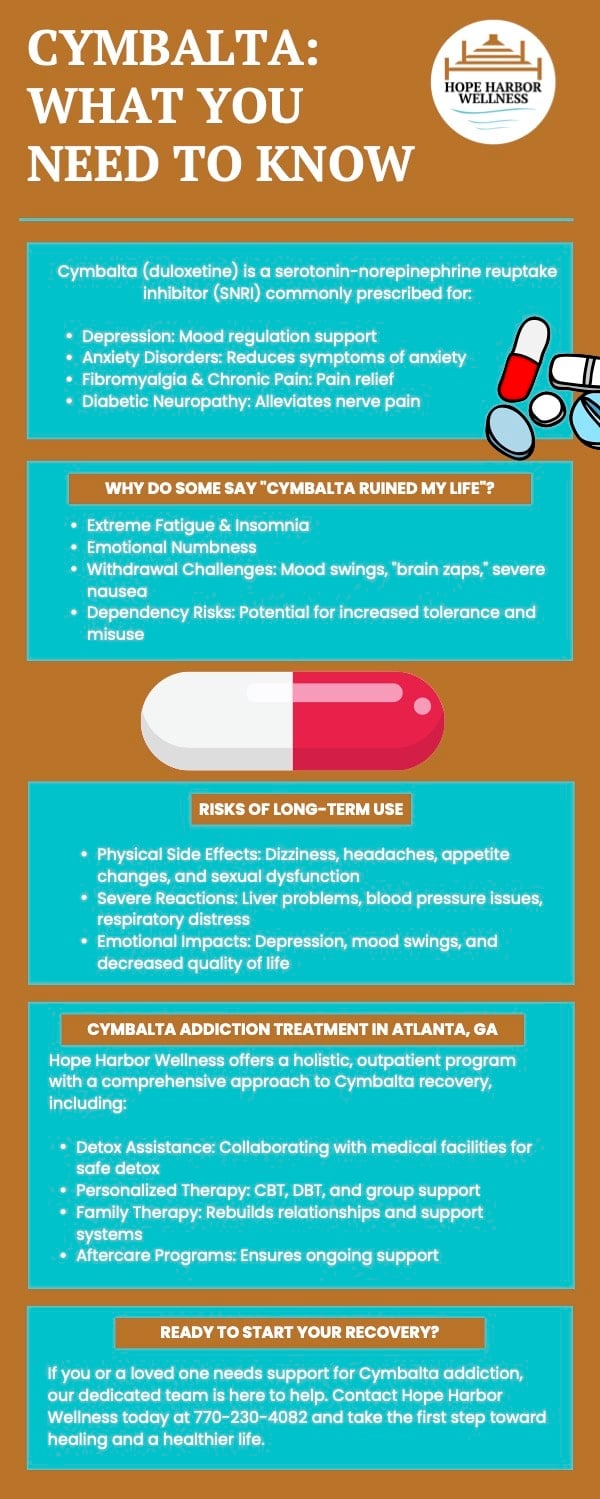
Understanding the Risks of Cymbalta Long-Term Side Effects
Cymbalta works by altering the levels of neurotransmitters in the brain, specifically serotonin and norepinephrine. While this can help improve mood and reduce pain, manipulating these natural chemicals can lead to widespread side effects throughout the body. The drug interferes with nerve cells that regulate vital functions like sleep, appetite, motor skills, and immune responses.
Over time, this interference can cause a domino effect of adverse reactions, as the body’s natural processes are disrupted. Long-term effects of Cymbalta are still being studied, but it’s known that prolonged use can leave patients dealing with both their original symptoms and new, unintended side effects.
When Someone Describes “How Cymbalta Ruined My Life”
Individuals may feel that Cymbalta negatively impacted their lives due to the side effects experienced or the difficulties faced when trying to discontinue the medication.
Side Effects of Cymbalta
Cymbalta can cause a range of side effects, which may include:
- Insomnia: Difficulty falling or staying asleep.
- Nausea: Feelings of sickness that can vary in intensity.
- Fatigue: Persistent tiredness and lack of energy.
- Changes in Appetite: Loss of appetite or increased hunger.
- Weight Changes: Unintended weight loss or gain.
- Headaches: From mild discomfort to severe migraines.
- Dizziness: Feelings of lightheadedness or imbalance.
- Sexual Dysfunction: Decreased libido or other sexual issues.
- Dry Mouth: A frequent sensation of dryness.
- Increased Sweating: Excessive perspiration without physical exertion.
- Euphoria: Unusually elevated mood or overexcitement.
Some severe side effects require immediate medical attention:
- Thoughts of self-harm or suicide.
- Yellowing of the eyes or skin, indicating liver problems.
- Blood in urine or stool.
- Vomiting or coughing up blood.
- Unexplained bruising or bleeding.
- Persistent headaches.
- Confusion or disorientation.
- Muscle spasms or cramps.
- General weakness.
- Hallucinations.
- Chest tightness.
- Uncharacteristic aggression or irritability.
- Shortness of breath.
- Painful erections lasting more than two hours.
- Allergic reactions like rash or swelling.
- Fainting or loss of consciousness.
- Bluish lips, tongue, or skin.
Quitting Cymbalta
Discontinuing Cymbalta can be challenging due to potential withdrawal symptoms. Stopping the medication abruptly is not recommended, as it can lead to uncomfortable or severe withdrawal effects. A gradual tapering plan, developed with your doctor, allows your body to adjust slowly to lower doses and can help minimize withdrawal symptoms.
Withdrawal occurs because the brain needs time to readjust its natural production of serotonin and norepinephrine after reliance on the medication.
Cymbalta Withdrawal Symptoms may include:
- Dizziness
- Nausea
- Headaches
- Irritability
- Fatigue
- Flu-like symptoms
- Insomnia
- Mood swings
- “Brain zaps” (electric shock sensations)
- Severe nausea

Can You Overdose on Cymbalta?
Yes, overdosing on Cymbalta is possible and can be dangerous. Symptoms of an overdose may include severe drowsiness, seizures, rapid heartbeat, high blood pressure, fainting, and in extreme cases, can be life-threatening. If an overdose is suspected, seek emergency medical attention immediately. Always take Cymbalta exactly as prescribed to avoid the risk of overdose.
How to Recover When Cymbalta Has Ruined Your Life
If you feel that Cymbalta has had a detrimental impact on your life, it’s important to take steps toward recovery:
Seek Professional Guidance
Consult your healthcare provider about your experiences. Do not stop taking Cymbalta abruptly without medical advice, as this can lead to severe withdrawal symptoms.
Gradual Tapering
Work with your doctor to create a plan to taper off the medication slowly. This approach helps minimize withdrawal effects and allows your body to adjust.
Monitor Your Symptoms
Keep a journal of any physical or emotional changes. Sharing this information with your healthcare provider can help tailor your treatment.
Consider Counseling or Therapy
Engaging in therapy can provide support and coping strategies to manage underlying mental health issues such as depression or anxiety.
Prioritize Your Physical Health
Maintain a balanced diet, stay hydrated, exercise regularly, and ensure adequate sleep to support your overall well-being.
Explore Alternative Treatments
Discuss with your doctor other medications or non-pharmacological therapies that may be more suitable for your needs.
Stay Patient and Positive
Recovery is a process that takes time. Be patient with yourself and focus on gradual progress.
Remember, you’re not alone in this journey. Seeking help is a courageous step toward healing. At Hope Harbor Wellness, we are committed to supporting individuals facing challenges with medications like Cymbalta. Our compassionate team is here to provide guidance, personalized treatment options, and a path toward a healthier, more fulfilling life.

Cymbalta Addiction Treatment Atlanta, GA
Located in the serene suburbs of Atlanta, Hope Harbor Wellness is your ally in the fight against Cymbalta addiction in Atlanta. Our drug rehab center, dedicated to holistic recovery, is ideally situated to offer you the support you need.
Our compassionate outpatient program collaborates with top-tier medical Cymbalta detox facilities, ensuring a safe and effective detox process. Once free from addictive substances, you can seamlessly transition into one of our specialized outpatient treatment programs at Hope Harbor Wellness, designed to address substance use disorders:
- Outpatient Rehab: A flexible program tailored to fit into your daily life.
- PHP (Partial Hospitalization Program): Offers a structured yet non-residential approach to treatment.
- IOP (Intensive Outpatient Program): Provides more intensive care while allowing you to maintain daily responsibilities.
- Dual Diagnosis Treatment Program: Caters to those with co-occurring mental health disorders.
Our Cymbalta addiction treatment programs incorporate a variety of interventions:
- MAT (Medication-Assisted Treatment): Utilizes medications to ease withdrawal symptoms and cravings.
- Psychotherapy (CBT or DBT): Addresses underlying psychological aspects of addiction.
- Group Therapy: Offers peer support and shared learning experiences.
- Individual Therapy: Provides personalized guidance and support.
- Family Therapy: Helps heal and strengthen family relationships.
- Holistic Therapies: Focuses on overall well-being, including physical, emotional, and spiritual health.
- Aftercare: Ensures ongoing support post-treatment.
Embark on your journey from addiction to recovery with Hope Harbor Wellness. Trust in our dedicated team to guide you every step of the way. For more information on Cymbalta addiction treatment in Atlanta, GA or to start your journey, call our admissions team at 770-573-9546 or fill out our online contact form.