


Percocet is a prescription opioid commonly prescribed by healthcare professionals to manage moderate to severe pain. Whether you or someone you care about is using this medication for pain relief, it’s essential to understand that Percocet has the potential for abuse similar to illicit drugs. Misusing Percocet can lead to serious risks, including the danger of an oxycodone overdose. A particularly harmful method of abuse is grinding Percocet tablets into a fine powder and snorting it.
Overcoming addiction to Percocet, as well as other prescription medications, is achievable with the right support from an addiction treatment center. In this article, we will discuss the dangers associated with Percocet addiction, the life-threatening risks of snorting this drug, and the steps involved in the recovery process.
What Is Percocet?
Percocet is a medication composed of two active ingredients: oxycodone and acetaminophen. Oxycodone is a strong opioid pain reliever, while acetaminophen is a non-opioid painkiller that enhances the effects of oxycodone. Together, these ingredients make Percocet an effective treatment for managing moderate to moderately severe pain.
In addition to these active components, Percocet contains several inactive ingredients such as:
- Colloidal silicon dioxide
- Croscarmellose sodium
- Crospovidone
- Microcrystalline cellulose
- Pregelatinized cornstarch
- Stearic acid
When individuals engage in snorting Percocet, they are not only ingesting oxycodone and acetaminophen but also these additional chemicals. This method of consumption introduces these substances directly into the nasal passages, increasing the risk of adverse effects.
Can You Snort Percocet?
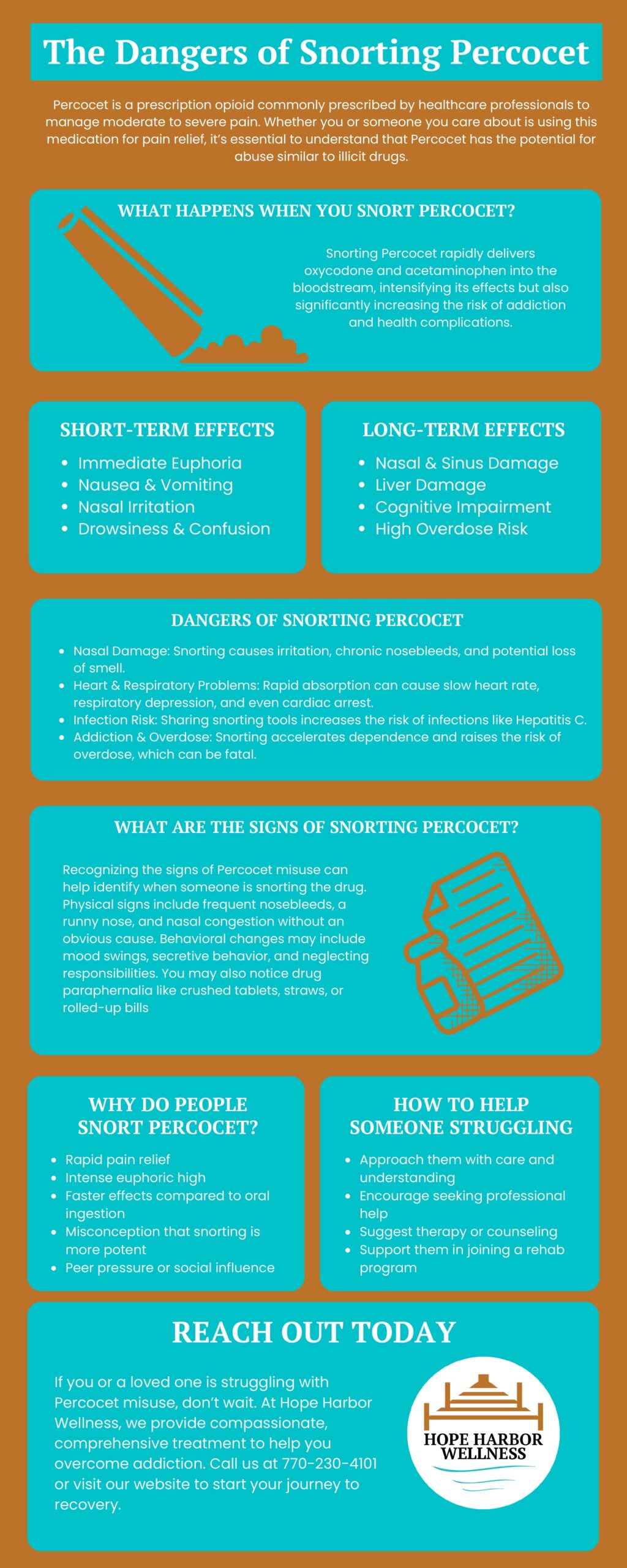
Yes, it is possible to snort Percocet, although it is highly dangerous and strongly discouraged. Snorting Percocet involves crushing the tablets into a fine powder and inhaling it through the nose. This method of ingestion bypasses the digestive system, allowing the active ingredients, oxycodone and acetaminophen, to enter the bloodstream more rapidly. When individuals choose to snort Percocet, they are seeking a quicker onset of the drug’s effects, whether for faster pain relief or to achieve an intense euphoric high.
However, percocet snorting significantly increases the risk of developing a tolerance to the drug, meaning that higher doses are needed to achieve the same effects. This rapid increase in tolerance can quickly lead to physical dependence and addiction. Additionally, snorting Percocet exposes the nasal passages and sinuses to harmful chemicals found in the tablets, causing irritation, chronic nosebleeds, and potential long-term damage to the respiratory system. The immediate surge of oxycodone into the brain heightens the risk of overdose, making snort Percocet an extremely hazardous practice.
At Hope Harbor Wellness, we recognize the severe risks associated with snorting Percocet and offer comprehensive treatment programs to help individuals overcome this dangerous behavior. Our dedicated team provides the support and resources necessary for recovery, ensuring a path toward a healthier, drug-free life. Contact us today at 770-573-9546 or fill out our online contact form.
Understanding Snorting Percocet
Percocet is a powerful prescription medication, and its misuse through methods like snorting Percocet intensifies its effects. According to the National Institutes of Health’s LiverTox, “Oxycodone (Percocet) is a semisynthetic, moderately potent, orally available opioid that is widely used for acute or chronic management of moderate- or moderately-severe pain, either alone or combined with acetaminophen.” This combination of oxycodone, a potent opioid, with acetaminophen enhances its pain-relieving effects but also increases the risk of misuse and addiction when taken in ways not prescribed.
Beyond pain relief, Percocet is known to generate intense euphoria, comparable to the high produced by heroin. This sense of well-being is one of the main reasons people become dependent on or abuse Percocet. Snorting Percocet delivers the effects almost immediately, as it allows the drug to bypass the digestive system and enter the bloodstream directly through the nasal passages. This rapid delivery leads to an intense, fast-acting high, making percocet snorting especially appealing to those seeking an enhanced experience. However, this intensified high comes with increased dangers, including a higher risk of addiction and severe health complications.
The dangers associated with snorting Percocet extend far beyond addiction. The direct absorption through nasal tissues exposes users to additional risks, such as damage to the nasal passages and sinuses, which can result in chronic nosebleeds, sinus infections, and even loss of smell over time. In addition, the rapid increase in oxycodone levels heightens the chance of an overdose, as the body is suddenly overwhelmed by the drug’s effects. This method of misuse also accelerates the body’s development of tolerance, causing users to require higher and more frequent doses to achieve the same effects, which fuels the cycle of addiction.

Why Do People Snort Percocet?
People choose to snort Percocet for several reasons, primarily driven by the desire for a more intense and immediate high compared to oral consumption. One of the main motivations behind percocet snorting is the pursuit of rapid pain relief. For individuals suffering from severe pain, snorting Percocet can provide quicker analgesic effects, allowing them to manage their discomfort more effectively in the short term.
Another significant reason is the pursuit of euphoria. Snorting Percocet delivers a faster and more potent rush of oxycodone to the brain, intensifying the feelings of pleasure and well-being. This heightened experience can be particularly appealing to those struggling with addiction, as the intense high reinforces the desire to continue using the drug despite the associated risks. Additionally, peer pressure and the influence of social environments where drug use is normalized can contribute to the decision to snort Percocet.
The method of snort Percocet also allows users to avoid the slower onset and diminished effects that come with oral ingestion. By bypassing the digestive system, snorting ensures that a larger portion of the drug is absorbed directly into the bloodstream, enhancing its potency. This efficiency can make snort Percocet an attractive option for those seeking to maximize the drug’s effects quickly, further fueling the cycle of abuse and dependence.
Understanding the underlying reasons why individuals resort to snorting Percocet is crucial for effective treatment and prevention. At Hope Harbor Wellness, we address these motivations through personalized therapy and support systems, helping individuals find healthier ways to cope with pain and emotional challenges without relying on substance abuse. To begin your Percocet addiction treatment in Atlanta, call us today at 770-573-9546 or fill out our online contact form.
What Happens When You Snort Percocet?
When individuals snort Percocet, their primary goal is to accelerate the drug’s opioid effects. This method can be used to achieve faster pain relief or to experience a more intense high, especially for those who have developed an addiction. Percocet snorting leads to a much quicker onset of the drug’s effects compared to taking it orally. However, this rapid administration also causes the body to build tolerance to Percocet more swiftly. As tolerance and physical dependence develop, users find themselves needing higher doses of snort Percocet to achieve the same desired effects.
Snorting a high dose of Percocet allows the drug to cross the blood-brain barrier more efficiently than when it is ingested orally. This is because the drug bypasses the digestive system and enters the bloodstream directly through the nasal passages. As a result, individuals may begin to feel the effects of snorting Percocet within just two to four minutes. This immediate absorption not only intensifies the euphoric sensations but also heightens the risks associated with opioid use, including a faster progression toward addiction and an increased likelihood of experiencing severe side effects.
Moreover, the act of percocet snorting can cause significant damage to the nasal passages and sinuses, leading to chronic nosebleeds, sinus infections, and other respiratory issues. The rapid influx of oxycodone and acetaminophen into the bloodstream can overwhelm the body’s ability to manage the drug, escalating the risk of overdose. This dangerous method of abuse makes it easier for users to lose control over their Percocet intake, thereby increasing the chances of developing a life-threatening dependency.
The Dangers of Snorting Percocet
Using a prescription medication like Percocet in ways not intended by a healthcare provider, or for non-medical reasons, constitutes drug abuse. Individuals may turn to methods such as smoking, injecting, or snorting Percocet after developing opioid tolerance, seeking to replicate or intensify the desired effects. While all opioids inherently pose a risk of dependence, the abuse of Percocet through snorting introduces additional health hazards.
To mimic the effects achieved through oral consumption, users often crush Percocet or oxycodone tablets into a fine powder and inhale it through their nostrils. Snorting Percocet significantly accelerates the drug’s absorption into the bloodstream. Unlike oral ingestion, which requires the drug to pass through the digestive system before entering the bloodstream, snorting allows Percocet to cross the blood-brain barrier more swiftly via the mucous membranes in the nose and throat.
This rapid absorption leads to an intensified and immediate effect, making the high more potent and increasing the likelihood of habitual use. Snorting oxycodone or Percocet greatly amplifies the dangers associated with opioid misuse, including numerous severe health issues and, most critically, a heightened risk of fatal overdose.
Physical Damage
Snorting prescription drugs like Percocet can cause significant physical harm. When individuals snort Percocet, they inflict damage on the nasal passages, sinuses, and throat. This method of use can lead to chronic nosebleeds, persistent sinus infections, and potentially a loss of the sense of smell if the damage is severe and left untreated. Additionally, snorting Percocet can result in difficulties swallowing and increase the risk of acute or severe bronchial asthma, lung infections, or pneumonia.
Moreover, snorting oxycodone can cause an abnormally slow heart rate, elevating the risk of cardiac arrest. Ingesting large quantities of oxycodone and acetaminophen in a short time can overwhelm the respiratory system, potentially causing profound respiratory depression. This deprives the brain of sufficient oxygen, leading to brain damage or, in extreme cases, death.
The paraphernalia used for snorting, such as drinking straws or dollar bills, can harbor bacteria that get transferred into the nose, increasing the risk of bacterial infections. Sharing tools for snorting oxycodone also heightens the risk of contracting diseases like Hepatitis C due to damaged blood vessels in the nasal area.
Side effects of Percocet that may be intensified by snorting include:
- Changes in blood pressure and heart rate
- Fever
- Itchy skin
- Severe headaches
- Sleep apnea
- Abdominal pain
- Constipation
- Nausea and vomiting
- Anxiety
- Confusion
Injury and Risky Behavior
Using high doses of Percocet can impair judgment and lead to dangerous behaviors. The drug’s impact on decision-making abilities may cause individuals to engage in activities they would typically avoid, such as driving under the influence. This increases the likelihood of involvement in car accidents and other traffic-related incidents due to impaired coordination and reaction times.
Additionally, the addictive nature of Percocet can drive individuals to partake in criminal activities in an effort to obtain more of the drug. This desperation to satisfy their dependency can lead to theft, fraud, or other illegal actions, further endangering their safety and well-being.
Risk of Overdose
The alarming number of opioid overdose deaths involving prescription drugs—16,416 in 2020 alone—underscores the critical risk of overdosing on opioids like Percocet. Overdosing is a medical emergency that requires immediate attention. It is crucial to seek help from an addiction treatment provider for Percocet addiction and abuse before a fatal overdose occurs.
Crushing and snorting Percocet accelerates its impact on the central nervous system, resulting in a more intense and immediate high. However, this method significantly increases the risk of overdose. Both primary components of Percocet—acetaminophen and oxycodone—pose severe health risks when consumed in excessive amounts. An overdose of acetaminophen can lead to acute liver damage, which may be irreversible.
Furthermore, combining oxycodone and acetaminophen with other substances, particularly depressants like tranquilizers or alcohol, exacerbates the effects and health risks of both drugs. This combination heightens the risk of a Percocet overdose, which can result in respiratory depression.
Signs of a Percocet overdose include:
- Stomach pain or spasms of the intestinal tract
- Pinpoint pupils
- Vomiting
- Low blood pressure
- Weak pulse
- Drowsiness
- Difficult, shallow, and slow breathing, or no breathing at all
- Slow heartbeat
- Loss of consciousness
- Slurred speech
- Blue-purple coloration of fingernails and lips
- Coma

Effects of Snorting Percocet
Snorting Percocet leads to numerous short-term and long-term side effects, some of which can be extremely dangerous and even life-threatening. These effects are often unpredictable and carry significant risks due to the presence of counterfeit drugs on the black market, which are frequently mixed with substances like fentanyl and carfentanyl.
This illicit mixture makes the street version of Percocet more potent and dangerous. Users often crush Percocet tablets and snort them to achieve a faster and more intense high, a practice commonly referred to as “snorting percs.” This method of abuse is equally, if not more, hazardous than other forms of misuse, increasing the likelihood of severe health complications and overdose.
Short- and Long-Term Side Effects of Snorting Percocet
Individuals who engage in snorting Percocet expose themselves to immediate and severe health risks. The damage caused by snorting Percocet can quickly affect vital organs, leading to potentially irreversible harm that might necessitate organ transplants if the abuse continues.
The primary ingredient responsible for some of these harmful effects is acetaminophen. High doses of acetaminophen can cause significant liver damage, which can be fatal or require a liver transplant.
The second active ingredient, oxycodone, contributes to a range of side effects, including:
- Drowsiness
- Nausea
- Mood swings
- Excessive sweating
- Constipation
- Brain damage
Fatal Effects of Snorting Percocet
The risk of overdose significantly increases when snorting Percocet. The combination of acetaminophen and oxycodone can have lethal consequences if misused or abused. Percocet impacts the areas of the brain responsible for regulating breathing, making an overdose more likely, especially when snorted.
Snorting Percocet allows high doses to enter the bloodstream rapidly, overwhelming the brain’s ability to control heart rate and respiration. This swift and intense absorption can cause brain functions to decline rapidly, preventing the body from recovering in time to prevent fatal outcomes.
If you or someone you know may be at risk of overdosing on Percocet, it is critical to seek help immediately. Reach out to Hope Harbor Wellness before it’s too late to intervene and receive the necessary support.
Snorting Percocet Vs. Oral Administration
Percocet, like other opioids, can be absorbed into the body through various routes. However, healthcare providers typically prescribe Percocet for oral consumption to ensure safer use. Oxycodone, one of Percocet’s active ingredients, has a relatively high bioavailability when taken orally—approximately 60-87% of the dose reaches systemic circulation—and its effects generally last between three to six hours.
The key difference between taking Percocet orally and snorting Percocet lies in the onset and intensity of its effects. When Percocet is taken by mouth, the analgesic (pain-relieving) effects begin within about 15 minutes and peak within 30 to 60 minutes. In contrast, snorting Percocet results in the drug entering the bloodstream much more quickly, leading to almost immediate pain relief and euphoria. However, this rapid absorption also significantly increases the risk of acute toxicity and overdose, making snorting Percocet far more dangerous than oral administration.
Percocet Addiction Treatment Atlanta, GA
Located in the serene suburbs of Atlanta, Hope Harbor Wellness is your ally in the fight against Percocet addiction in Atlanta. Our drug rehab center, dedicated to holistic recovery, is ideally situated to offer you the support you need.
Our compassionate outpatient program collaborates with top-tier medical Percocet detox facilities, ensuring a safe and effective detox process. Once free from addictive substances, you can seamlessly transition into one of our specialized outpatient treatment programs at Hope Harbor Wellness, designed to address substance use disorders:
- Outpatient Rehab: A flexible program tailored to fit into your daily life.
- PHP (Partial Hospitalization Program): Offers a structured yet non-residential approach to treatment.
- IOP (Intensive Outpatient Program): Provides more intensive care while allowing you to maintain daily responsibilities.
- Dual Diagnosis Treatment Program: Caters to those with co-occurring mental health disorders.
Our Percocet addiction treatment programs incorporate a variety of interventions:
- MAT (Medication-Assisted Treatment): Utilizes medications to ease withdrawal symptoms and cravings.
- Psychotherapy (CBT or DBT): Addresses underlying psychological aspects of addiction.
- Group Therapy: Offers peer support and shared learning experiences.
- Individual Therapy: Provides personalized guidance and support.
- Family Therapy: Helps heal and strengthen family relationships.
- Holistic Therapies: Focuses on overall well-being, including physical, emotional, and spiritual health.
- Aftercare: Ensures ongoing support post-treatment.
Embark on your journey from addiction to recovery with Hope Harbor Wellness. Trust in our dedicated team to guide you every step of the way. For more information on Percocet addiction treatment in Atlanta, GA or to start your journey, call our admissions team at 770-573-9546 or fill out our online contact form.