


Phentermine is a prescription stimulant used short-term to suppress appetite, yet it can remain traceable in your body well after the weight-loss benefits have faded. Understanding its half-life, typical drug-test windows, and the variables that slow or speed elimination is key for anyone worried about side effects, workplace testing, or tapering off safely. Below, Hope Harbor Wellness explains everything you need to know and offers guidance for compassionate, evidence-based treatment if phentermine use has become problematic.
What Is Phentermine?
Phentermine (brand names Adipex-P®, Lomaira®, Ionamin®) is an amphetamine-like medication approved only for short periods—generally up to 12 weeks—to jump-start weight loss alongside diet and exercise. It boosts norepinephrine in the central nervous system, which curbs hunger and may slightly raise basal metabolic rate. Misuse, especially at high doses or for longer than prescribed, can lead to dependence, insomnia, anxiety, and cardiovascular strain.
Phentermine Half-Life and Metabolism
Most adults metabolize phentermine with an average elimination half-life of about 20 hours. In other words, 50 percent of the drug leaves the bloodstream roughly 20 hours after the last dose. Complete systemic clearance takes about five half-lives—roughly four days for most healthy adults.
The Metabolic Pathway
- Absorption: Peak blood levels appear three to four hours after ingestion.
- Metabolism: Primarily hepatic (liver) via cytochrome P450 enzymes.
- Excretion: Mostly renal; a small fraction leaves unchanged in urine.
Maintaining adequate hydration and kidney health supports normal clearance, but no home remedy can “flush” phentermine out overnight.
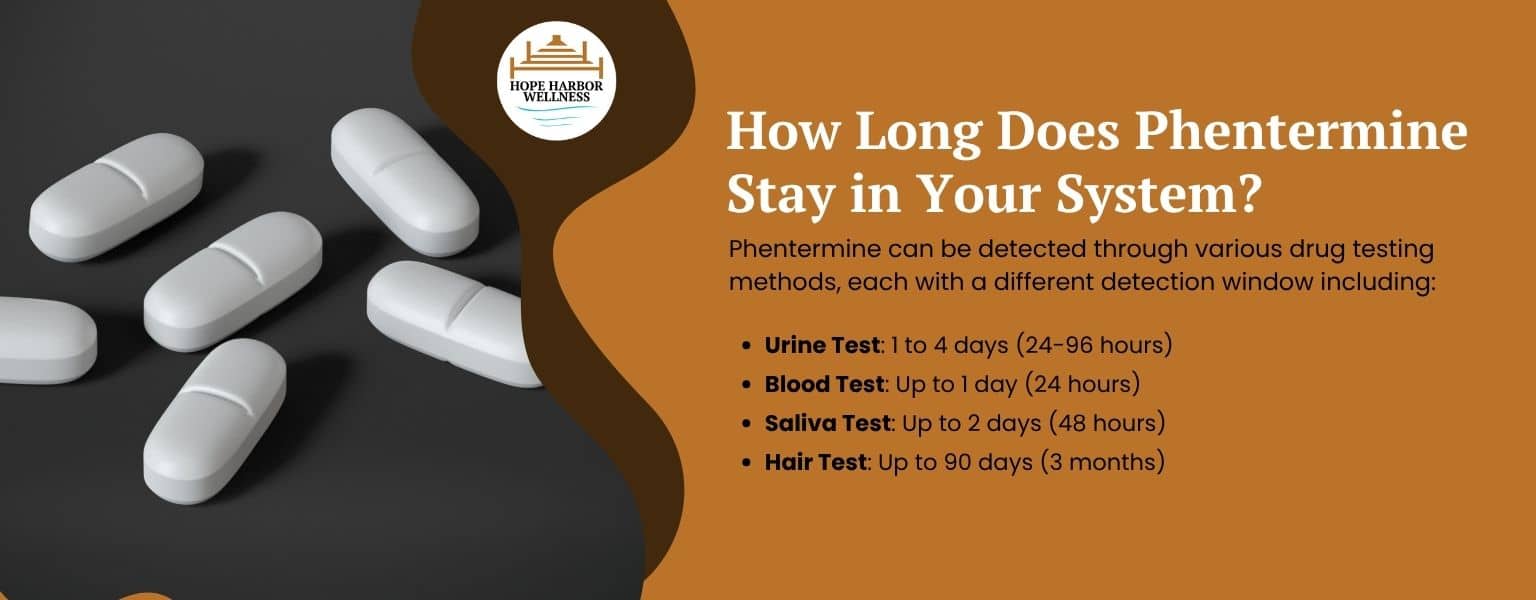
Detection Windows by Drug-Test Type
| Test Type | Typical Detection Window | Why It Matters |
|---|---|---|
| Urine | 1–4 days after last dose | Most employment and court screenings rely on urine panels. |
| Blood | Up to 24 hours | Used in emergencies or accidents to confirm impairment. |
| Saliva | Up to 48 hours | Less common but growing in workplace settings. |
| Hair | Up to 90 days (from date of use) | Provides a long-term history but is rarely ordered for phentermine. |
These ranges assume a single short-acting oral dose. Extended-release capsules or chronic use can extend every window by a day or two.
Factors That Influence How Long Phentermine Stays in Your Body
- Age and Metabolism – Younger adults with faster metabolisms clear the drug more quickly.
- Body Mass and Fat Distribution – Phentermine is lipophilic; higher body-fat percentages may prolong storage.
- Renal and Hepatic Function – Kidney or liver impairment slows breakdown and excretion.
- Dosage and Duration – Higher doses or continuous use saturate tissues and extend clearance.
- Urinary pH – Acidic urine accelerates elimination, whereas alkaline urine may slow it.
- Drug Interactions – Certain antidepressants and antacids alter gastric pH or enzyme activity, affecting absorption and metabolism.
Can You Speed Up Phentermine Detox?
Quick fixes—detox teas, excessive water loading, activated charcoal—lack scientific proof.
The safest, most reliable approach is time plus healthy habits:
- Stay hydrated with water and electrolyte-rich fluids.
- Eat balanced meals rich in fiber and lean protein to support liver enzymes.
- Engage in moderate exercise to stimulate circulation and sweating (if medically cleared).
- Avoid additional stimulants (caffeine, nicotine) that stress the cardiovascular system.
If you must pass a scheduled drug test while holding a valid prescription, bring your script to the testing facility. Attempting to manipulate results can be dangerous and may constitute fraud.
More About Drug Tests and Detection
Understanding how long Phentermine stays in your system is only one piece of the picture. If you’d like a deeper breakdown of how urine, blood, saliva, and hair tests actually work, you can read our guide on how drug tests work. For a broader overview of different substances and timelines, visit how long drugs stay in your system.

Phentermine Withdrawal Timeline and Symptoms
Although phentermine is not an opioid or benzodiazepine, abrupt cessation after weeks of daily use can trigger a “crash”:
| Timeframe | Common Symptoms |
|---|---|
| First 24 hours | Fatigue, increased appetite, mood dip |
| Days 2–4 | Irritability, sleepiness or insomnia, mild depression |
| Days 5–7 | Symptoms fade; energy and appetite stabilize |
| Week 2 and beyond | For some, lingering cravings or mood swings continue, especially if underlying anxiety or disordered eating was never addressed. |
Gradual tapering under medical supervision minimizes discomfort and reduces relapse risk.
Phentermine Misuse, Dependence, and When to Seek Help
Because phentermine is a Schedule IV controlled substance, physical dependence is possible.
Warning signs include:
- Escalating dose beyond prescription
- Using multiple prescribers (“doctor shopping”)
- Anxiety or agitation when pills run low
- Combining phentermine with other stimulants or alcohol
- Neglecting work, school, or relationships in pursuit of weight-loss goals
If these red flags sound familiar, professional support can prevent more serious health consequences such as hypertension, arrhythmias, or stimulant use disorder.
Evidence-Based Treatment at Hope Harbor Wellness
Hope Harbor Wellness in Atlanta offers a full continuum of care for phentermine or other stimulant misuse so you can enter treatment at the level that matches your needs and daily responsibilities:
- Outpatient Detox (Ambulatory Withdrawal Management): Medical oversight with medication-supported stabilization while you sleep at home, best for people who have mild to moderate withdrawal symptoms and a safe living environment.
- Partial Hospitalization Program (PHP): Structured therapy, medical monitoring, and skill-building about six hours a day, five or six days a week, ideal for those who need near-daily support without overnight care.
- Intensive Outpatient Program (IOP): Three to five sessions a week, each about three hours, scheduled around work or school, perfect for clients stepping down from PHP or needing more support than weekly counseling alone.
- Standard Outpatient Treatment: Weekly individual therapy with optional groups and peer support, designed for people who have strong external support systems and need maximum scheduling flexibility.
Across every level you receive:
- Comprehensive medical evaluation to create a safe taper plan or explore non-stimulant weight-management options.
- Evidence-based therapies such as Cognitive Behavioral Therapy to reshape body-image beliefs, manage cravings, and treat co-occurring anxiety or depression.
- Nutritional counseling that emphasizes sustainable, balanced eating rather than crash diets.
- Dual-diagnosis care for clients with concurrent mental-health or eating disorders.
- Ongoing relapse-prevention planning with alumni meetings, 24-hour crisis support, and structured aftercare check-ins.
Whether you need the structure of PHP, the flexibility of IOP, or a medically supervised outpatient detox, Hope Harbor Wellness tailors a roadmap that fits your goals, lifestyle, and privacy so you can recover safely and confidently.
Key Takeaways
- Phentermine’s half-life is about 20 hours, so most people clear the drug in four days, but urine tests can detect it up to four days later and hair tests for up to 90 days.
- Age, health, dosage, and urinary pH strongly influence the exact timeline.
- There is no proven way to “beat” a drug test—time and physician-guided tapering are safest.
- Withdrawal is usually mild but can disrupt sleep and mood; medical oversight is recommended for anyone using phentermine longer than prescribed.
- If you notice signs of dependence, Hope Harbor Wellness offers compassionate, holistic care.
Ready to Reclaim Your Life from Phentermine Addiction?
If phentermine use is interfering with your well-being, call Hope Harbor Wellness today at 770-230-4257 or fill out our contact form. Our team will verify your insurance, answer your questions, and help you build a healthier, more sustainable path forward. You are not alone, and recovery starts the moment you reach out.
How Long Does Phentermine Stay in Your System Frequently Asked Questions
How long can phentermine be detected in a standard urine drug test?
Most people will test negative within 1–4 days after their last dose of phentermine. Because the medication’s half-life is about 20 hours, it typically clears the body in roughly four days, but heavier or extended use can stretch detection to the high end of that range. If you have a valid prescription, bring it to the testing site—legitimate medical use should not count against you.
Will phentermine show up as an amphetamine on a 10-panel drug screen?
Phentermine is chemically similar to amphetamine, so many immunoassay (initial) screens flag it in the same category. A confirmation test such as GC-MS, however, can differentiate the two and verify that the substance is phentermine. If you’re concerned, disclose your prescription in advance to avoid confusion or false accusations.
Which factors slow—or speed up—phentermine elimination?
Key variables include age, metabolic rate, kidney and liver health, dosage, duration of use, body-fat percentage, and urinary pH. Acidic urine helps the drug exit faster, while alkaline urine can prolong detection. Staying hydrated and following your prescriber’s dosing limits are the safest ways to keep elimination on schedule.
Can I accelerate detox by drinking extra water or using over-the-counter cleanses?
No proven method can “flush” phentermine out overnight. Extreme water loading or herbal detox kits may disrupt electrolytes or interact with medications. The only reliable strategy is time, supported by balanced nutrition, adequate sleep, moderate exercise, and medical guidance if you plan to taper off.
How soon is it safe to drive after I’ve stopped taking phentermine?
For most healthy adults, stimulant-related side effects—jitters, elevated heart rate, or insomnia—fade within 24–48 hours after the final dose. To drive safely, wait at least one full day, ensure you feel alert and well-rested, and follow your doctor’s specific recommendations. If lingering fatigue or mood swings persist, consult a healthcare professional before getting behind the wheel.