


Snorting ketamine can pose several dangers to your health and increase the risk of addiction. Treatment for ketamine insufflation (snorting) can help people who have experienced mental and physical health consequences as a result of their addiction.
When used recreationally, the ‘club drug’ ketamine may be snorted to achieve rapid effects of euphoria and a dream-like state. Abusing ketamine by means of insufflation (snorting) can have harmful effects on the body and brain, including kidney damage and drug poisoning. Chronic insufflation of ketamine may also lead to dependence and addiction.
If kratom use is becoming hard to stop, confidential treatment is available.
Hope Harbor Wellness provides structured addiction treatment, outpatient drug detox, and dual diagnosis care for adults 18+ with commercial insurance.
Is Snorting Ketamine Dangerous?
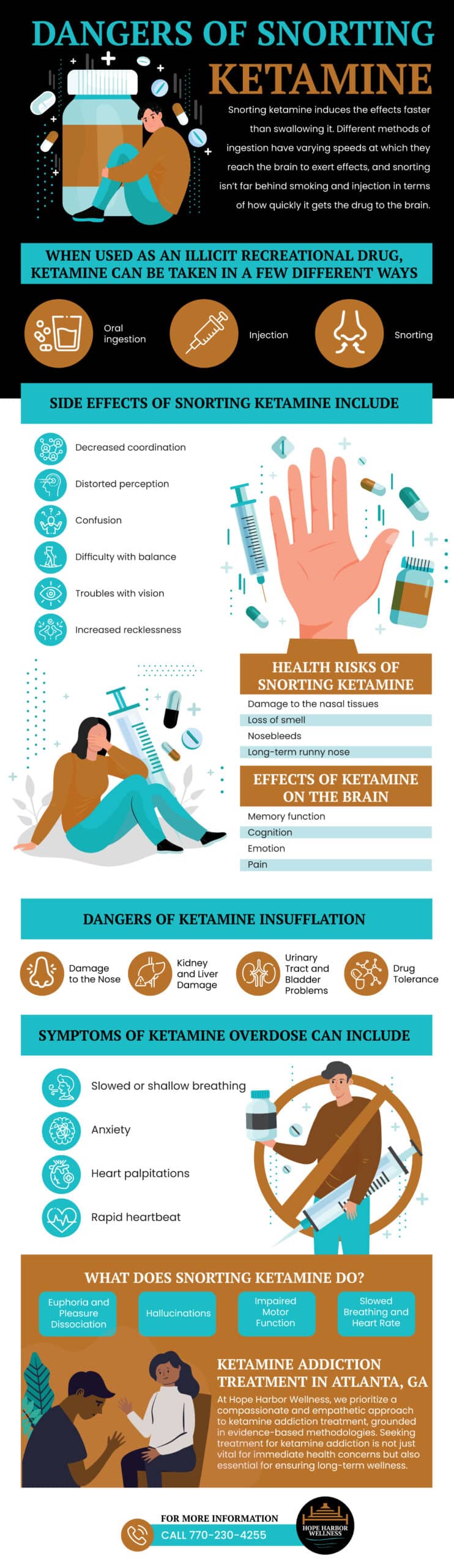
Snorting ketamine induces the effects faster than swallowing it. Different methods of ingestion have varying speeds at which they reach the brain to exert effects, and snorting isn’t far behind smoking and injection in terms of how quickly it gets the drug to the brain. Methods of ingestion that get the drug to the brain quicker are associated with higher risks of addiction development, making snorting one of the riskier ways to take ketamine. Snorting causes effects to arise more quickly than some other routes of administration. This method facilitates the rapid passage of ketamine through the nasal mucosal membranes directly into the bloodstream. As a result, ketamine can quickly cross the blood-brain barrier, leading to a sharp rise in serum drug concentrations.
When a person snorts ketamine, they experience a different rush than they would by swallowing it, which both adds to addiction potential and increases overdose risk. Snorting ketamine delivers a heavy dose of fast-onset, dangerous drug effects. Additionally, this method of use can result in severe damage to the nasal passages.
How Is Ketamine Used?
Within clinical and veterinary settings, ketamine may be used as a surgical anesthetic for humans and animals. When used for these purposes, ketamine is injected in liquid form.
While ketamine is only legal for clinical use, it is also manufactured illegally and sold by dealers for recreational use. Illicit ketamine may be sold in the form of a liquid, tablet, or powder. Some common street names for ketamine include ‘Special K,’ kit kat, and Super K.
The most common ways ketamine is used recreationally are insufflation (snorting) and intramuscular injection. Both of these methods can produce more rapid effects than when the drug is taken orally in its tablet form. For this same reason, they can also be dangerous.
Why Is Ketamine Snorted?
When used as an illicit recreational drug, ketamine (also known as Vitamin K, Super K, Special K, Ket, and Kit Kat) can be taken in a few different ways:
- Oral ingestion
- Injection
- Snorting
Of these three, snorting is favored because it is faster and delivers a more potent high than oral ingestion and does not require a needle or syringe.
The drug is typically divided into lines, called bumps, and then inhaled using a paper or plastic straw. From there, the drug is quickly absorbed through the fine membranes and blood vessels of the nasal cavities and passed on to the brain. Effects can be felt in as little as five to ten minutes.
Effects of Snorting Ketamine
In general, a ketamine high begins with dream-like feelings of euphoria and pleasure. Users may have trouble speaking or moving, experience visual or auditory distortions, and it’s common for blood pressure and breathing to slow down.
Because ketamine is a dissociative anesthetic, ketamine highs usually bring feelings of detachment. Individuals may feel separated from their body and more or less connected with those around them or the rest of reality. Floating sensations, confusion, and hallucinations are common.
At higher doses, this dissociation can lead to what is known as a K-Hole, an intense disconnect between the user and the outside world (including their body) that leaves them immobile and unable to speak. K-Holes often feature severe flashbacks, hallucinations, and other symptoms of psychosis.
The sensation has been described as somewhere between severe intoxication and a coma.
Side Effects of Snorting Ketamine Include:
- Decreased coordination
- Distorted perception (sight and sound)
- Confusion
- Difficulty with balance
- Troubles with vision
- Increased recklessness
- Chest pain
- Nausea
- Anxiety
- Depression

Health Risks of Snorting Ketamine
While snorting is generally considered a less damaging method of substance use than injection, it is still extremely harmful to the body in the long term.
Snorting drugs, including ketamine, causes negative health effects including:
- Damage to the nasal tissues
- Loss of smell
- Nosebleeds
- Long-term runny nose
- Lung irritation
- Hoarse voice
- Difficulty breathing
- Problems swallowing
Effects of Ketamine on the Brain
Ketamine acts on a specific receptor in the brain known as the NMDA (N-methyl-D-aspartate) glutamate receptor.
Glutamate produces the anesthetic effects of ketamine and plays a role in the following:
- Memory function
- Cognition
- Emotion
- Pain
Ketamine can also impact dopamine and serotonin levels, which are brain chemicals responsible for controlling feelings of pleasure, mood, and perception. This accounts for the euphoric state, or ‘rush,’ experienced by those who use ketamine.
Dangers of Ketamine Insufflation
Ketamine abuse can pose several health risks, including damage to organ function, memory loss, and other cognitive problems. Snorting ketamine can further increase these risks and introduce additional dangers specific to this method of use.
Damage to the Nose
Snorting ketamine through the nose can negatively impact nasal passageways and sinus cavities, causing inflammation and irritation. In the short term, this can lead to symptoms such as nosebleeds, difficulty swallowing, and a hoarse voice.
Long-term ketamine insufflation can cause more severe harm to the structure and function of the nose. It may result in a perforated septum (holes in the nasal membrane dividing the nostrils) or reduce the sense of smell.
Kidney and Liver Damage
Chronic abuse of ketamine has been linked to reduced kidney and liver function. This can lead to chronic and sometimes severe stomach pain, sometimes referred to as ‘K cramps.’
Damage to these organs is most often seen in cases where someone has been taking high doses of ketamine over an extended period. The kidneys may also show signs of toxicity with overdose.
Urinary Tract and Bladder Problems
Ketamine abuse can lead to significant problems involving the bladder and urinary tract. Symptoms of ketamine-related bladder problems include painful urination, increased frequency and urgency, and blood in urine. Some effects of this damage can be severe and debilitating, making it difficult for individuals to function normally in their daily lives.
The frequency of ketamine use, the amount snorted, and the length of time a person has abused ketamine are factors that play a role in the likelihood of experiencing severe damage.
Drug Tolerance
Over time, repeated use of ketamine can lead to a person experiencing decreased effects, known as developing tolerance or ketamine dependence. When someone has developed a tolerance, they may begin to use more of the drug or use it more frequently to achieve the same effects.
Snorting ketamine can further increase the risk for tolerance and cause it to develop much quicker due to the rapid onset of its effects. Bingeing on ketamine by snorting large or multiple doses can similarly increase this risk.
If you have developed ketamine dependence, you may experience certain withdrawal symptoms once the effects of the drug have worn off. These can include strong cravings for ketamine, sweating, or headaches.
Can Snorting Ketamine Cause an Overdose?
Ketamine overdose is not always lethal, but it can cause serious harm to the user, and snorting ketamine increases the overdose risk. Because snorting the drug allows it to reach the brain faster, it can result in an intensified rush but may also overwhelm various brain-controlled physiological processes. During an overdose, the user is likely to fall unconscious and have very slow, shallow breathing. In reported cases where ketamine use has resulted in deaths, it has generally been due to either accidents or because it was used together with another intoxicating substance, such as alcohol, opiates, cocaine, or amphetamines. Combining ketamine with other drugs can result in dangerous interactions and lead to numerous health complications—potentially causing extensive damage to the user’s body and brain. For example, using ketamine with other drugs that depress the central nervous system and slow breathing (e.g., alcohol) significantly raises the risk of overdose and death.
Symptoms of Ketamine Overdose Can Include:
- Slowed or shallow breathing
- Anxiety
- Heart palpitations
- Rapid heartbeat
- Chest pain
- Confusion
- Vomiting
- High blood pressure
Ketamine insufflation may be more likely to lead to overdose when mixed with the use of other substances, including sedatives and alcohol. Combining ketamine with depressants can increase the risk for symptoms like slowed breathing, which in some cases may result in respiratory failure.

Can You Snort Ketamine?
Yes, you can snort ketamine, and this method of ingestion is relatively common among individuals seeking a rapid and intense high. Snorting ketamine involves inhaling the powdered form of the drug through the nose, typically using a straw or rolled paper. This route allows the drug to be absorbed quickly through the nasal mucosa into the bloodstream, leading to a faster onset of effects compared to oral ingestion.
However, snorting ketamine carries significant risks. The rapid absorption not only heightens the immediate effects but also increases the potential for developing a dependency. Repeated snorting can cause severe damage to the nasal passages and sinuses, leading to chronic nosebleeds, loss of smell, and even a perforated septum (holes in the nasal membrane). Additionally, the intense and immediate high can reinforce addictive behaviors, making it harder to quit.
Beyond physical damage, snorting ketamine can exacerbate mental health issues such as anxiety, depression, and psychosis. The combination of these factors makes snorting ketamine a dangerous practice with long-term consequences. If you or someone you know is considering snorting ketamine, it’s crucial to seek professional help to understand the risks and explore safer alternatives for managing mental and physical health challenges.
What Does Snorting Ketamine Do?
Snorting ketamine delivers the drug directly into the bloodstream through the nasal membranes, resulting in a swift and intense onset of effects. This method of ingestion bypasses the digestive system, allowing ketamine to rapidly cross the blood-brain barrier and exert its psychoactive effects almost immediately.
When ketamine is snorted, users typically experience a range of effects, including:
- Euphoria and Pleasure: An intense sense of well-being and happiness.
- Dissociation: A feeling of detachment from one’s body and surroundings, creating an altered state of consciousness.
- Hallucinations: Visual and auditory distortions that can range from mild to severe.
- Impaired Motor Function: Difficulty speaking, moving, and maintaining balance.
- Slowed Breathing and Heart Rate: Physical effects that can be dangerous, especially at higher doses.
At higher doses, snorting ketamine can lead to a phenomenon known as a K-Hole. A K-Hole is characterized by extreme dissociation, severe hallucinations, and an inability to move or communicate. This state is often compared to a near-comatose condition and can be terrifying and disorienting for the user.
Long-term snorting of ketamine can result in chronic health issues, including:
- Nasal and Sinus Damage: Persistent inflammation, nosebleeds, loss of smell, and perforated septum.
- Kidney and Liver Damage: Reduced function leading to chronic pain and toxicity.
- Urinary Tract and Bladder Problems: Painful urination, increased frequency, urgency, and blood in urine.
- Cognitive Impairments: Memory loss, decreased coordination, and difficulty with decision-making.
Moreover, snorting ketamine increases the risk of developing a tolerance, meaning users need higher doses to achieve the same effects, which further elevates the risk of addiction and overdose. Combining ketamine with other substances, such as alcohol or sedatives, can amplify these dangers, leading to severe health complications or even death.
Understanding what snorting ketamine does highlights the critical need for awareness and intervention. If you or someone you know is struggling with ketamine use, contact us today at 770-573-9546 or fill out our online contact form to begin your drug-free future.
If ketamine use is affecting your mood, judgment, or daily functioning, now is a good time to get help.
Hope Harbor Wellness offers outpatient addiction treatment and dual diagnosis care for adults 18+ whose substance use is connected to anxiety, depression, trauma, or other mental health symptoms.
Ketamine Addiction Treatment in Atlanta, GA
At Hope Harbor Wellness, we prioritize a compassionate and empathetic approach to ketamine addiction treatment, grounded in evidence-based methodologies. Seeking treatment for ketamine addiction is not just vital for immediate health concerns but also essential for ensuring long-term wellness. Although ketamine may not carry the notorious reputation of drugs like cocaine or fentanyl, it poses significant risks, especially at high doses.
One of the critical challenges with ketamine use is the common practice of mixing it with other substances or consuming it in ways that obscure the actual dosage, significantly increasing the risk of overdose.
If you or a loved one is grappling with ketamine addiction, reaching out to a specialized ketamine rehab like Hope Harbor Wellness is a crucial step toward recovery. Our team is dedicated to addressing ketamine addiction from a holistic perspective, focusing on both the physical and psychological aspects of recovery. Contact us today at 770-573-9546 or fill out our online contact form to begin your Ketamine Addiction Treatment in Atlanta, GA.