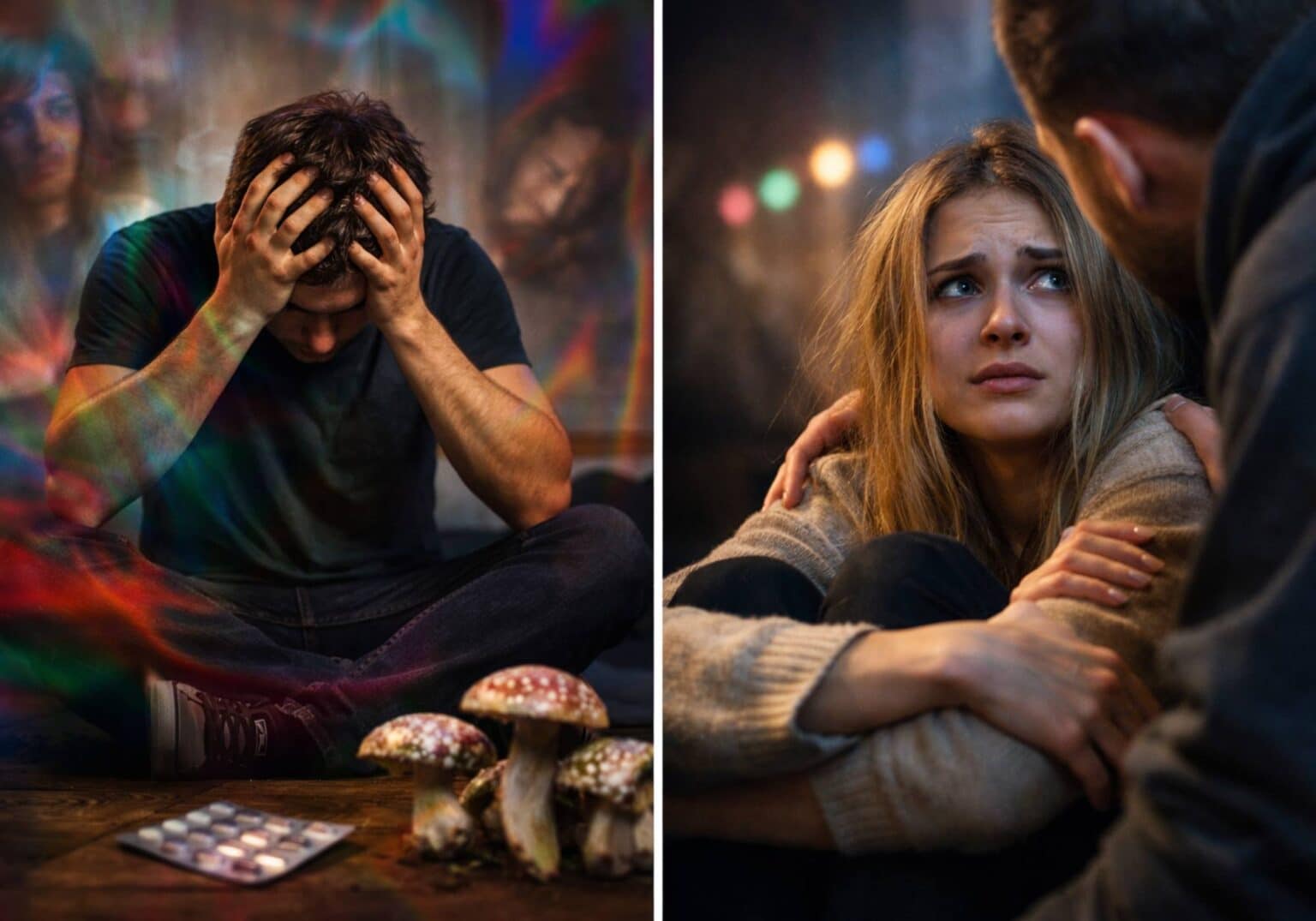

A shrooms “bad trip” can be one of the most intense and frightening experiences someone goes through. While psilocybin mushrooms are often described as mind-opening, they can also bring up overwhelming fear, panic, disturbing thoughts, and a sense of losing touch with reality.
If you or someone you love has had a bad trip, you may be left wondering what happened, whether it will happen again, and how to feel normal and safe afterward. This guide explains what a shrooms bad trip can feel like, how long it may last, and what you can do to help, including when it’s time to seek professional support.
If an experience with shrooms has led to ongoing anxiety, depression, or repeated use of substances to cope, Hope Harbor Wellness is here to help you navigate what comes next.
What Is a Shrooms Bad Trip?
A “bad trip” is a psilocybin experience marked primarily by fear, emotional pain, or distress rather than curiosity or insight. Instead of feeling expansive or peaceful, the person may feel trapped, out of control, or overwhelmed by their thoughts and sensations.
A bad trip is more likely when:
- The dose is high or the potency is unknown
- Other substances (alcohol, cannabis, stimulants, or other drugs) are involved
- The person is in an unsafe, chaotic, or unfamiliar setting
- There’s a history of trauma, anxiety, psychosis, or other mental health conditions
- The person is already distressed or emotionally overloaded before taking shrooms
If you’re interested in how a typical trip can feel in less intense circumstances, you can read our broader guide on what a shrooms trip feels like.
What Does a Shrooms Bad Trip Feel Like?
Bad trips can look different from person to person, but many share common themes.
Emotional Experiences
- Intense fear, panic, or dread
- Feeling like something terrible is about to happen
- Shame, guilt, or reliving painful memories
- Feeling hopeless or convinced things will never get better
Thought Patterns
- Paranoia (believing others are out to harm or judge you)
- Confusing, looping thoughts you can’t escape
- Feeling like you’re losing your mind or “going crazy”
- Distorted beliefs about time, reality, or your own identity
Perception Changes
- Disturbing or nightmarish visual distortions
- Seeing frightening faces, shadows, or shapes
- Feeling detached from your body or surroundings in a scary way
- Feeling like you’re stuck in a moment or trapped in your own mind
Physical Feelings
- Rapid heartbeat, shaking, tight chest, or difficulty breathing
- Nausea, sweating, chills, or dizziness
- Feeling like you might die even when your physical signs are stable
For some, these experiences fade when the drug wears off. For others, especially if the trip was traumatic or involved other substances, the emotional impact can linger long after.
If you’re worried about more serious medical effects of psilocybin or mixing shrooms with other drugs, our article on whether you can overdose on shrooms explains when a situation moves from “bad trip” into a life-threatening emergency.
How Long Does a Shrooms Bad Trip Last?
In many cases, a bad trip lasts as long as the drug is active — often 4–6 hours, sometimes longer.
However:
- The most intense fear or confusion usually peaks within the first few hours
- Emotional fallout, like anxiety, low mood, or trouble sleeping, may continue for days or weeks
- In a small number of people, especially those with existing mental health vulnerabilities, symptoms like paranoia, depression, or intrusive memories can linger much longer
If you want to better understand timing, onset, and how quickly mushrooms start working, you can also read our guide on when shrooms kick in.
How to Help Someone Having a Shrooms Bad Trip
If someone is having a bad trip, your calm presence can make a big difference.
While every situation is unique, some supportive steps may include:
- Stay calm and grounded. Speak gently and avoid arguing with what they’re perceiving.
- Offer reassurance. Remind them that what they’re feeling is drug-related and will pass.
- Reduce stimulation. Turn down bright lights, lower loud music, and limit the number of people in the room.
- Keep them physically safe. Remove sharp objects, prevent them from wandering into traffic or unsafe spaces, and avoid leaving them alone.
- Encourage slow breathing. Simple grounding like slow breaths, holding a comforting object, or naming things they can see and hear can help.
If there’s any concern that they took multiple substances, are having trouble breathing, or might hurt themselves or someone else, this becomes a medical emergency. Call 911 (or your local emergency number) right away.
When a Shrooms Bad Trip Becomes an Emergency
You should seek immediate emergency help (call 911) if the person:
- Has chest pain, trouble breathing, or extremely fast or slow heart rate
- Faints, has a seizure, or is unresponsive
- Is talking about self-harm or suicide
- Becomes aggressive, violent, or impossible to keep safely contained
- May have mixed shrooms with other substances like alcohol, opioids, benzodiazepines, or stimulants
If you’re concerned about ongoing mental health symptoms or suicidal thoughts after the trip, emergency services or crisis lines (such as 988 in the U.S.) are critical resources.
Emotional Recovery After a Bad Trip
Many people feel shaken, ashamed, or confused after a bad trip.
It’s common to:
- Have trouble sleeping or feel on edge for days
- Replay parts of the experience and wonder what it “means”
- Avoid talking about it because you feel embarrassed or scared
- Notice increased anxiety or mood swings
Talking about the experience with a mental health professional can help you:
- Make sense of what happened without judgment
- Process distressing emotions, memories, or insights
- Identify risk factors like trauma, anxiety, or depression that may need care
- Explore healthier ways of coping without turning back to substances
If the trip is part of a larger pattern of substance use, including frequent shroom use or combining psilocybin with alcohol, cannabis, or other drugs, it may be time to look at whether there’s a deeper problem. Our resource on psilocybin addiction explains how repeated psychedelic use can become harmful and what support can look like.
When Shroom Use Becomes a Pattern
A bad trip is often a turning point. Some people decide to stop using mushrooms altogether. Others keep using shrooms — or move to other substances — to avoid uncomfortable emotions or chase a different kind of experience.
Shroom use may be part of a bigger concern when:
- You’re using mushrooms regularly to escape stress or emotional pain
- You’re often mixing shrooms with alcohol, cannabis, or other drugs
- You notice your mental health getting worse over time
- Friends or family express concern about your use or your behavior
- You’ve tried to cut back or stop and find it hard to follow through
If some of these signs feel familiar, you’re not alone. Substance use is often a way of coping with deeper pain, trauma, or untreated mental health conditions — and those can be addressed in treatment.
Support and Treatment at Hope Harbor Wellness
At Hope Harbor Wellness, we work with people who are dealing with substance use, including psychedelics, cannabis, alcohol, and other drugs, as well as co-occurring mental health challenges like anxiety, depression, or trauma.
Our outpatient programs can include:
- Individual therapy to process difficult experiences like a bad trip
- Group support to reduce isolation and shame
- Education on substance effects, harm reduction, and recovery
- Dual diagnosis treatment for both mental health and substance use concerns
- Relapse-prevention planning and healthier coping strategies
You don’t have to keep carrying the fear or confusion from a bad trip by yourself. If you’re ready to talk about what you’re going through, call us at 770-573-9546 or fill out our online contact form. Healing and stability are possible, one step at a time.
FAQs: Shrooms Bad Trip
What causes a shrooms bad trip?
Bad trips can be triggered by high doses, unknown potency, mixing shrooms with other substances, being in an uncomfortable or unsafe environment, or using mushrooms when you’re already anxious, stressed, or dealing with mental health challenges.
How long does a shrooms bad trip usually last?
A bad trip often lasts as long as the drug is active in your system, typically 4–6 hours. The most intense distress usually happens during the peak of the trip, but emotional aftereffects like anxiety, low mood, or trouble sleeping can last days or longer.
Can you die from a shrooms bad trip?
Most bad trips are psychologically intense rather than physically life-threatening, but they can still be dangerous. Someone in a panicked or paranoid state may behave in risky ways or mix substances in ways that raise the risk of overdose or serious harm. If there are signs of medical distress, self-harm, or violent behavior, call 911 immediately.
What should I do during someone’s bad trip?
Stay calm, offer reassurance, reduce stimulation, and help keep the person safe from falls, traffic, or self-harm. Avoid arguing with what they’re seeing or feeling. If they have trouble breathing, lose consciousness, or become a danger to themselves or others, call emergency services.
Will I be “stuck” in a bad trip forever?
Even though it can feel endless while it is happening, a bad trip does eventually end as the substance wears off. However, some people experience ongoing anxiety, low mood, or intrusive memories afterward. Talking with a mental health professional can help you process what happened and feel more grounded.
Can a bad trip trigger long-term mental health problems?
For some people, especially those with pre-existing or underlying vulnerabilities, a bad trip can coincide with longer-term anxiety, depression, or psychotic symptoms. That’s why it’s important to seek professional help if you’re not feeling like yourself in the days and weeks after the experience.
When should I seek treatment after a shrooms bad trip?
You should reach out for help if you notice ongoing distress, trouble functioning at work or school, changes in mood or behavior, or if you’re using substances to cope with what happened. Our resource on psilocybin addiction and the outpatient programs at Hope Harbor Wellness can be a starting point for support.