
If you use kratom daily and have heard about the growing wave of bans and product seizures sweeping the country, you may be wondering what happens to you if your supply disappears. That is a legitimate clinical question — and the answer matters urgently, because kratom withdrawal is real, it can be severe, and attempting to stop abruptly without support is not the safest approach.
This article explains what is happening with kratom regulation in 2026, why Georgia is not immune to these changes, and most importantly, what your options are if kratom has become something your body depends on.
If you’re dependent on kratom and worried about your supply, clinical support is available now.
Same-day assessments available. In-network with BCBS, Cigna, Optum, TriCare, and more.
What Is Actually Happening with Kratom Right Now
The regulatory landscape around kratom has shifted dramatically in the past twelve months, and it is accelerating in 2026. Here is what has happened at both the federal and state level:
In July 2025, the FDA recommended that the DEA classify concentrated 7-hydroxymitragynine — known as 7-OH, the most potent opioid-active compound in kratom — as a Schedule I controlled substance under the Controlled Substances Act. FDA Commissioner Martin Makary described concentrated 7-OH as potentially representing “the fourth wave of the opioid epidemic.” That language from the FDA’s top official is not rhetorical — it reflects genuine alarm at the products now sitting on gas station shelves across the country.
The FDA’s concern centers on a specific and serious problem: the kratom products being sold today are not the traditional leaf products of even five years ago. Manufacturers have increasingly concentrated and in some cases synthetically manufactured 7-hydroxymitragynine, producing shots, gummies, tablets, and liquid extracts with 7-OH levels 109 to 509 percent higher than what occurs naturally in the kratom plant. These are not supplement-level products — at those concentrations, 7-OH behaves like a potent opioid with all the associated overdose and dependency risk.
States have moved quickly in response. Florida enacted an emergency restriction on high-potency 7-OH products in August 2025. Ohio’s Board of Pharmacy passed emergency rules in December 2025 banning the sale, possession, and distribution of synthetic kratom and concentrated 7-OH products. Los Angeles County ordered retailers to immediately remove all kratom and 7-OH products from shelves following California’s Department of Public Health statewide warning. And on February 24, 2026, Connecticut became the seventh state to designate kratom and its derivatives — including 7-OH — as Schedule I controlled substances, with a product removal deadline of March 25, 2026.
The pattern is clear: what was freely available at gas stations and smoke shops a year ago is being removed from shelves in state after state. That process is coming, in some form, for every remaining state — including Georgia.
Where Georgia Stands Right Now
Georgia has not banned kratom, but it has enacted some of the most specific regulatory requirements in the country through House Bill 181, which took effect January 1, 2025 under Governor Kemp’s signature. Georgia’s kratom law:
- Raises the legal purchase and possession age to 21
- Requires all kratom products to be kept behind a counter or in a secured display — not on open shelves
- Caps 7-hydroxymitragynine content at no more than 2 percent of total alkaloid content
- Bans vaping or inhalation of kratom products
- Requires vendor licensing, registered agents in the state, and detailed labeling including ingredients and concentration levels
- Prohibits synthetic or adulterated kratom formulations
The 2% 7-OH cap is significant. The high-potency shots and extracts that have flooded convenience stores nationally — the same products with 7-OH levels hundreds of percent above natural plant concentrations — are not legally sold in Georgia under this law. Any retailer selling them is already in violation of state law.
Does that mean Georgia’s kratom supply is safe and reliable? No. Enforcement is the gap between law and reality, and Georgia’s enforcement of its kratom regulations has been uneven. The products that are technically illegal under HB 181 are still appearing in Georgia stores. But the direction of travel is clear: Georgia has laid the regulatory framework, federal pressure is intensifying, and further restrictions are likely on the horizon — potentially including full scheduling of 7-OH consistent with the FDA’s 2025 recommendation.
If you are using kratom daily in Georgia — especially if you are using extracts, shots, or any high-potency format — your current supply situation is less stable than it may appear.
Why Kratom Dependency Is a Real Clinical Concern — Not a Personal Failing
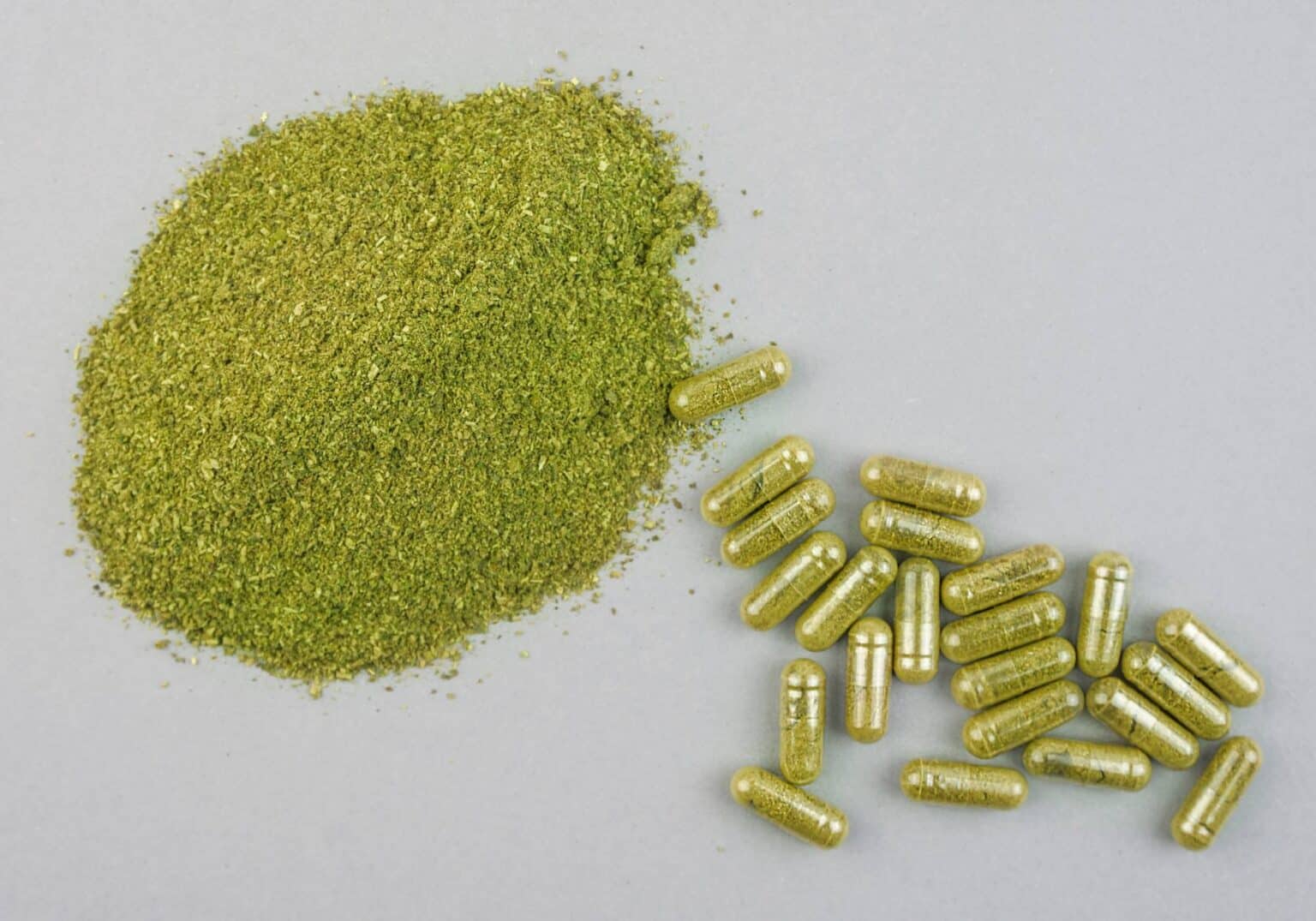
Kratom is sold as a supplement. It is shelved next to protein powders and herbal teas. It is marketed for energy, pain relief, anxiety, and as a “natural” alternative to opioids. None of that marketing changes what kratom’s active alkaloids actually do in the human body.
Mitragynine and 7-hydroxymitragynine both act on mu-opioid receptors — the same receptors targeted by heroin, oxycodone, and fentanyl. At the doses achievable with the concentrated products now common on the market, 7-OH’s opioid receptor activity is substantially greater than what occurs with natural leaf kratom. The neurological consequence of regular exposure is identical to what happens with other opioids: receptor downregulation, physical dependency, and a withdrawal syndrome when the substance is stopped.
Kratom withdrawal is not mild for everyone. For people using daily — particularly those using concentrated formats — stopping produces muscle and bone pain, nausea, insomnia, sweating, anxiety, depression, and intense craving that begins within 12 to 24 hours of the last dose and peaks over 2 to 3 days. Many people have tried to stop and found it harder than they expected. That experience is not a character flaw. It is opioid receptor pharmacology.
There is a second population that Hope Harbor Wellness sees regularly: people who began using kratom specifically to manage opioid withdrawal after stopping heroin, oxycodone, or other opioids. This approach is understandable — kratom does provide some opioid receptor activity that reduces acute withdrawal symptoms. But what frequently happens is that the person successfully stops their original opioid only to develop a second, sometimes more entrenched dependency on kratom. This is not a judgment about the choice — it is a clinical reality that requires treatment that addresses both dependencies, not just the original one.
The Hidden Risk Nobody Is Talking About: What Happens When the Supply Disappears
When kratom products disappear from shelves — whether through state bans, federal scheduling, or local enforcement — people who are physically dependent on them face an acute problem with no easy solutions. Clinical research on this pattern from states with prior kratom restrictions documents a specific and serious concern: substitution.
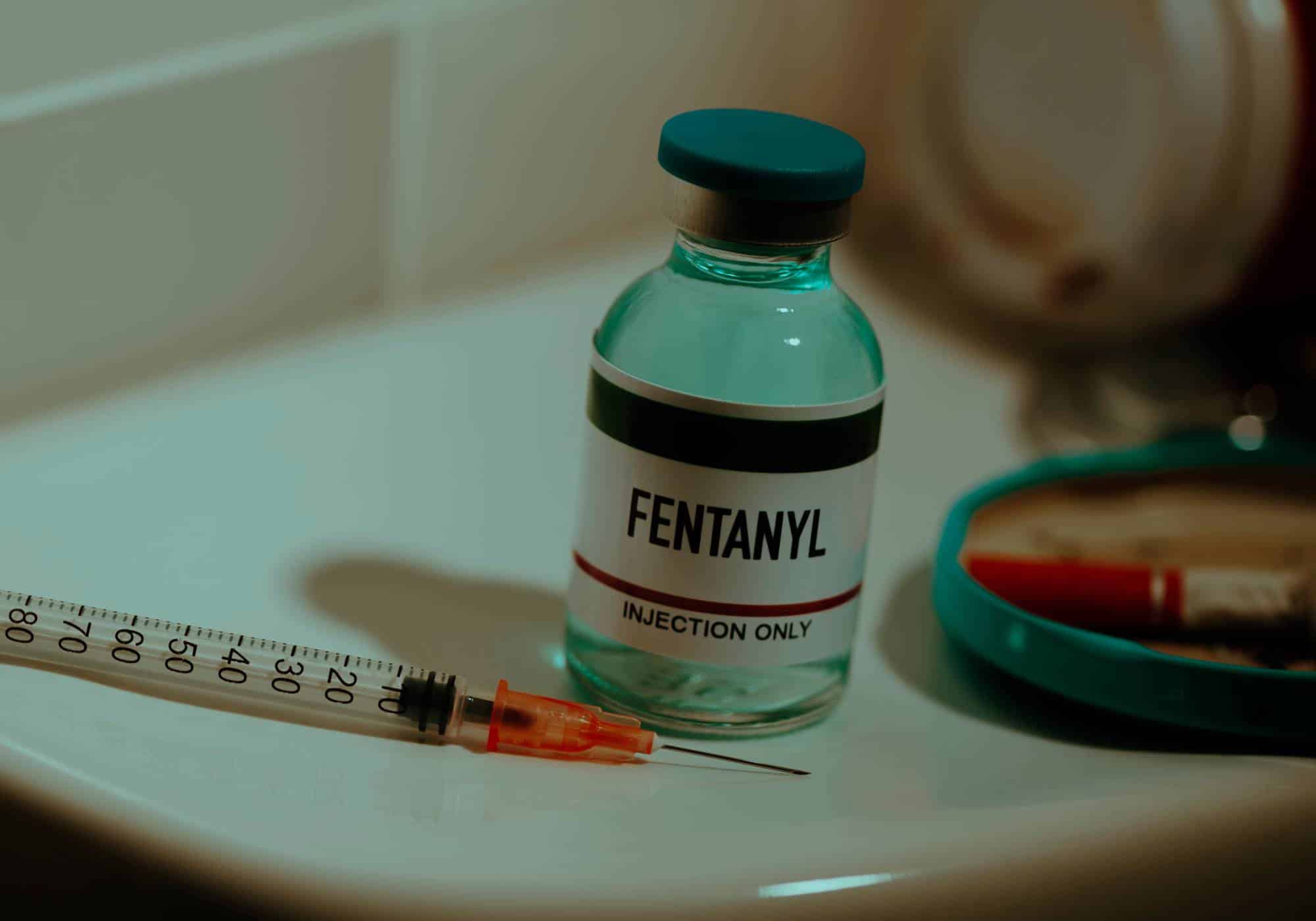
People who are dependent on kratom and lose access to it often do not simply stop. They seek other substances to manage withdrawal and craving. The most available substitute in today’s drug environment is fentanyl — either directly or through counterfeit pills marketed as oxycodone or other opioids. A person who has been using kratom and has no opioid tolerance who transitions to street fentanyl to manage withdrawal symptoms faces catastrophic overdose risk. Fentanyl’s lethal dose is measured in micrograms, and a person with no tolerance has essentially no safety margin for a potency variation in the supply.
This is not a hypothetical risk. It is the documented pattern that followed previous opioid regulatory actions — prescription opioid restrictions in the mid-2010s drove users to heroin; heroin market disruptions drove users to fentanyl. The same substitution dynamic applies when kratom access is suddenly removed from people who are dependent on it.
The clinically safe path is not to wait for your supply to disappear and then manage the consequences. It is to engage with treatment now, while you have the stability to do it on your own terms rather than in the context of acute withdrawal and crisis.
What Kratom Addiction Treatment Actually Looks Like
At Hope Harbor Wellness in Hiram, GA, kratom dependency is treated as the opioid-class clinical condition it is — with appropriate medical evaluation, evidence-based behavioral therapy, and when indicated, Medication-Assisted Treatment.
The first step is a clinical assessment that establishes the degree of physical dependency, identifies any co-occurring conditions (chronic pain and anxiety are the two most common in kratom users), evaluates liver function for clients with extended heavy use (kratom-induced liver injury is documented and worth ruling out), and determines the appropriate level of care.
MAT with buprenorphine is evaluated for clients with significant kratom dependency. Because kratom’s active alkaloids act on the same mu-opioid receptors as buprenorphine, it effectively addresses the withdrawal and craving component of kratom dependency. For clients who began using kratom for opioid withdrawal management and have complex dual dependency, MAT is particularly valuable in providing a stable foundation for behavioral treatment to work.
For clients with underlying chronic pain, our clinical team coordinates non-opioid pain management approaches — because sending someone into recovery from kratom without addressing the pain condition that drove them to kratom in the first place creates an unsustainable situation. For clients with anxiety — another very common driver of kratom use — we provide evidence-based anxiety treatment with non-addictive approaches that address the root cause rather than requiring a substance to manage it.
Our programs serve kratom-dependent clients across Metro Atlanta and Northwest Georgia:
- Partial Hospitalization Program (PHP) — Five days per week for clients who need higher-intensity early recovery support
- Intensive Outpatient Program (IOP) — Three days per week for clients managing work and family obligations alongside treatment
- Virtual IOP — Full IOP programming via telehealth for clients across Georgia without commute barriers
- Medication-Assisted Treatment (MAT) — Buprenorphine evaluated for appropriate candidates
If You’ve Been Using Kratom to Manage Opioid Withdrawal — Read This
This is one of the most common presentations we see: someone who developed an opioid dependency, decided to address it by switching to kratom, and now has both an established kratom dependency and an untreated underlying opioid use disorder. The kratom has been doing a real job — managing withdrawal and craving — but it has not treated the underlying condition, and the dependency it created is now a clinical problem in its own right.
If this describes you, the path forward is not sequential — stop kratom first, then address the opioid history. That approach fails because it removes the medication managing your symptoms without providing anything to replace it. The right approach is integrated: establish MAT with buprenorphine that addresses both the kratom dependency and the underlying opioid use disorder simultaneously, combined with behavioral therapy that addresses the psychological and social dimensions of both.
Our opioid addiction treatment program is specifically designed to address this clinical picture. Call 770-573-9546 and tell our admissions team your history — including the kratom — and we will build a treatment plan that addresses the full picture, not just the most recent substance.
The Window to Act Is Now — Before the Supply Disruption Forces the Issue
There is a meaningful difference between entering treatment as a deliberate, planned decision and entering treatment in the middle of an acute withdrawal crisis after your supply has disappeared. In the first scenario, you have time to choose a program, verify insurance, arrange your schedule, and begin with clinical stability. In the second, you are managing severe physical symptoms while trying to navigate a healthcare system, and the risk of substitution with something more dangerous is highest.
The kratom regulatory situation in 2026 is not stable. The FDA has recommended Schedule I status for the most potent kratom compounds. Florida has already implemented emergency restrictions. Connecticut is pulling products from shelves today. Georgia has enacted significant restrictions that will tighten with enforcement. The supply of high-potency kratom products in Georgia’s convenience stores and smoke shops is not guaranteed to be there six months from now — and for people who are physically dependent, that matters.
You do not have to wait for a crisis to seek treatment. You do not have to hit a rock bottom, lose a job, or have a medical emergency to deserve clinical support. If kratom is something you cannot stop despite trying, if you have noticed tolerance building over time, if you feel sick or anxious when doses are delayed — those are the clinical signals that warrant professional evaluation. Now is the right time.
Hope Harbor Wellness — Kratom Addiction Treatment in Hiram, GA
We provide outpatient kratom dependency treatment for adults across Metro Atlanta and Northwest Georgia — serving Paulding, Douglas, Cobb, Cherokee, Carroll, and Bartow counties.
Call 770-573-9546 for a same-day assessment, or verify your insurance online. In-network with BCBS, Cigna, Optum, TriCare, Oscar, Humana Military, and VACCN.
Frequently Asked Questions — Kratom, the Bans, and Getting Treatment
Is kratom still legal in Georgia in 2026?
Yes, kratom remains legal in Georgia as of March 2026. However, Georgia’s House Bill 181 — which took effect January 1, 2025 — significantly regulates the market: the legal age is now 21, products must be kept behind counters, 7-OH content is capped at 2% of total alkaloids, and synthetic or adulterated kratom is prohibited. High-potency shots and extracts that exceed Georgia’s concentration limits are not legally sold in the state, though enforcement has been uneven. The federal regulatory trajectory suggests further restrictions ahead.
What states have banned kratom or pulled it from shelves?
As of March 2026, six states have full kratom bans: Alabama, Arkansas, Indiana, Rhode Island, Vermont, and Wisconsin. Connecticut became the seventh state to schedule kratom as a Schedule I controlled substance on February 24, 2026, with a product removal deadline of March 25, 2026. Florida and Ohio have emergency restrictions on high-potency 7-OH products. California, Los Angeles County specifically, has ordered retailers to remove all kratom and 7-OH products. The FDA recommended federal scheduling of concentrated 7-OH in July 2025.
Can kratom withdrawal be dangerous?
Kratom withdrawal is not directly fatal in the way alcohol or benzodiazepine withdrawal can be, but it is clinically significant and for heavy users can be severe. Symptoms include muscle and bone pain, nausea, insomnia, sweating, anxiety, depression, and intense craving. The most serious danger is not the withdrawal itself but what people do to manage it — including turning to fentanyl or other opioids as a substitute, which creates acute overdose risk. Medically supported kratom treatment eliminates this risk.
Can Suboxone (buprenorphine) help with kratom withdrawal?
Yes. Buprenorphine acts on the same mu-opioid receptors as kratom’s active alkaloids and effectively manages kratom withdrawal symptoms and craving. Whether MAT is appropriate for your specific situation is determined by clinical assessment. Hope Harbor Wellness evaluates MAT candidacy as part of the intake process. Call 770-573-9546 to get started.
I started using kratom to get off heroin — does that change my treatment?
Yes, and this is a very common presentation. Using kratom for opioid withdrawal management often produces a second dependency that requires its own treatment. Our approach addresses both simultaneously using MAT and dual diagnosis behavioral therapy — not sequentially, which rarely works. Call 770-573-9546 and tell our admissions team the full history so we can build the right plan.
Does insurance cover kratom addiction treatment?
Yes. Kratom use disorder falls under opioid or sedative use disorder categories, which are covered behavioral health benefits under most commercial plans. Hope Harbor Wellness is in-network with BCBS/Anthem, Cigna, Optum/UnitedHealthcare, Oscar, TriCare, Humana Military, and VACCN. Verify your specific coverage at hopeharborwellness.com/insurance/ or call 770-573-9546.
Don’t Wait for a Crisis. Get Help Now.
Hope Harbor Wellness | 126 Enterprise Path, Suite 208, Hiram, GA 30141