


Hydrocodone is among the most commonly prescribed opioid pain medications in the United States, often given after surgeries or injuries to relieve moderate to severe pain. Although it’s effective when taken as directed, hydrocodone also carries a high risk for misuse and addiction. One particularly dangerous form of abuse involves snorting hydrocodone, also known as hydrocodone snorting. When you snort hydrocodone, you bypass your body’s natural filters and deliver the drug rapidly to your bloodstream in higher concentrations than typical oral use. This quick absorption raises the likelihood of dependency, overdose, and serious long-term health issues.
In 2020, about 9.5 million people in the U.S. misused prescription painkillers like hydrocodone. Snorting hydrocodone amplifies its euphoric effects but also greatly boosts the hazards tied to opioid misuse, such as significant nasal damage, breathing difficulties, and a higher chance of developing opioid use disorder (OUD). This article explains what happens when people snort hydrocodone, why some choose this dangerous route, the potential consequences, and how to find support if you or a loved one is struggling.
If ketamine use has become hard to control, confidential help is available now.
Hope Harbor Wellness provides structured addiction treatment and dual diagnosis treatment for adults 18+ whose substance use is tied to anxiety, depression, trauma, or other mental health concerns.
Can You Snort Hydrocodone?
Yes, it’s possible to snort hydrocodone, but it’s extremely risky and can lead to severe health problems. Snorting hydrocodone requires crushing the tablet into a fine powder and inhaling it through the nose. Because this method avoids the digestive system, the drug goes straight into the bloodstream through the nasal passages and throat mucous membranes. That rapid absorption results in a faster and more powerful high compared to swallowing a pill.
The quick onset can appeal to people who want an intense rush, but it dramatically increases the chances of life-threatening complications like respiratory depression, especially if too much is taken at once. It also raises the risk of nasal damage, including a perforated septum. The drug’s swift entrance into your system can lead to a buildup that your body can’t handle, which raises your overdose risk. In 2019, over 70% of overdose deaths involved an opioid, and prescription opioids like hydrocodone are a big factor in this epidemic. Hydrocodone snorting bypasses many of your body’s safety checks, making overdose far more likely than with oral use.
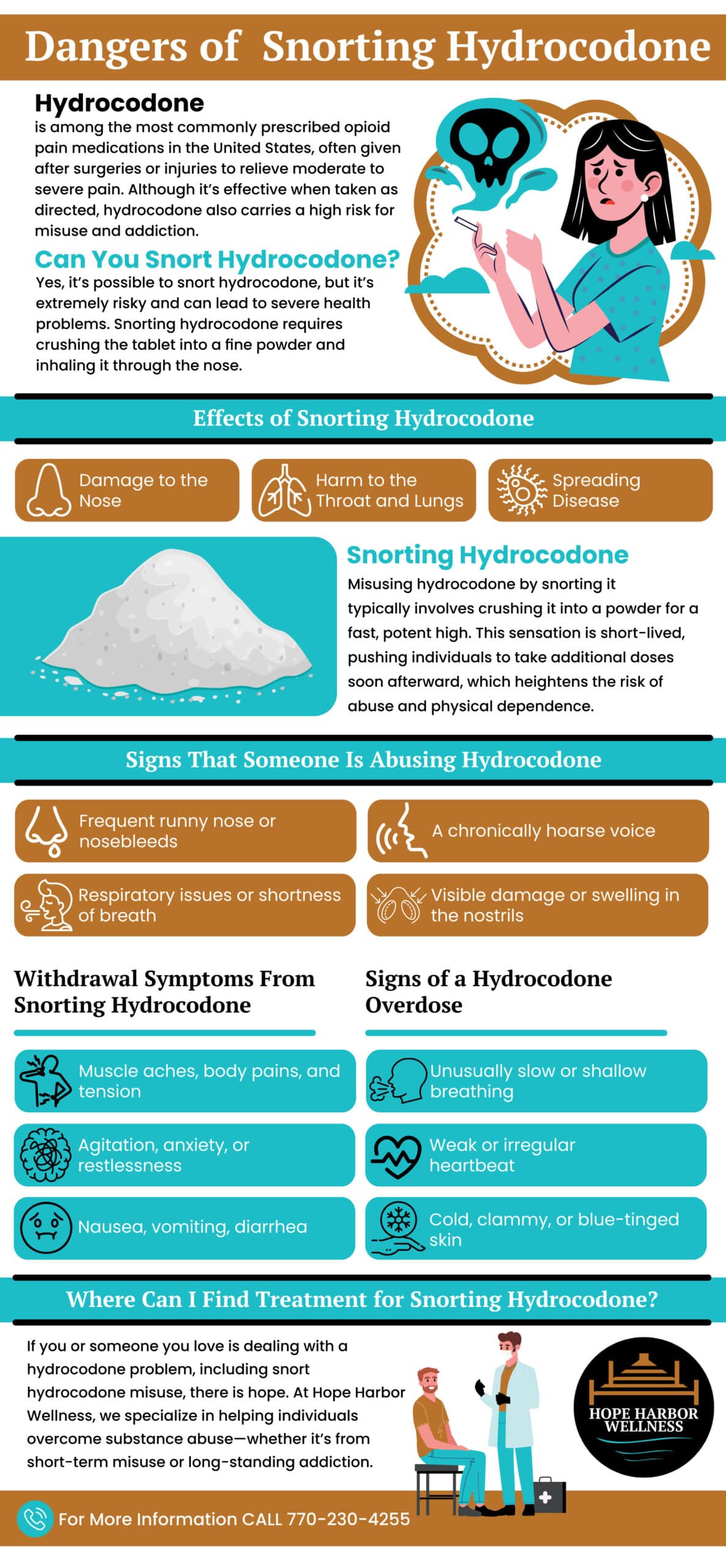
What Happens When Someone Snorts Hydrocodone
When an individual decides to snort hydrocodone, they irritate and inflame the delicate tissues inside the nose. Over time, this inflammation can become chronic, leading to infection or permanent tissue death. Such damage may cause frequent nosebleeds and, in severe cases, destroy a person’s sense of smell entirely. With prolonged misuse, the drug can eat away at the nasal tissue, potentially creating a hole in the roof of the mouth (the palate) or in the septum between the nostrils. This can complicate normal tasks like eating, drinking, and even breathing.
Because the nose connects to the throat, the hydrocodone can drip down and irritate the vocal cords, causing a sore throat or hoarseness. Some of the drug might also reach the lungs, causing lung irritation and worsening breathing conditions like asthma. People often use simple tools such as rolled paper, straws, or hollowed-out pens to snort hydrocodone. But sharing such items can spread bloodborne diseases, including hepatitis C.
On top of these snorting-specific risks, hydrocodone misuse in any form can bring a variety of side effects. Even when used as prescribed, opioids often cause constipation, drowsiness, and dehydration. But long-term or heavy abuse can lead to confusion, mood swings, nausea, difficulty breathing, or sexual dysfunction. If the brain isn’t getting enough oxygen due to opioid-induced respiratory depression, it can trigger hypoxia, which risks permanent brain damage.
Why Do People Snort Hydrocodone?
In normal usage, hydrocodone is meant to be swallowed. It travels through the digestive system, slowing its release into the bloodstream. But if you decide to snort hydrocodone, blood vessels in the nasal passages absorb it right away. This produces a sharp and intense high more rapidly than ingesting it by mouth.
Although intravenous injection and smoking may be even faster routes to the brain, these methods are widely viewed as more dangerous. Some people see snorting hydrocodone as a “lesser evil,” but in truth, it’s far from safe. Snorting still delivers a high amount of hydrocodone to the brain quickly, which can push the body’s tolerance and intensify the risk of addiction and overdose.

What Is Hydrocodone?
Hydrocodone is a synthetic opioid commonly prescribed to treat moderate-to-severe pain after dental work, surgery, or major injuries. Most commonly, it’s a white, oblong pill designed for oral consumption. Like other opioids, hydrocodone attaches to opioid receptors in the brain. This action diminishes pain while releasing a sense of relaxation or euphoria. It also slows breathing, which can be risky if taken in large amounts or combined with other sedatives.
Often, doctors combine hydrocodone with acetaminophen—a widely available pain reliever sold under names like Tylenol—to enhance its effects. However, excessive use of acetaminophen can harm the liver. Because of these potential risks, medical professionals urge caution and closely monitor anyone using hydrocodone long-term.
Snorting Hydrocodone
Misusing hydrocodone by snorting it typically involves crushing it into a powder for a fast, potent high. This sensation is short-lived, pushing individuals to take additional doses soon afterward, which heightens the risk of abuse and physical dependence.
In some instances, hydrocodone is formulated in an extended-release tablet, meant to be released into the body slowly. Crushing these tablets for snorting releases a large quantity of hydrocodone at once, which boosts overdose hazards. People who frequently snort hydrocodone—sometimes referred to as hydrocodone snorting—risk serious health complications due to how quickly and how much of the drug hits their system.
Effects of Snorting Hydrocodone
Manufacturers design medications like hydrocodone for slow, controlled absorption through the digestive tract. When you snort hydrocodone, it bypasses your stomach and enters your bloodstream quickly via the nasal membranes. You can feel the effects within two to fifteen minutes. Once in your system, hydrocodone latches onto your central nervous system, offering intense relief from pain but also risking dependence.
Some immediate effects can include euphoria and sedation, which many users find appealing. Yet, these short-term benefits come at a cost. Snorting hydrocodone can also trigger uncomfortable physical and mental symptoms. Longer-term misuse can lead to severe nasal damage, lung irritation, and a higher chance of falling into compulsive patterns of substance use.
Damage to the Nose
Snorting hydrocodone can inflict both short- and long-term harm on your nasal passages. The tissue that lines the inside of your nose is thin and sensitive, making it prone to irritation or injury. Repeated snorting can cause chronic inflammation, constant runny noses, frequent nosebleeds, and infections.
Over time, the hydrocodone can erode the tissue in your nostrils. This might create holes in the septum (the divider between nostrils) or even in the roof of your mouth. In extreme cases, breathing and eating both become difficult, and some people develop a whistling sound when they inhale. Medical research shows that around 77% of those who got treatment for hydrocodone addiction after nasal use had signs of necrosis—dead tissue—inside the nose.
Harm to the Throat and Lungs
When you snort hydrocodone, some of the powder can slide down the back of your throat. If it lands on your vocal cords, you might experience a sore throat and a raspy voice. Inhaling particles can also let the drug reach your lungs, potentially worsening breathing problems such as asthma or leading to inflamed lung tissue.
The nose normally traps harmful substances with nasal hairs and mucus, but constant snorting damages these defenses. Tiny hydrocodone particles can more easily pass into the lungs, aggravating the respiratory system. This can result in issues like respiratory failure or chronic breathing difficulties. Over time, repeated irritation can cause weight loss, severe shortness of breath, or other long-term lung complications.
Spreading Disease
When snorting hydrocodone, many users crush the pill on various surfaces or utensils, exposing themselves to contaminants. If these surfaces carry bacteria, viruses, or other harmful particles, they can enter the bloodstream through fragile nasal membranes. Using shared paraphernalia—like rolled-up dollar bills, straws, or other improvised items—can further spread infections, including hepatitis C or other bloodborne pathogens.
Because snorting often involves contact with nasal blood vessels, it’s quite easy for infections to be transmitted between people. If you suspect that you or someone close to you has used shared snorting tools, it’s wise to get tested for infectious diseases and see a healthcare provider.
Signs That Someone Is Abusing Hydrocodone
If someone you know is snorting hydrocodone, it’s a clear signal of drug misuse. Hydrocodone is known to be addictive, and seeking a more rapid or heightened effect is a common sign of developing dependence.
Other signs of hydrocodone abuse may include:
- Frequent runny nose or nosebleeds
- A chronically hoarse voice
- Respiratory issues or shortness of breath
- Visible damage or swelling in the nostrils
- Needing larger doses to feel the drug’s effects
- Neglecting responsibilities at work, school, or home
- Secrecy about drug use or possession of unusual items for snorting
- Mood swings or anxiety
If you notice these signs, it’s time to consider professional help. Early intervention can prevent more severe complications, such as an overdose or permanent health damage. Many individuals struggling with hydrocodone snorting can recover with the right combination of medical treatment, therapy, and support.
Withdrawal Symptoms From Snorting Hydrocodone
Stopping hydrocodone suddenly after prolonged snorting can bring on painful withdrawal symptoms—both physical and mental. Typically, these symptoms begin within hours of your last dose. They can linger for days or even weeks, depending on how long you’ve been using the drug.
Common hydrocodone withdrawal symptoms may include:
- Muscle aches, body pains, and tension
- Agitation, anxiety, or restlessness
- Nausea, vomiting, diarrhea
- Excessive sweating
- Insomnia and racing thoughts
- Enlarged pupils or goosebumps
Hydrocodone doesn’t always exit the body quickly, so these symptoms can stick around for a while. Since withdrawals can be intense, quitting under medical supervision is usually safer. Professionals can provide medications and therapies to manage discomfort and reduce the likelihood of relapse.

Signs of a Hydrocodone Overdose
Hydrocodone overdose happens when someone takes more of the drug than their body can safely process. Snorting hydrocodone increases the risk by delivering large doses to the bloodstream instantly. If someone snorts multiple lines too close together, the medication can accumulate in their system faster than the body can break it down.
A hydrocodone overdose often involves severe respiratory depression, where breathing slows or stops. This can be fatal or cause permanent brain damage if the brain lacks oxygen for too long. The danger rises even more if hydrocodone is combined with other substances that depress the central nervous system, such as alcohol, benzodiazepines, or muscle relaxants.
Look for these overdose warning signs:
- Unusually slow or shallow breathing
- Weak or irregular heartbeat
- Cold, clammy, or blue-tinged skin
- Heavy drowsiness that leads to unresponsiveness
- Constricted or widely dilated pupils
- Loss of consciousness
Naloxone, also known as Narcan, is an opioid antagonist that can reverse an overdose. It’s commonly carried by paramedics and police officers. Naloxone is available in many pharmacies without a prescription, and it comes in a nasal spray form.
Where Can I Find Treatment for Snorting Hydrocodone?
If you or someone you love is dealing with a hydrocodone problem, including snort hydrocodone misuse, there is hope. At Hope Harbor Wellness, we specialize in helping individuals overcome substance abuse—whether it’s from short-term misuse or long-standing addiction. We offer a continuum of care that can include everything from medication-assisted detox to outpatient and aftercare programs.
Our compassionate team at Hope Harbor Wellness understands the complexities of hydrocodone snorting and opioid addiction. We design customized treatment strategies to address not only the immediate challenges of opioid withdrawal but also any underlying emotional or mental health factors. This comprehensive approach helps you get to the root causes of addiction, so you can develop healthier coping skills.
When you reach out, our staff will guide you through the admissions process, discuss possible insurance coverage, and explain your options for treatment. We can answer all your questions about detox, therapy, and ongoing support, ensuring you feel comfortable and informed. With professional help, it’s entirely possible to break free from hydrocodone snorting, avoid severe complications, and rebuild a life centered on wellness. Contact us today at 770-573-9546 or fill out our online contact form.