
When treating ADHD, many doctors prescribe stimulant medications, such as Vyvanse or Adderall XR, because they can be very effective at helping people manage symptoms. Vyvanse, available in capsule and chewable tablet forms, is a central nervous system stimulant the FDA has approved for ADHD and binge eating disorder. One key question people often ask is, “How long does Vyvanse last?” Knowing the answer matters when thinking about dosing, potential side effects, and how it stacks up against other stimulant medications like Adderall, Focalin XR, or mixed amphetamine salts. In this article, we’ll explore how Vyvanse works, how long its effects generally last, and what you can expect if your doctor includes this medication as part of your treatment plan.
It’s important to note that Vyvanse can have its own risks. One is the possibility of serotonin syndrome when combined with other drugs that affect serotonin levels. Also, Vyvanse abuse is a serious issue that impacts not only individuals but their families as well. For anyone dealing with addiction, support is available, and there are effective methods for finding help.
What Is Vyvanse?
Vyvanse is a controlled substance and falls under Schedule II drugs as classified by the DEA (Drug Enforcement Administration). You’ll need a valid prescription from a doctor to get it. Though stimulants like Vyvanse can sometimes be used off-label for conditions like extreme tiredness or cognitive challenges in neurological disorders, Vyvanse might be less likely to be used this way than other stimulants because of how it is metabolized.
Whether for ADHD or any other off-label reason, it’s important to remember that Vyvanse is potent and can have serious side effects. Always discuss any concerns or questions about Vyvanse, especially regarding dose and timing, with your doctor.
How Long Does Vyvanse Stay in Your System?
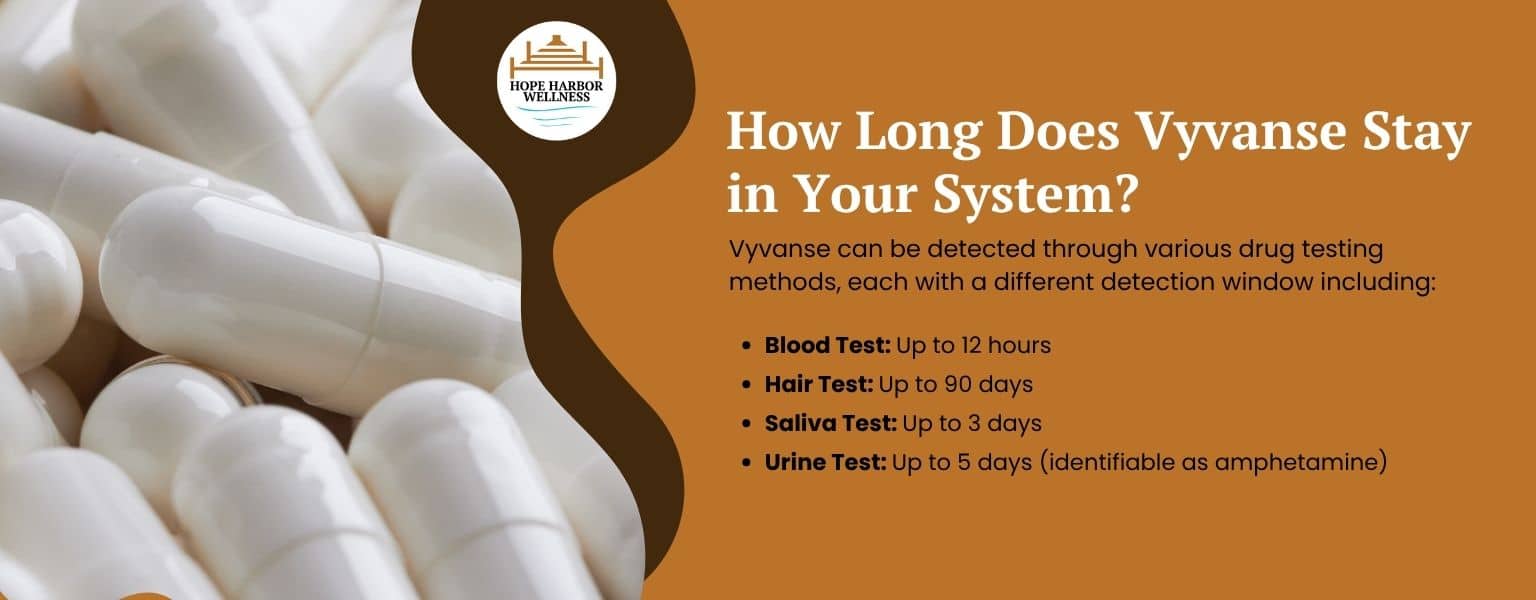
Even after the effects have worn off, lab tests might still detect Vyvanse in your body.
The length of time it’s detectable depends on the type of test:
- Blood: A blood test can find Vyvanse for up to 12 hours after your last dose.
- Urine: Vyvanse is identifiable as amphetamine in urine for up to five days after the final use.
- Saliva: Traces of Vyvanse can appear in saliva for up to 72 hours post-use.
- Hair: A hair follicle test may detect Vyvanse for as long as 90 days after your last dose.
Different labs can have varying cutoff levels to determine whether a test is positive. As an example, some labs consider a dextroamphetamine level below 50 ng/mL to be negative. If you’re worried about detection times, it’s vital to understand how your body processes Vyvanse and how you might be tested.
How Long Does Vyvanse Stay in Breastmilk?
Another common question is, “How long does Vyvanse stay in breastmilk?” The truth is that this isn’t well understood, and we don’t have clear data on how long it lingers or whether it harms nursing infants. Some professionals advise against taking Vyvanse while breastfeeding. If you’re a nursing mother thinking about using Vyvanse, talk to your doctor or a specialist before you start.
How Long Does Vyvanse Last?
People who rely on this medication often ask, “How long does Vyvanse last?” In most cases, Vyvanse (lisdexamfetamine) works for around 10 to 14 hours after you take it. This makes it a long-acting stimulant that is commonly prescribed for ADHD and binge eating disorder. Once ingested, your body gradually converts Vyvanse into dextroamphetamine, its active form, leading to steady symptom relief throughout the day. This long duration is a key advantage that sets Vyvanse apart from other stimulants, such as Adderall XR or Focalin XR.
Keep in mind that how long does Vyvanse last can vary based on your prescribed dose, how your body processes medication, and whether you swallow a capsule or chew a tablet. Most patients take a single morning dose to benefit all day without losing sleep at night. Following a healthcare provider’s instructions is essential for getting the best results while minimizing side effects like insomnia or loss of appetite.
Vyvanse Effect and Duration
To understand how long does Vyvanse last 20 mg or 30 mg, it helps to look at how the body deals with the medication. We often measure a drug’s presence in the body using half-life—the time it takes for normal metabolic processes to reduce the drug’s concentration by half. Vyvanse’s active ingredient, lisdexamfetamine, converts into the stimulant dextroamphetamine, which is what actually boosts attention and energy levels.
Various factors can affect how long Vyvanse remains in your system, including:
- Frequency of Use: Taking Vyvanse daily can lead to slightly different patterns of detection compared to occasional use.
- Dosage: A higher dose might remain in your system longer. If you’re specifically wondering, “How long does 30mg Vyvanse last?” you should expect around 10 to 14 hours, though it can vary by person.
- Substance Interactions: If you mix Vyvanse with other drugs or alcohol, it might alter how your body processes it.
- Timing of the Last Dose: The closer you are to your last dose, the more likely you’ll test positive.
- Physical Health: Conditions like kidney or liver problems can slow your body’s ability to remove the drug.
What Affects How Long Vyvanse Stays in Your System?
A drug’s half-life is a big clue for figuring out how long it remains in your body. The half-life for a medication is basically how long it takes your metabolism to clear half of the drug’s concentration. With Vyvanse, the half-life of its active byproduct, dextroamphetamine, plays a major role.
Key factors include:
- Dosage Amount and Frequency: Higher doses or frequent usage can increase how long it’s detectable.
- Combination with Other Drugs: Using Vyvanse alongside certain medications can slow or speed up your metabolism.
- Overall Health: People with good kidney and liver function generally process the drug faster.
- Body Weight and Gender: These can also affect the speed of drug metabolism.
- Testing Method: Blood, urine, saliva, and hair tests each have different detection windows.
Some individuals naturally clear Vyvanse more quickly, while others take longer. If you have existing kidney or liver issues, the drug might stay in your system for a longer time. So it’s important to keep your doctor informed about any medical conditions you have.
Vyvanse Half-Life
Vyvanse half-life is critical to understanding its duration in your system. The main component, lisdexamfetamine, breaks down into dextroamphetamine, which causes most of Vyvanse’s effects. This stimulant has a plasma half-life of about 12 hours, meaning it can be found for up to 60 hours after your last dose. That’s why drug tests may detect Vyvanse for up to three days post-ingestion.
For individuals coping with ADHD or binge eating disorder, Vyvanse can be a useful tool to manage symptoms. But knowing the half-life helps you avoid accidental problems, like mixing Vyvanse with alcohol, which can be risky. By understanding how the drug lingers in your body, you can make safer choices about your medications and daily routine.
How Long Do the Effects of Vyvanse Last?
When Vyvanse first appeared, many believed it might have a lower abuse potential compared to other stimulants, such as Ritalin. However, new studies show it can still be misused. While the onset of effects might kick in around 30 minutes for some, that can vary. Some feel the impact quicker, while others have a slower build that can last longer.
If you’re wondering, “How long does 30mg Vyvanse last?” or “Does Vyvanse wear off after 24 hours?” the typical experience is around 10 to 14 hours of effect, not 24 hours. That means it should generally be taken once a day, usually in the morning, to avoid interfering with sleep. Everyone’s different, so you may need to talk with your doctor about adjusting your dose or schedule if you find the effects too strong or too weak.
Can You Overdose on Vyvanse?
Yes, you can overdose on Vyvanse (lisdexamfetamine), which can lead to life-threatening issues. Signs of overdose or toxic levels include intense agitation, a racing heartbeat, high blood pressure, hallucinations, seizures, and, in severe cases, unconsciousness or even death. Misusing Vyvanse—like taking higher doses than prescribed or mixing it with other substances—raises the risk of overdose.
- What to Do if You Suspect Overdose: Call emergency services immediately. Quick treatment is crucial to address symptoms and avoid major complications.
- Prevention Tips: Take Vyvanse exactly as prescribed, keep it in a secure place, and talk to your doctor before mixing it with any other drugs or supplements.
Is Vyvanse Addictive?
Because Vyvanse is a stimulant, it ramps up dopamine levels in the brain. That can produce feelings of euphoria and make it addictive. You might spot a Vyvanse addiction if someone uses more than prescribed, craves the drug, or keeps taking it despite negative outcomes. Managing dependence and withdrawal often calls for medical detox and a structured program to prevent relapse and rebuild healthier habits.
This risk goes up when people take Vyvanse in higher doses than directed or misuse it without a legitimate prescription. Using it regularly can lead to physical and mental dependence, meaning your body and mind start to rely on Vyvanse to function. Stopping it suddenly after a long period of heavy use can cause withdrawal symptoms like fatigue, low mood, and irritability.
Prevention means following your prescription carefully, never sharing the medication, and informing your doctor if you have a personal or family history of substance abuse. If you suspect you have an addiction to Vyvanse, seeking professional help is vital.
More About Drug Tests and Detection
Understanding how long Vyvanse stays in your system is only one piece of the picture. If you’d like a deeper breakdown of how urine, blood, saliva, and hair tests actually work, you can read our guide on how drug tests work. For a broader overview of different substances and timelines, visit how long drugs stay in your system.
Getting Help for Vyvanse Addiction
Vyvanse addiction often arises because of its appealing effects, like heightened energy and focus. This sense of reward in the brain can fuel a stimulant addiction. If you or someone you love is struggling, you’re not alone. Addiction can be overwhelming, but there are ways to get better.
Effective treatments can include:
- Therapy and Counseling: Cognitive Behavioral Therapy (CBT), motivational interviewing, or other therapies that help identify triggers and develop coping strategies.
- Medical Detox: For some people, detox can ease withdrawal.
- Support Groups: Peer-based groups can offer emotional and social support during recovery.
- Outpatient Drug Rehab: This option provides a structured program that fits into your daily life. You receive help through counseling, therapy, and educational sessions while still living at home.
- Aftercare Services: Long-term support is often crucial to prevent relapse.
Recovery is about getting your life back without misusing Vyvanse. If you or a family member suspects addiction, many resources can help guide you through each step, from detox to aftercare. Addiction doesn’t just affect the user—loved ones feel the impact, too. By reaching out, you can find solutions that lead to a healthier, more fulfilling life.
If you believe you’re dealing with a Vyvanse addiction, don’t hesitate to call Hope Harbor Wellness at 770-573-9546 or via online form. We offer outpatient drug rehab in Atlanta, GA.